Reviewed · PARMESAN AND BALSAMIC TOURS
Parmigiano-Reggiano Cheese Factory Small group Tour From Parma
Parmigiano-Reggiano is not made behind a shop counter. It is cooked in huge copper kettles, lifted by hand, salted in brine, and left to change for months or years. This small-group tour lets you watch those stages at close range, then taste the results side by side.
I like the small maximum of eight people, which gives the guide room to explain the work and answer questions. I also like the focus on the full process, from the casello cooking room to the aging racks, rather than a quick stop for cheese samples. The main caution is uncertain transport communication: several strong visits were balanced by reports of missed pickups and poor notification when a tour was canceled.
Key points before you book
- Watch real cheese production: You see the cooking, shaping, brining, and aging areas rather than only hearing a sales pitch.
- Taste different ages: The final sampling shows how Parmigiano-Reggiano changes as it matures.
- Small group format: The tour accepts no more than eight people, a useful size for questions and close viewing.
- English guidance: The activity is offered in English and lasts about three hours.
- Convenient Parma meeting point: Start at Viale Giovanni Falcone 48a at 8:30 am, then return to the same meeting point.
- Check the morning pickup carefully: The most serious complaints concern late or absent transport and weak communication.
Why this Parma cheese visit is worth your morning
Parma is famous for food that rewards attention to method. This tour works because it shows you the labor behind a name you may otherwise know only from a supermarket label.
Parmigiano-Reggiano is made under strict local traditions, and the factory visit puts those traditions in practical terms. You see where the milk is cooked, where the fresh cheese is salted, and where the finished wheels spend long months changing in storage. That sequence matters. It helps you understand why the cheese has such a firm texture, savory taste, and range of ages.
I would set aside about three hours from the start at 8:30 am. That is long enough for a real explanation without turning the visit into an all-day food program. Since the tour returns to its starting point, you can still plan a later lunch or an afternoon around Parma.
The visit is also more useful than a simple tasting. The cheese sample comes at the end, after you have seen the work, so you can connect flavor with age and production. That small bit of context makes the tasting much more memorable.
More Cheese Farm Visits in Italy
- Parma: Traditional Cheese Factory Visit with Tasting
★ 4.9 · 225 reviews - From Parma: Parmigiano Reggiano Farm Tour & Tasting with Transfer
★ 5.0 · 113 reviews - Parmesan Cheese Factory Tour & Tasting near Parma
★ 4.7 · 98 reviews
Meeting at 8:30 am in Parma
The listed meeting point is Viale Giovanni Falcone 48a, 43122 Parma. It is near public transportation, and the location is practical if you are coming through the Parma train station area. Some booking arrangements offer pickup points near local accommodation, so select the closest available point when booking and read the confirmation carefully.
The early start is not a drawback for a cheese factory. Production visits are tied to the working day, not to the relaxed pace of an afternoon sightseeing walk. Arriving on time gives you the best chance of seeing the factory as a working place rather than a quiet display room.
Transport to the property has been efficient on well-run departures, and the ride is described as comfortable. The factory is outside the city center, so included transport adds real value. You do not need to arrange a taxi or figure out a rural bus connection on your own.
Still, this is the part of the tour that deserves the most caution. There have been cases of people waiting in cold rain for a vehicle that did not arrive, followed by late notice that the tour had been canceled. Another departure involved a driver who was ill, but the cancellation was not communicated before the pickup time.
I would save the operator’s contact details, arrive early, and keep the morning flexible. If you have a train or another paid activity immediately afterward, leave a generous buffer. The tour is meant to return to the meeting point, but the transport record is not consistent enough for a tight connection.
Inside the casello cooking room
The first major stop is the casello, the production room where the cheese is cooked. This is the part of the visit that gives the clearest sense of scale.
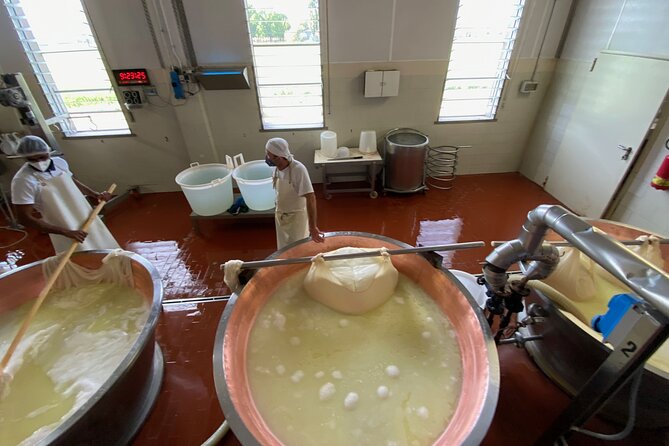
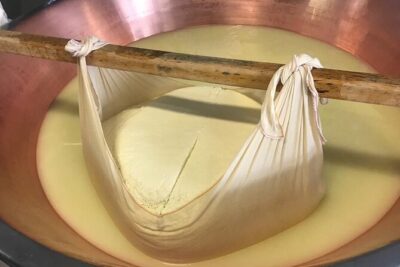
You can expect to see large copper kettles and the production process explained step by step. The guide describes what happens as the milk is transformed into the curd that will become Parmigiano-Reggiano. Rather than rushing from one room to another, the better departures allow time to explain what you are looking at and why each stage matters.
This is where a guide with factory experience makes a difference. Mattia is one guide associated with the visit, and he grew up around his family’s cheese factory. Another guide has been described as a former cheesemaker. Those details matter because the explanations can go beyond a memorized script and address the practical side of the work.
The best part for me is the plain connection between handwork and the final product. You see that this is not a small block cut from a machine and wrapped for tourists. The cheese is made in large forms, handled through several stages, and then watched over for a long time.
The room may be active and industrial rather than polished. That is a benefit if you want an authentic food visit, but it also means you should expect a working facility, not a museum built for visitors. Wear sensible clothing and follow any hygiene instructions, including the use of hairnets.
The brining room and the patient aging process
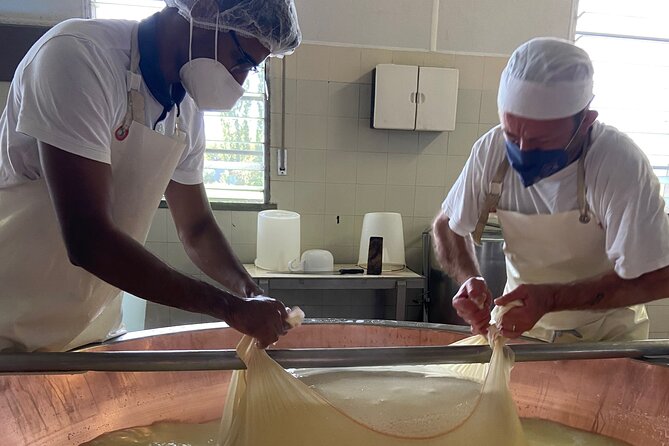
After cooking, the tour moves through the brining room and the aging area. These stages can seem less dramatic than the copper kettles, but they explain much of what you taste later.
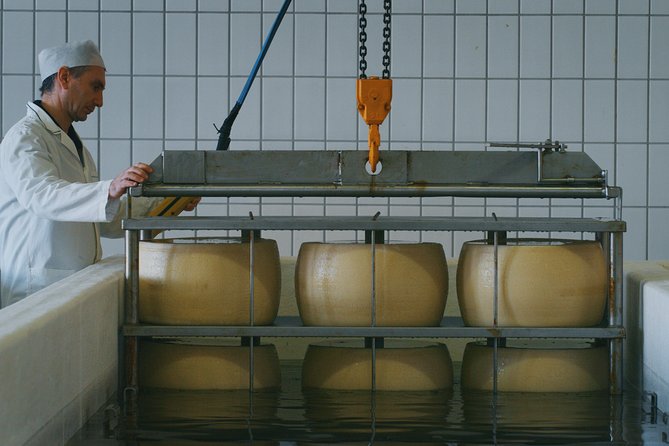
The brining room shows how the fresh wheels are treated with salt before they mature. The guide connects this stage to the cheese’s texture and flavor, giving you a clearer idea of why Parmigiano-Reggiano is not ready to eat the moment it leaves the cooking room.
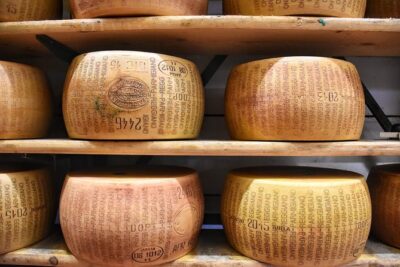
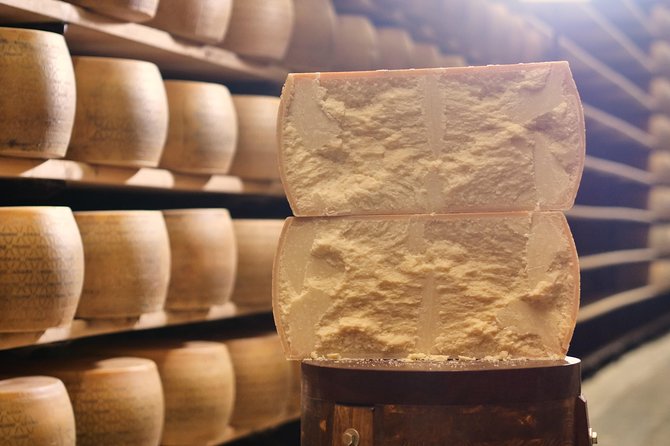
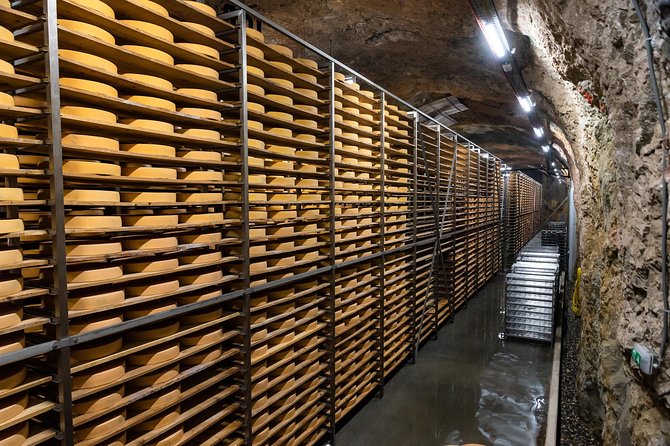
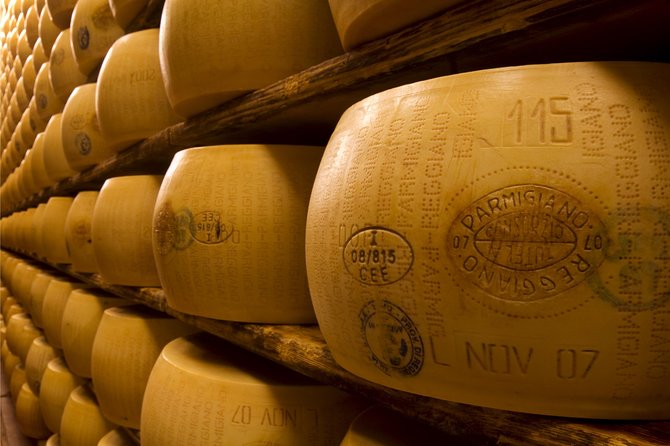
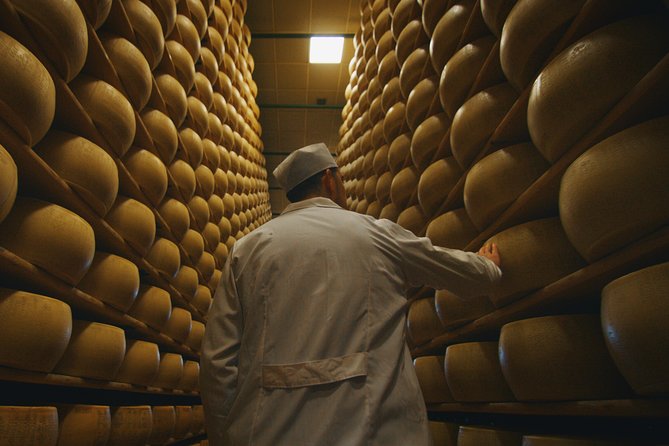
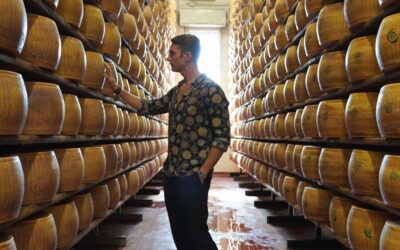
The aging room is perhaps the most visually striking part of the visit. Rows of wheels show the scale of the operation and the time involved. A young wheel and a much older one are not simply the same product stored for longer. Age changes the texture, aroma, and intensity, and the tasting lets you notice those differences directly.
I like this part because it slows down the usual food-tour message. You are not just told that the cheese is traditional. You see the storage required to make it, and you understand why a finished wheel represents months or years of care.
Do not expect every detail of the production schedule to be identical on every visit. A working factory may be at a different stage when you arrive. The tour’s value comes from seeing the rooms and receiving a clear explanation of how the stages fit together.
More Cheese Farm Visits in Parma
- Parma: Parmigiano Reggiano Farm Tour & Tasting with Transfer
★ 4.8 · 87 reviews - Parmigiano Cheese Factory Visit and Tasting
★ 5.0 · 22 reviews - Parmesan and Ham Factory Tour
★ 4.5 · 21 reviews - Parmesan Wheels near Parma: Tasting & Factory Tour
★ 4.9 · 10 reviews
A tasting that explains age, not just flavor
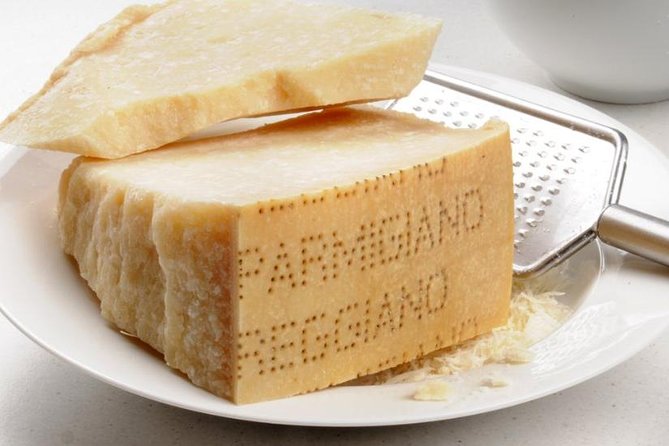
The tasting is generous on the strongest departures, and it is more useful than a quick nibble at the end of a tour. You sample Parmigiano-Reggiano at different ages, which gives you a simple lesson in maturation.
A younger cheese may feel less dry and more approachable. Older cheese tends to be firmer and more intense, with a stronger savory character. The point is not to decide that one age is universally best. It is to notice how time changes the cheese.
Ask questions during this portion. With a group of up to eight, you should have a fair chance to ask about age, texture, storage, and the differences you notice. Some guides also allow time to purchase cheese at the factory, though you should treat that as an opportunity rather than the main purpose of the visit.
The tasting is especially helpful if you plan to buy Parmigiano-Reggiano in Parma. You can compare before spending money, and you leave with a better sense of what age suits your cooking or snacking. If you already know the cheese well, the side-by-side format still gives you a reason to pay attention to small changes in texture.
The guide can make or break the visit
The strongest element of this tour is the human explanation. Several guides have been praised for making the process easy to follow, answering questions, and keeping the tone friendly. Mattia receives particular praise for his connection to the family factory and his enthusiasm for the work.
That personal link can turn technical information into a story about daily life in the Parma area. A guide who has grown up around cheesemaking can explain what the rooms are used for in practical terms, not just repeat dates and labels.
Language delivery has not been consistent. One departure had a guide whose diction was difficult to understand, while another guide speaking in the same room was much clearer. If you have trouble following the explanation, move closer to the guide and ask for a slower repetition. The group size should make that possible.
There was also a serious complaint about rude remarks made in Italian toward a group waiting for transport. That behavior is not acceptable. It appears to be an isolated but important warning, especially for visitors who understand Italian and may catch comments that others miss. I would judge the tour mainly on the factory content, but I would not ignore the uneven service record.
What the $84.11 price includes in practical terms
At $84.11 per person, this is not the cheapest way to taste cheese in Parma. You are paying for more than samples, though. The price covers a guided factory visit, transport to the production site, an English explanation, a small group limited to eight, and the time spent showing several stages of production.
The value is strongest if you want to understand how Parmigiano-Reggiano is made. A shop tasting may cost less and take less time, but it will not show you the cooking room, brining room, or aging racks. If your interest is mainly in eating cheese, the price may feel high. If you enjoy food traditions and working producers, the three-hour format is easier to justify.
The family-run setting also adds something that a large commercial attraction may not. You are closer to the people and rooms behind the product. That does not guarantee a perfect departure, but it can make the visit feel personal and grounded in the region.
A current score of 3.7 out of 5 from 15 ratings suggests a mixed record rather than a clear recommendation for everyone. The content itself earns very strong approval on many departures. The weak points center on pickup, cancellation notices, and occasional communication problems. I would pay the price if the schedule works for you, but I would protect yourself with extra time and careful confirmation.
Who will enjoy this factory visit most
I would recommend this tour to you if food production interests you, especially if you want to see the work behind a famous Italian product. It suits couples, families, and small groups who prefer a focused morning activity to a large coach excursion.
It is also a good choice for anyone coming from Milan by train and meeting in Parma. One well-run departure found the meeting point convenient for that kind of trip, and transport onward to the factory was simple.
The tour may be less suitable if you need guaranteed timing. A missed pickup could ruin a short visit to Parma, and the three-hour schedule leaves less room for a major delay. I would also think twice if you dislike working facilities, hairnets, or tours that depend on a guide’s speaking style.
Most people can participate, according to the supplied details. The experience is not described as a strenuous activity, but the precise seating, walking, or facility arrangements are not provided. If you have specific mobility or pregnancy concerns, ask the operator before booking rather than relying on general participation guidance.
Booking details that deserve attention
Confirmation is provided at booking, and free cancellation is available until 24 hours before the local start time. Cancel later than that, or make a late change, and you should not expect a refund.
The tour requires a minimum number of participants. If the operator cancels because that minimum is not reached, you are offered another date or activity, or a full refund.
The activity is mobile-ticket friendly and offered in English. It begins at 8:30 am and ends back at the meeting point. Since pickup arrangements have caused problems on some departures, keep the confirmation accessible on your phone and verify the exact meeting instructions before the morning of the tour.
Should you book the Parmigiano-Reggiano factory tour?
I would book it if you want a close look at real cheesemaking and can keep your schedule flexible. The small group, family connection, full production route, and age comparison at the tasting give the tour more substance than a simple food stop.
I would not book it blindly if you have a same-day train connection or an important appointment right afterward. Confirm the pickup point, arrive early, and allow extra time for the return. If the operator improves its transport communication, this could be one of the more useful food visits in Parma. For now, the factory experience is strong, but the logistics deserve a careful check.
FAQ
Where does the tour start?
The listed meeting point is Viale Giovanni Falcone, 48a, 43122 Parma PR, Italy. Some pickup options may be available near accommodation, so choose the nearest listed point when booking.
What time does the tour begin?
The scheduled start time is 8:30 am.
How long does the experience last?
The tour lasts approximately three hours.
Is the tour offered in English?
Yes. The experience is offered in English.
How many people can join the tour?
The group has a maximum of eight participants.
What parts of the cheese factory will I see?
You visit the casello cooking room, the brining room, and the aging room. The guide explains the production stages as you move through the facility.
Is tasting included?
Yes. You sample Parmigiano-Reggiano at different ages to compare how maturation changes the cheese.
Can I cancel for a full refund?
Yes, if you cancel at least 24 hours before the local start time. Cancellations or changes made less than 24 hours in advance are not refunded.
More Parmesan and Balsamic Tours in Parma
- Tour Parmigiano Reggiano dairy and Parma ham
★ 5.0 · 601 reviews - Parma: Parmigiano Production and Parma Ham Tour & Tasting
★ 4.9 · 554 reviews - Guided group tour TastyBus: Parmesan Cheese and Parma Ham
★ 5.0 · 241 reviews - From Parma: Parmesan, Parma Ham & Balsamic Vinegar Tour
★ 4.9 · 187 reviews
New cheese trips in Parma
- Parmigiano Cheese Factory Visit and Tasting★ 5.0 · 22 reviews
- Parmesan and Ham Factory Tour★ 4.5 · 21 reviews
- Parmigiano-Reggiano Tour and tastings★ 4.5 · 6 reviews
- Parmigiano Reggiano Parma Ham and Castle Private Tour & Tasting★ 5.0 · 9 reviews
- Parmigiano and Culatello Private Tour with Lunch and Farm Visit★ 5.0 · 2 reviews
- Parma Food Tour with Sightseeing and Parmesan Tasting★ 4.5 · 14 reviews
- Parmigiano Reggiano and Parma ham tour★ 5.0 · 9 reviews
- From Parma: Parmigiano,Prosciutto and winery Tour and tasting★ 4.5 · 8 reviews
Parmesan and Balsamic Tours, compared.
Parmigiano Production and Parma Ham Tour & Tasting
Read our review →
Guided group tour TastyBus: Parmesan Cheese and Parma Ham
Read our review →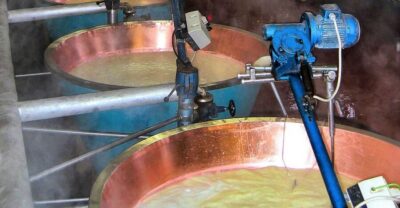
Cheese, Ham, & Balsamic Vinegar Tour with Tastings
Read our review →