
Reviewed · CHEESE AND CHARCUTERIE BOARDS
MONTALCINO : Wine Tasting with Tuscan Cold Cuts and Cheese
Montalcino is best understood one sip at a time, and this small winery visit gives you that chance. You taste Brunello and Rosso di Montalcino, learn how the wines are made, and sample one directly from the wooden barrel before settling in with Tuscan meats and cheese.
I like the intimate group size of 10, and I like that the tasting includes more than wine: warm homemade bread, local olive oil, cured meats, and cheese make this feel like a taste of daily Tuscan life. The main drawback is practical: there is no hotel pickup, and the two-hour visit is a fairly compact introduction rather than a full winery day.
Key points at a glance
- Barrel tasting: Try wine directly from a wooden barrel, a simple but memorable way to see how the finished bottle is still taking shape.
- Three local wines: Taste Brunello, Rosso di Montalcino, and a third local wine during a guided session.
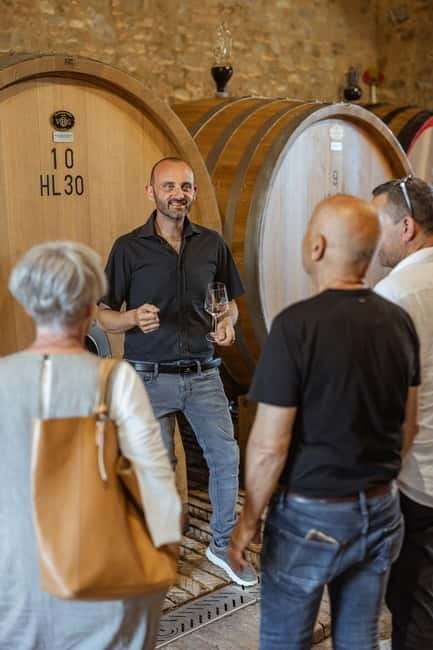
- Family-run setting: Gianni leads the experience with clear, lively explanations when he is your guide, and his family runs the vineyard.
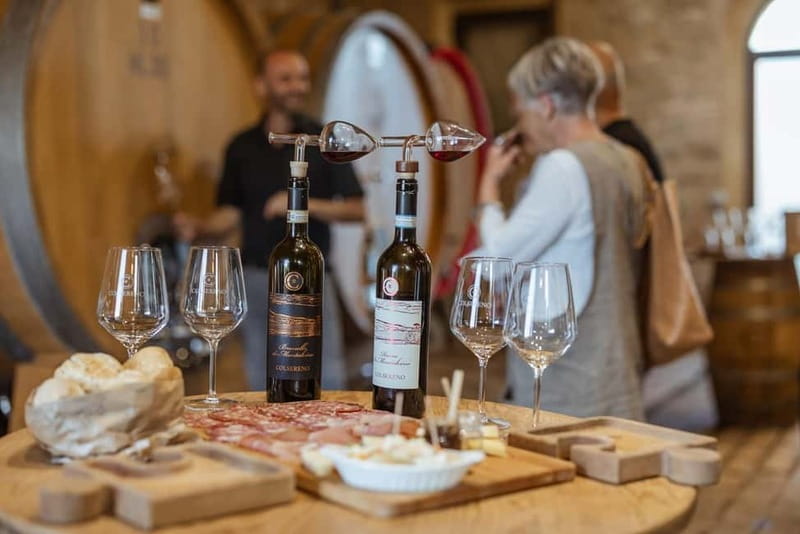
- Tuscan food pairing: Warm homemade bread, Tuscan olive oil, cured meats, and cheeses turn the tasting into a light meal.
- Small group format: With no more than 10 people, you can ask questions without shouting across a crowded cellar.
- Rural setting: A short walk through the vineyard brings the famous Brunello country into view.
Why this Montalcino tasting works so well
At $46 per person, this is a good-value introduction to one of Tuscany’s most famous wine areas. You are not paying only for three small pours. The price also covers the winery visit, vineyard walk, barrel tasting, guide, bread and olive oil, and a platter of local food.
That matters in Montalcino, where a wine stop can easily become expensive if it focuses only on prestige bottles. Here, the food helps make the experience feel complete. You can taste the wine beside the products that belong on a Tuscan table, rather than treating each glass as a technical exercise.
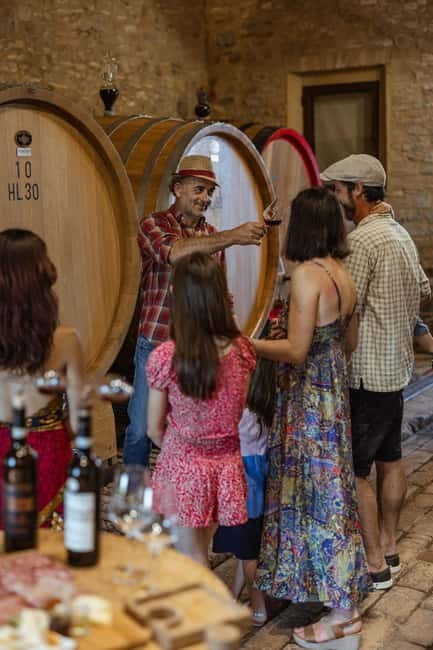
The small group also improves the value. A maximum of 10 people gives you a better chance to ask about grape growing, aging, food pairings, and the differences between Brunello and Rosso di Montalcino. You are not simply moved from one glass to the next.
The timing is another advantage. Two hours is long enough to cover the basics and enjoy the food without consuming an entire day. If you are touring the Val d’Orcia by car, this can fit neatly between a visit to Montalcino and another stop in the countryside.
More Cheese and Charcuterie Boards in Italy
- Taste of Lake Como: 4 Wines Paired with Local Cheese Charcuterie
★ 5.0 · 197 reviews - Lazise: Wine Tasting with Charcuterie and Cheese Board
★ 4.8 · 139 reviews - Winery tour and wine, cheese & charcuterie tasting
★ 5.0 · 44 reviews
Arriving at Wine Resort Colsereno
You need to make your own way to the meeting point. Hotel pickup and drop-off are not included, so this is easiest for people with a rental car or another planned way to reach the winery.
Pay close attention to the navigation instructions. The directions specifically tell you to use Google Maps and not other map services. That is the sort of small detail worth following in rural Tuscany, where different mapping systems can place a winery entrance or access road incorrectly.
The exact starting time depends on availability when you book. Since the visit includes a vineyard walk and food tasting, allow yourself enough time to arrive without rushing. Being late to a small wine visit can affect the whole group more than being late to a large city attraction.
Wine Resort Colsereno provides a family-run setting rather than the feel of a large commercial operation. The setting is part of the appeal. You come to a working wine property, not just a shop with bottles arranged for sale.
The vineyard walk and Brunello country
The experience begins with a leisurely stroll through the vineyard. This is not a strenuous hike, and the point is not exercise. The walk gives you a physical sense of where the wine starts.
The scenery around Montalcino is one of the reasons people come to this part of Tuscany. Rows of vines, open countryside, and the wider Brunello area put the bottles into context. You are tasting a wine tied closely to its place, and seeing the vines makes that connection easier to understand.
I like this part because it slows the pace before the tasting begins. You can look at the setting, ask initial questions, and shift from sightseeing mode into wine mode. It also gives the guide a natural opening to explain traditional production methods and the work involved in making high-quality wine.
The walk does not replace a full agricultural tour. The available details do not promise an extensive explanation of every vineyard task or a long visit to the cellar. Think of it as a useful introduction before the main tasting, not a half-day wine-production course.
Warm bread, Tuscan oil, and the first taste
The food begins with warm homemade bread and Tuscan olive oil. This is a small serving, but it sets the tone for the rest of the visit. Good olive oil is easier to appreciate when you taste it simply, without a heavy sauce or a complicated dish.
The bread also gives you something to eat before the wines arrive. That is helpful if you have come directly from sightseeing and do not want to taste on an empty stomach.
Do not treat this as a full lunch. The bread, cured meats, and cheeses make a generous tasting accompaniment, but the experience is still built around wine. If you need a substantial meal, plan one separately.
The food pairing has a practical purpose beyond hospitality. Salt, fat, and texture change how wine tastes. Cured meat can make a wine seem fruitier or softer, while cheese can bring out different notes in the glass. You do not need advanced wine knowledge to notice these changes.
More Wine and Cheese Tastings in Italy
- Authentic Farm Tour with Pizza, Cheese, Wine & Limoncello Tasting
★ 5.0 · 698 reviews - Cooking class with Pasta, mozzarella and Tiramisu with wine
★ 5.0 · 549 reviews - Amalfi: Make Fresh Pasta, Mozzarella & Tiramisù with wine
★ 5.0 · 503 reviews - Amalfi: Make Fresh Pasta, Mozzarella, & Tiramisù with Wine
★ 5.0 · 305 reviews
Three wines, including Brunello and Rosso di Montalcino
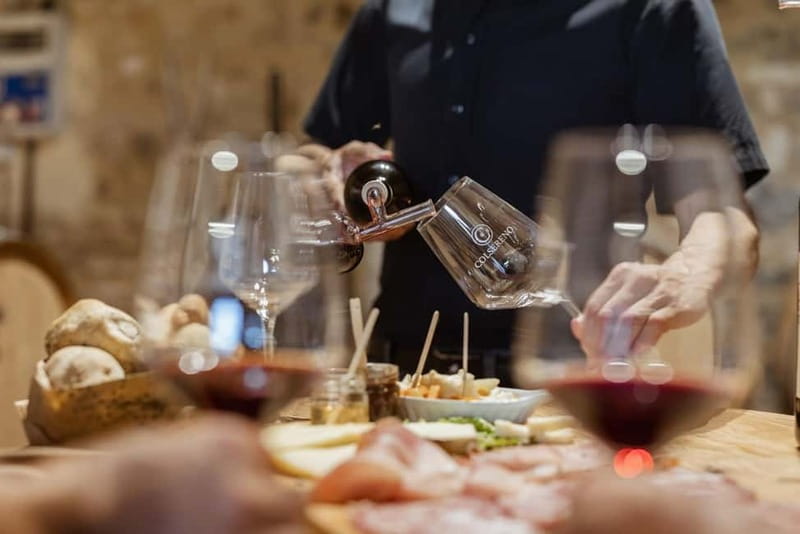
The guided tasting features three local wines. The two names to expect are Brunello di Montalcino and Rosso di Montalcino, along with a third wine from the property or local area.
Brunello is the famous bottle from Montalcino, and this tasting gives you a chance to consider why it has such a strong reputation. The guide explains what makes these wines distinctive and how traditional methods shape their character.
Rosso di Montalcino gives you a useful comparison. It comes from the same celebrated wine area, but it is presented as a separate style from Brunello. Tasting both in the same sitting helps you compare rather than rely on a label or price tag.
The guide also discusses the techniques used to produce the wines. This is where the experience can be especially helpful for a first visit to Montalcino. You learn not only what is in your glass, but also how the winemaking process affects the result.
When Gianni leads the session, expect an easygoing style with clear explanations and plenty of room for questions. He is described as running the vineyard with his family and bringing real enthusiasm to the work. The language options are Italian and English.
The exact wines can vary, so you should not assume that every bottle shown in photographs or discussed before your visit will be part of your tasting. The confirmed structure is three local wines, including Brunello and Rosso di Montalcino.
The wooden barrel tasting
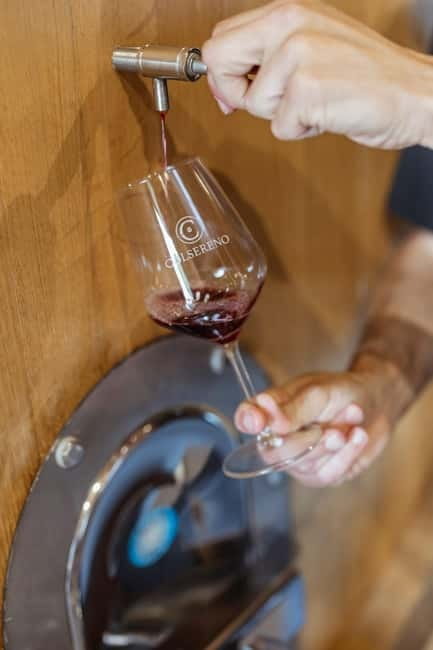
The most unusual part of the visit is tasting wine directly from the wooden barrel. You are not sampling a finished bottle with a polished label. You are getting a look at wine while it is still aging and changing.
This helps explain why wine can taste different at several stages of production. A barrel sample may seem less settled or less rounded than a bottled wine. That is not a flaw. It is a glimpse at a work in progress.
For anyone curious about the making of Brunello, this is the detail that gives the visit extra value. Many tastings explain aging in general terms. Here, you actually taste the product in the barrel, which makes the process easier to remember.
The barrel pour is also a good reason to ask questions. Ask how the wine changes as it ages, what the producer watches for, and how the barrel sample compares with the bottled wines. The guide can explain the property’s traditional methods in a way that connects directly to what is in your glass.
Tuscan cured meats and cheeses on the table
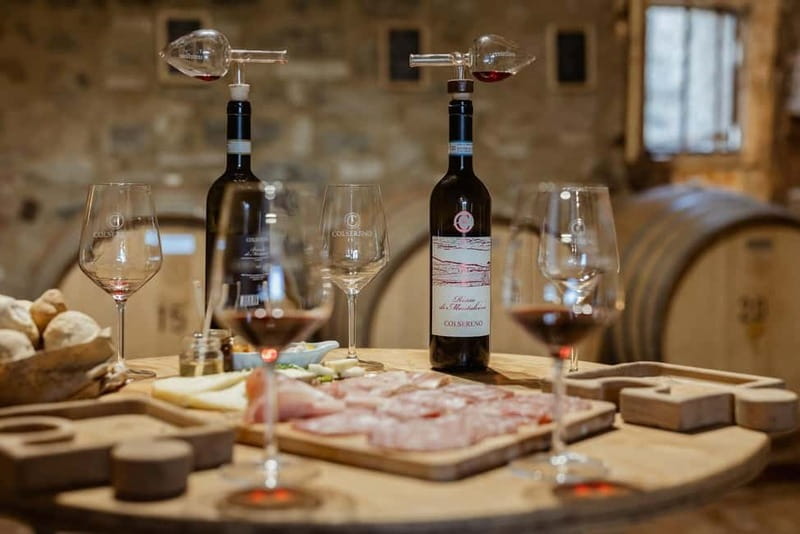
The platter of Tuscan cured meats and cheeses is not just decoration beside the wine. It gives the tasting a local food identity and helps turn two hours of sipping into a relaxed social meal.
Expect a selection of cured meats and cheeses rather than a detailed cooking class. The available information does not specify every item, so exact products may vary. That is normal for a small property working with seasonal or local supplies.
I would approach the platter as a chance to test combinations. Taste a little food first, then take another sip of wine. Notice which pairing you prefer. There is no need to use formal tasting language. Your own reaction is more useful than trying to guess the answer the guide wants.
The food also makes this a good choice for couples, friends, and families with adult children who want more than a formal tasting. It offers enough substance to keep the visit comfortable, while the wine remains the main subject.
What the guide adds to the visit
A wine tasting can be pleasant but forgettable if the person leading it simply names the bottles. This experience puts clear explanations at the center.
Gianni is the guide name associated with the experience, and when he leads, his role appears to go beyond pouring wine. He explains the region, the Brunello production process, and the family’s work at the vineyard. His style is described as lively and passionate, which suits a small group better than a stiff lecture.
The language choices are Italian and English. If you have detailed questions about winemaking, it is useful to think of them before arriving. Ask about the difference between Brunello and Rosso di Montalcino, the purpose of barrel aging, and the traditional methods used at the property.
The small group limit of 10 is important here. You can listen closely, but you also have a realistic chance to ask follow-up questions. That personal contact is one of the better reasons to choose this over a large winery stop.
There may also be a friendly family dog around the property. It has become part of the warm welcome and even provides a memorable goodbye, but this should not be treated as a guaranteed feature of every visit.
Timing, price, and practical limits
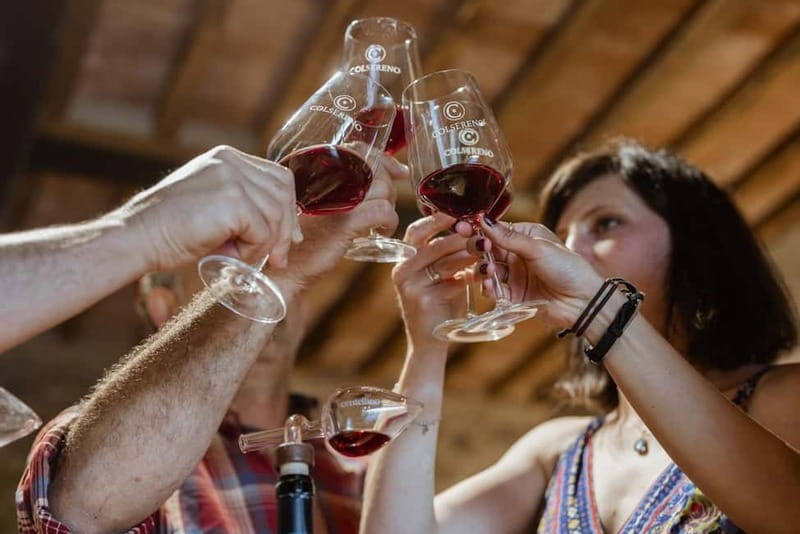
The two-hour duration is one of the clearest strengths. It is long enough for the walk, explanations, three wines, barrel sample, and food, but short enough to fit into a day of sightseeing.
The tradeoff is that you will not receive every possible winery experience in two hours. There is no promise of a full production tour, a large meal, or a long session with many wines. If you want an all-day wine program, you need a different type of booking.
At $46, the cost is reasonable for Montalcino. You receive wine, food, a guide, and access to the property rather than paying for a tasting alone. The value is strongest if you appreciate the setting and explanations as much as the drinks.
There is free cancellation up to 24 hours before the start time, and you can reserve now while paying later. Those terms help if your Tuscan route may change, though you still need to confirm the available start times before booking.
The experience is not suitable for people over 95. No other restriction is given, so the main practical questions are how you will reach the winery and whether a two-hour tasting suits your day.
Who should book this Montalcino experience
I would choose this visit if you want a focused introduction to Brunello without giving up half a day. It suits you especially well if you enjoy small family-run properties, local food, and explanations that connect the bottle to the vineyard.
It is also a good fit for first-time wine tasters. You can learn the basics without needing to recognize aromas or understand technical wine terms before you arrive.
Experienced wine drinkers may enjoy the barrel sample and the chance to compare Brunello with Rosso di Montalcino. The session is not built as a collector’s tasting or a private vertical tasting, so keep your expectations at the right level.
I would be more cautious if you need hotel transportation, want a substantial lunch, or prefer a large winery with an extensive cellar tour. The visit is compact, personal, and food-focused.
Should you book Wine Resort Colsereno?
Book it if you want a relaxed, small-group taste of Montalcino with real local food and a chance to sample wine from the barrel. The combination of Brunello, Rosso di Montalcino, homemade bread, olive oil, cured meats, cheese, and vineyard views gives you a lot for two hours and $46.
Skip it if getting to the winery will be difficult, or if you are searching for a long technical tour with a large number of wines. For most visitors building a day around Montalcino, though, this is a sensible and enjoyable stop, especially when Gianni is leading the conversation.
FAQ
How long does the wine tasting last?
The experience lasts two hours, including the winery visit, vineyard walk, guided tasting, barrel sample, and food.
Which wines will I taste?
You will taste three local wines, including Brunello di Montalcino and Rosso di Montalcino. The third wine is not specified.
Can I taste wine directly from the barrel?
Yes. Tasting directly from a wooden barrel is included.
What food is included?
You receive warm homemade bread with Tuscan olive oil, plus a platter of Tuscan cured meats and cheeses.
Is transportation from my hotel included?
No. Hotel pickup and drop-off are not included. You should use Google Maps to reach the meeting point.
What languages are available?
The live guide can conduct the experience in Italian or English.
New cheese trips in Italy
- Wine Tasting with Cured Meats & Cheeses in Florence★ 5.0 · 2 reviews
- Vico Equense: Tour in the dairy “Mozzarella Experience”★ 5.0 · 19 reviews
- Turin: Gastronomy tasting through oil, wine and cheese★ 5.0 · 2 reviews
- From Parma/Cinque Terre: Truffle & Parmesan Picnic (Tasting)★ 5.0 · 2 reviews
- Tuscany: Ripalte Design Winery Wine and Cheese Tasting Tour★ 4.7 · 15 reviews
- The Valpolicella food & wine driving tour: cheese factory+ winery★ 5.0 · 6 reviews
- Full Day Prosecco and Cheese Tasting from Venice★ 5.0 · 9 reviews
- Prosecco Hills Wine and Cheese Gourmet Discovery★ 5.0 · 6 reviews
Cheese and Charcuterie Boards, compared.
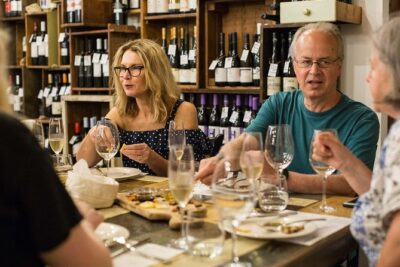
Hungarian Wine Tasting (with Cheese and Charcuterie) in Budapest
Read our review →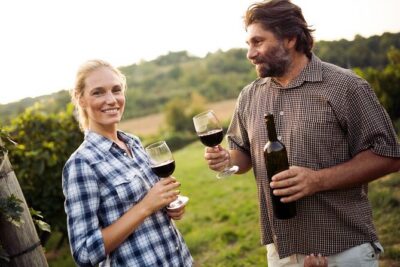
Full-Day Group Wine Tour (with cheese and charcuterie) in Niagara-on-the-Lake
Read our review →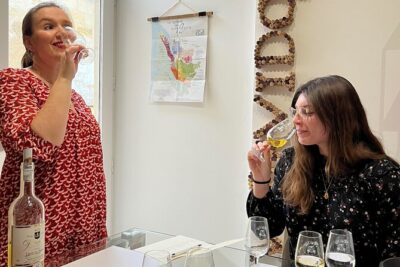
Tasting of 6 Bordeaux wines and pairing charcuterie & cheese
Read our review →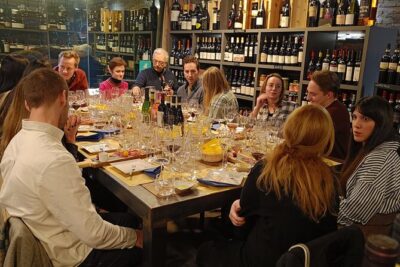
Taste of Lake Como: 4 Wines Paired with Local Cheese Charcuterie
Read our review →
Wine Masterclass with Cheese and Charcuterie Board
Read our review →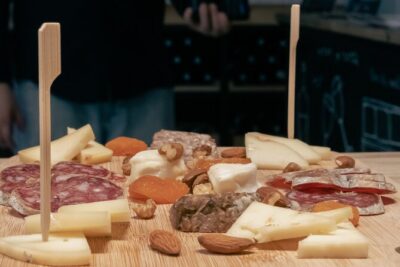
Introduction to Bordeaux wines paired with cheeses & charcuterie
Read our review →
Between the Lines Cheese and Charcuterie Picnic
Read our review →Browse the lists this tour appears in