
Reviewed · CHEESE AND CHARCUTERIE BOARDS
Introduction to Bordeaux wines paired with cheeses & charcuterie
The most useful thing about this Bordeaux tasting is its clear regional comparison. In about an hour, you taste a white wine, then two reds, one from the Left Bank and one from the Right Bank, including a Bordeaux grand cru. That gives you a quick map of Bordeaux’s major styles without sending you out to the vineyards.
I like the small-group setting, with a maximum of 12 people, and I like the practical teaching. You learn how to taste wine, not just what is in your glass. The cheese, charcuterie, baguette, water, and printed notes are included too. The main catch is the short format. Some sessions feel rushed, and the food may not be paired in detail with every single wine. One English-filtered booking also turned out to be conducted in French, with some English help.
Key points to know
- Three distinct wines: Start with white wine, then compare Left Bank and Right Bank reds, including one Bordeaux grand cru.
- A useful first lesson: Learn terroir, grape varieties, appellations, and the basic steps of tasting without needing previous wine knowledge.
- A central Bordeaux address: Meet at 2ter Rue Mably, two steps from the Grand Théâtre.
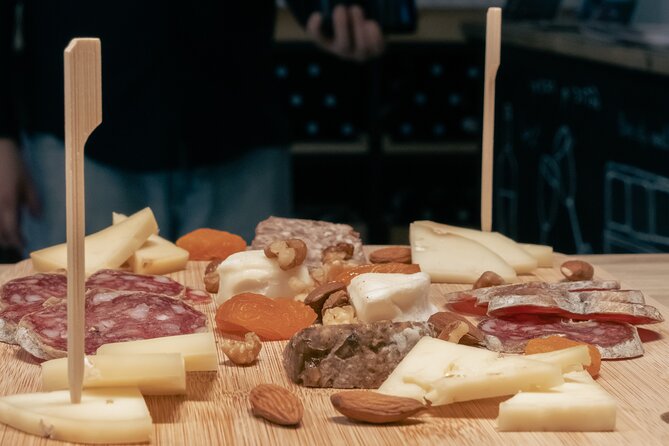
- Food is included: Enjoy local cheeses, cold cuts, fresh baguette, and water at no extra charge.
- Personal attention: The group is limited to 12 people, and the host takes questions throughout the class.
- Plan for a brisk hour: The listed duration is about one hour, though some sessions run closer to 1.5 hours.
Why this Bordeaux tasting works as a first lesson
Bordeaux wine can seem needlessly complicated at first. The labels often emphasize the estate, village, or appellation rather than the grape variety, and the city’s famous names can make beginners feel they need a private dictionary before ordering a bottle.
This workshop gives you the basic tools first. You learn what terroir means, how grape varieties shape a wine, and why an appellation matters. The host then connects those ideas to the wines in front of you. That order is helpful because you are not trying to memorize facts without tasting their effect.
I especially like the Left Bank and Right Bank comparison. Bordeaux is split by the Gironde estuary and its connected rivers, and the two sides are known for different blends and wine traditions. You will not become a Bordeaux specialist in one sitting, but you should leave with a better sense of why two bottles from the same broad region can taste quite different.
The teaching is designed for beginners, but it does not shut out people who already know a little about wine. Hosts such as Antoine, Toku, Toco, Anna, Vincent, and Helene have been praised for making the material approachable and taking questions. The strongest sessions seem to depend partly on the individual host, but the format gives a good presenter plenty of room to explain, joke, and adjust the pace.
More Cheese and Charcuterie Boards in France
- Tasting of 6 Bordeaux wines and pairing charcuterie & cheese
★ 5.0 · 199 reviews - Bordeaux: Wine Masterclass with Cheese and Charcuterie Board
★ 4.9 · 184 reviews - Bordeaux Wines Masterclass paired with cheeses & charcuterie
★ 5.0 · 110 reviews
What happens at 2ter Rue Mably
You meet at 2:30 pm at 2ter Rue Mably, close to the Grand Théâtre in central Bordeaux. This is a convenient place to fit into a day of sightseeing because the activity begins and ends at the same address. You do not need to spend the afternoon getting to a distant vineyard.
The setting is between a wine bar and a small oenology class. That description tells you what to expect. This is not a grand chateau visit, a vineyard walk, or a formal restaurant meal. It is an indoor tasting lesson with a personal, social feel.
The room is small and personable. That helps the host speak directly with the group, but it also means comfort can vary. One person found the space warm on a very hot day, even with fans running. If you are sensitive to heat, this is worth keeping in mind when choosing the time of year.
The maximum group size is 12. That is small enough for questions and discussion, and it is a better fit for learning than a large tasting room. The private format also suggests a more direct exchange with the host, though the wording about a private tasting should not lead you to expect a one-party booking in every case. Ask questions early if you want help with a particular bottle or region.
The first glass teaches you how to taste
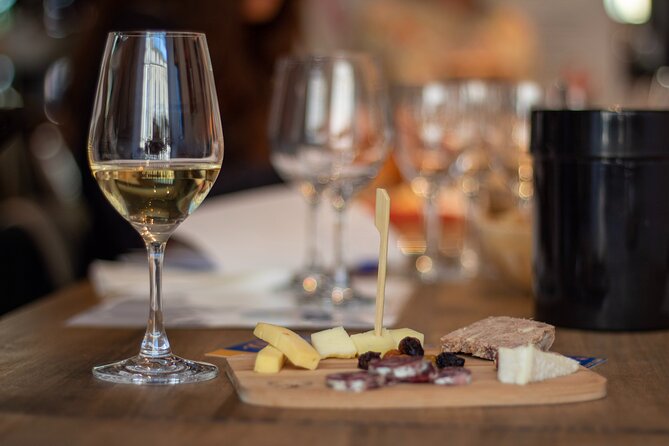
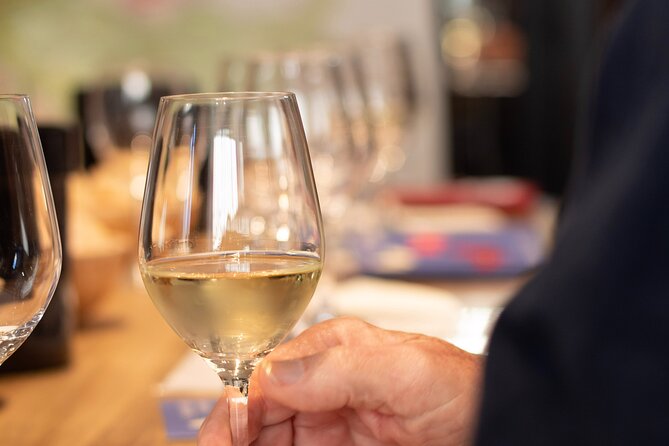
The tasting begins with a white wine. This is not simply a warm-up glass. It is used to demonstrate the main steps of wine tasting through a standard method used in the wine trade.
You learn to look at the wine, smell it, and taste it with more purpose. For a first-time taster, that structure is valuable because it replaces vague comments about wine with a simple process you can repeat at home.
The white wine also gives your palate a gentler starting point before the red wines arrive. The host can use it to explain freshness, aroma, texture, and balance in a way that is easier to follow before moving into the more layered comparison between Bordeaux’s two banks.
The sensory element adds some fun. One session included smell-based challenges, which can help you pay attention without turning the class into a lecture. You will still hear history and regional detail, but the tasting itself remains central.
Left Bank, Right Bank, and one grand cru
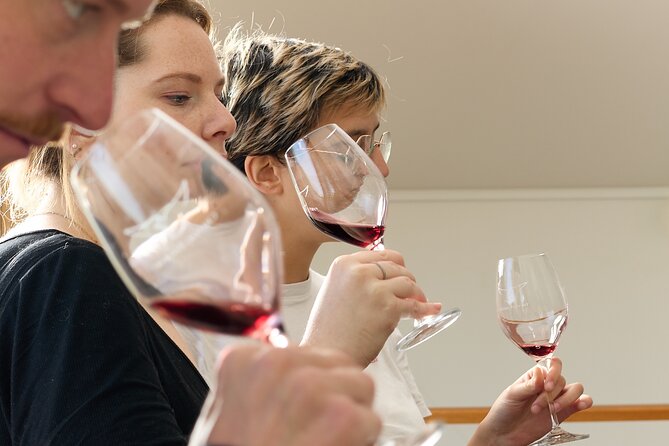
The two red wines are the heart of the class. One comes from the Left Bank and the other from the Right Bank. One is a Bordeaux grand cru, giving you a chance to taste a wine with a higher classification and discuss what that label does and does not tell you.
This is a smart use of limited time. A long lecture about the Médoc and Libournais can blur together, but two glasses placed side by side make the regional differences easier to remember. The host explains the major red wine areas, including the Médoc on the Left Bank and the Libournais on the Right Bank.
Do not expect a full technical study of every Bordeaux appellation. The tasting is an introduction, not a sommelier exam. Its real value is helping you recognize the broad pattern of Bordeaux wine, then giving you enough vocabulary to ask better questions at a wine shop or restaurant.
You can also ask about bottles you plan to buy during your trip. The hosts are there to demystify the labels and explain the region, and several sessions included useful suggestions for further outings. That makes the class more than a set of three samples. It can help shape the rest of your Bordeaux wine plans.
More Wine and Cheese Tastings in France
- Professional – Bordeaux Wine and Cheese Tasting with a walking tour
★ 5.0 · 218 reviews - Bordeaux Gourmet Experience: Cheese & Wine Tasting
★ 4.6 · 169 reviews - Bordeaux Gourmet Experience : tasting of French cheeses & wines
★ 4.5 · 71 reviews - Bordeaux Afternoon Food Tour : Sweets, Wine and Cheese
★ 5.0 · 38 reviews
Cheese, charcuterie, and what the pairing really means
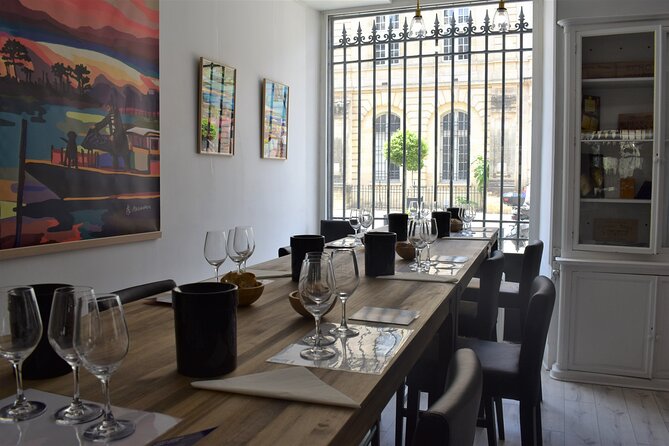
A board of local cheeses and charcuterie comes with the tasting, along with fresh baguette and water. This is enough to make the session feel like a small French food experience rather than three isolated pours.
The food also gives the host a chance to explain basic wine and food pairing. You can see how salt, fat, texture, and intensity affect the way a wine tastes. That lesson is practical, especially if you plan to order wine with a meal later in France.
Keep your expectations sensible. The board is included as a tasting accompaniment, not as a full lunch. One person also found that the cheeses and meats were not paired methodically with every wine. If you want a detailed match for each item, ask the host as you go. The format seems more focused on tasting and conversation than on a formal sequence of separate food pairings.
A food allergy was accommodated during one session, which is encouraging. Still, you should mention any dietary need when booking or at the start rather than assuming the standard board will suit you.
The hosts make the difference
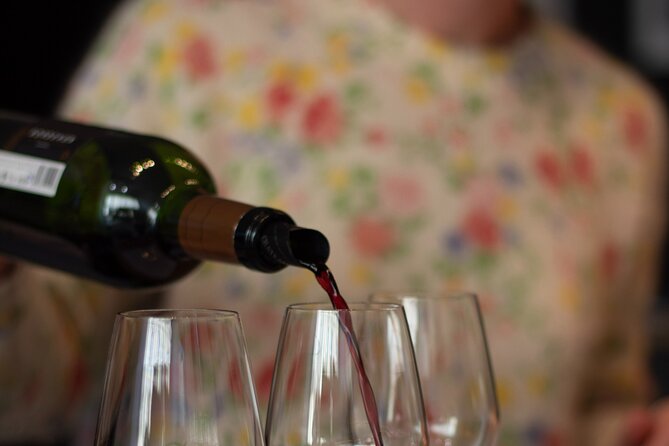
The best part of this experience is the human element. Antoine has been especially praised for making the class amusing, interactive, and useful for people with different levels of wine experience. Anna was described as a friendly host who added sensory challenges, while Toku and Toco were praised for clear explanations, humor, and helpful answers.
Vincent led a relaxed tasting for one small group, and another session with Helene included strong commentary. These names do not guarantee who will lead your class, but they give you a sense of the teaching style the provider aims for.
A good host can explain Bordeaux without making you feel foolish for asking a basic question. That matters here. Wine classes sometimes become performances by the expert, with the audience left behind. This one is intended to adapt to beginners and more experienced tasters, and the best sessions appear to do exactly that.
Language deserves a practical note. English is offered, and English-speaking participants have had sessions led fully in English. However, one booking that used an English filter was conducted mainly in French, with the facilitator making an effort to include English. If precise English instruction is essential to you, confirm the language before the session begins. A translation app may help, but it is not an ideal substitute for a clear wine lesson.
Is $35.09 good value?
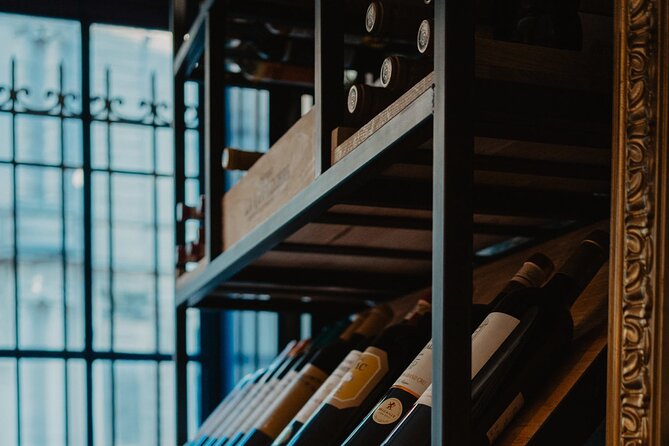
At $35.09 per person, the price is fair for central Bordeaux. You receive three wines, instruction from a wine expert, a cheese and charcuterie board, baguette, water, and printed information. You also avoid the cost and travel time of reaching a vineyard outside the city.
The value is strongest if you are new to Bordeaux wine or short on time. A vineyard excursion can offer more scenery and a longer visit, but it also takes much of a day. This workshop gives you a usable introduction in the city, leaving you free to visit museums, walk along the river, or dine nearby afterward.
The price is less compelling if your main goal is a large meal or a long tasting. The food is a snack board, and the wine portions are part of a lesson rather than an evening of drinking. A final glass of your favorite wine is not included, so do not expect the class to finish with an extra pour.
You may find the session runs a little beyond the listed one-hour duration. One account describes about 1.5 hours, while the official description gives approximately one hour. I would keep about 90 minutes free so you are not pressed for the next reservation.
Timing, comfort, and practical details
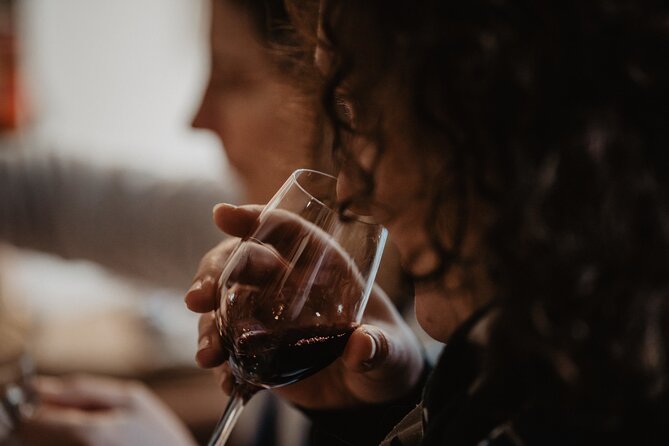
The start time is 2:30 pm, and the activity finishes back at the meeting point. The central location is near public transportation, and the meeting address is easy to combine with a day in Bordeaux’s historic core.
Confirmation is provided when you book, and mobile tickets are accepted. Service animals are allowed. The experience requires good weather, and if poor weather causes cancellation, you are offered another date or a full refund.
The cancellation rule is simple but firm. Cancel at least 24 hours before the local start time for a full refund. Changes or cancellations within 24 hours are not accepted for a refund.
The group limit of 12 is important. It keeps the discussion manageable, but the room may feel close if the group is full. On a warm day, comfort may be less reliable than the teaching. I would also arrive ready to participate rather than expecting a quiet tasting where you only listen.
Who should book this workshop?
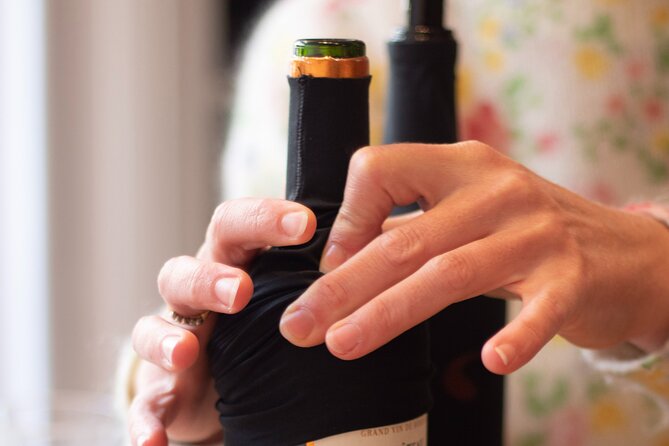
I would choose this for a first visit to Bordeaux, especially if you want a useful introduction before buying wine or visiting the wider region. It also suits couples, friends, solo visitors, and anyone who prefers a short city activity over a full-day excursion.
It is a good pick for beginners because no prior wine knowledge is required. It also works for people who already know the basics and want a quick refresher on Bordeaux’s two main red wine areas.
You may want something else if you want a vineyard setting, a large meal, extensive food pairings, or a slow tasting with many wines. The compact format favors clarity and access over depth. It is also not the best fit if you cannot follow some French and the English language is not confirmed in advance.
Should you book it?
Book this Bordeaux wine tasting if you want to understand the region quickly, taste three well-chosen styles, and learn in a friendly room near the Grand Théâtre. The Left Bank and Right Bank comparison is the strongest reason to go, and the included cheese and charcuterie make the $35.09 fee sensible.
Skip it if you want a full vineyard day or expect a substantial meal. For everyone else, this is a practical first step into Bordeaux wine, with enough regional detail to make your next bottle, restaurant order, or vineyard visit more rewarding.
FAQ
Where does the Bordeaux wine tasting begin?
The experience begins at 2ter Rue Mably, 33000 Bordeaux, France, near the Grand Théâtre. It ends back at the same meeting point.
What time does the tasting start?
The listed start time is 2:30 pm.
How many wines are included?
Three wine tastings are included: one white wine, one red from the Left Bank, and one red from the Right Bank. One of the reds is a Bordeaux grand cru.
Is food included?
Yes. A board with local cheeses and charcuterie is included, along with fresh baguette and water. Personal expenses are not included.
Is the experience offered in English?
English is offered, but the language should be confirmed before the session. One English-filtered booking was conducted mainly in French, with some English assistance from the facilitator.
How far in advance can I cancel for a full refund?
You must cancel at least 24 hours before the experience start time for a full refund. Cancellations or changes made less than 24 hours before the start are not refunded.
More Wine and Cheese Tastings in Bordeaux
- Blind Tasting: 4 Bordeaux Natural Wine + Cheese experience
★ 4.8 · 35 reviews - Wine Masterclass & Cheese Tasting Workshop in Bordeaux
★ 5.0 · 29 reviews - Bordeaux wines : tasting with 4 white wines and cheeses
★ 5.0 · 24 reviews - Tasting of Bordeaux White Wines Wine and Cheese Pairing
★ 5.0 · 10 reviews
More Cheese and Charcuterie Boards in Bordeaux
- Tasting of Bordeaux red wines, wine and charcuterie pairings
★ 5.0 · 24 reviews - Budapest: Wine, Cheese, and Charcuterie Tasting
★ 4.9 · 647 reviews - Hungarian Wine Tasting (with Cheese and Charcuterie) in Budapest
★ 5.0 · 531 reviews - Full-Day Group Wine Tour (with cheese and charcuterie) in Niagara-on-the-Lake
★ 5.0 · 349 reviews
New cheese trips in Bordeaux
- Wine Masterclass & Cheese Tasting Workshop in Bordeaux★ 5.0 · 2 reviews
- Tasting of Bordeaux White Wines Wine and Cheese Pairing★ 5.0 · 10 reviews
- Wines and Cheeses: Learning to combine perfectly★ 4.5 · 7 reviews
- Highlights of Bordeaux Walking Tour + Wine & Cheese Tasting★ 4.5 · 5 reviews
- Wine Masterclass & Cheese Tasting Workshop in Bordeaux★ 5.0 · 29 reviews
- Tasting of Bordeaux red wines, wine and charcuterie pairings★ 5.0 · 24 reviews
- Bordeaux Food Tour : Sweets, Cheese & Wine pairing workshop★ 5.0 · 8 reviews
- Bordeaux Gourmet Experience : tasting of French cheeses & wines★ 4.5 · 71 reviews
Cheese and Charcuterie Boards, compared.
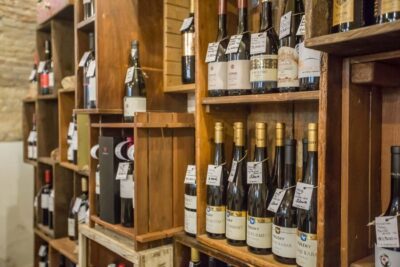
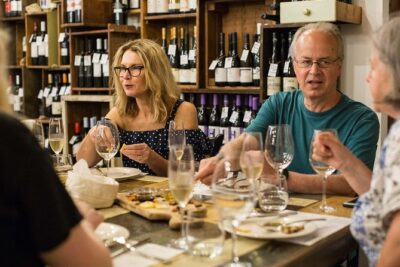
Hungarian Wine Tasting (with Cheese and Charcuterie) in Budapest
Read our review →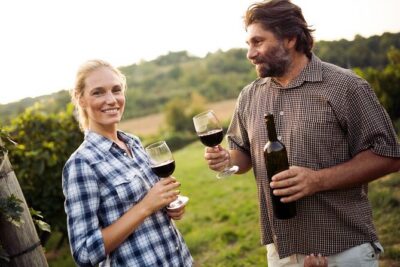
Full-Day Group Wine Tour (with cheese and charcuterie) in Niagara-on-the-Lake
Read our review →
Tasting of 6 Bordeaux wines and pairing charcuterie & cheese
Read our review →
Taste of Lake Como: 4 Wines Paired with Local Cheese Charcuterie
Read our review →
Wine Masterclass with Cheese and Charcuterie Board
Read our review →
Between the Lines Cheese and Charcuterie Picnic
Read our review →
Lazise: Wine Tasting with Charcuterie and Cheese Board
Read our review →Browse the lists this tour appears in