Reviewed · CHEESE WALKING AND FOOD TOURS
Paris: Montmartre Cheese, Wine & Pastry Guided Walking Tour
Montmartre is at its best when you slow down and let the neighborhood unfold between bites. This three-hour walk links eight food stops with cobbled lanes, old cafés, Place du Tertre, Le Moulin Rouge, and the climb toward Sacré-Coeur. You are not simply eating your way uphill. You are learning why this former village attracted artists, singers, and writers.
I like the mix of serious French food and local history, plus the chance to visit small food shops rather than only famous tourist addresses. I also like the gentle route to Sacré-Coeur, which can avoid the most punishing staircase approach. The main consideration is the price, $127 per person, and the walking: this is not a good fit for wheelchair users, children under four, or anyone hoping to sit in one place for three hours.
Key points at a glance
- Eight tastings in three hours: Expect a spread of French pastries, homemade chocolate, cheese, charcuterie, baguette, and wine.
- A food tour with a story: Guides such as Oscar, Julie, Arthur, Marie, and Catherine connect the dishes to Montmartre’s artists, buildings, and daily life.
- A slower route to Sacré-Coeur: You walk through the neighborhood instead of treating the basilica as a quick photo stop.
- Small-group atmosphere: The format leaves room for questions and personal tips, including food suggestions for the rest of your Paris stay.
- A proper Montmartre introduction: The route includes Place du Tertre, cafés, private mansions, vineyards, windmills, and Le Moulin Rouge.
- Come hungry but not starving: The tastings can add up to a substantial meal, especially when the cheese and charcuterie stop arrives.
Why this Montmartre food walk works
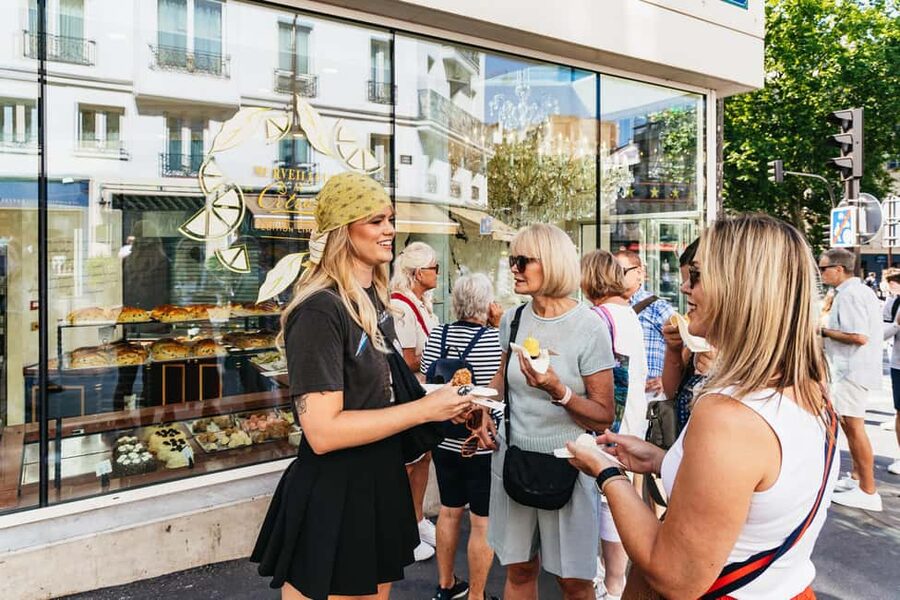
The clever part of this tour is its balance. Montmartre can easily become a checklist of Sacré-Coeur, Place du Tertre, and a quick photograph outside Le Moulin Rouge. Food gives you a reason to pause. The guide gives the streets a story.
You may start near Blanche Metro station, where the meeting point is outside the Starbucks and pharmacy. From there, the route works uphill through Montmartre, with stops along the way. The exact food selection can vary, but the format is clear: sweet and savory tastings paired with French wine, spread across local shops and selected stops.
I particularly like this approach for a first visit. A guide can point out the difference between a street built for tourism and one still used by people who live and shop in the area. You get a taste of Montmartre’s food culture while also seeing why the neighborhood became famous.
The small-group setup matters. You can ask about a pastry, a wine, a building, or a restaurant recommendation without shouting across a large crowd. Guides including Oscar, Julie, Arthur, Marie, Catherine, Elliott, Manon, and Emeline have been praised for mixing food knowledge with stories about Paris and practical advice for the rest of your visit.
More Cheese Walking and Food Tours in France
- Private Montmartre Food Tour with Wine, Cheese & Pastries
★ 5.0 · 1,027 reviews - Paris Le Marais Food Tour With 10+ Tastings, Cheese, Wine & More
★ 5.0 · 985 reviews - Paris St Germain Food Tour with Cheeses, Foie Gras, Wines & More
★ 5.0 · 401 reviews
Starting at Blanche and finding the old Montmartre
Blanche is a useful starting point because Le Moulin Rouge gives you an immediate landmark. The neighborhood here is busy and theatrical, but the tour soon moves beyond the obvious sights.
Your guide introduces Montmartre as more than a postcard district. The area is associated with Toulouse-Lautrec, Pablo Picasso, Edith Piaf, and many other artists and performers. Their connection to Montmartre is not treated as a dry list of names. The guide uses streets, cafés, buildings, and local food to explain the atmosphere that drew them here.
This is where the walking format earns its keep. You might pass a café terrace, a quiet lane, or a private mansion while hearing how the neighborhood changed over time. The route gives you context before you reach the most crowded sights.
The streets are cobbled and the route includes uphill walking. Wear shoes with firm soles, not delicate city sandals. The pace is generally described as manageable, and one guide, Arthur, adjusted the speed for a slower member of the group and used a less strenuous route toward Sacré-Coeur. Still, you should expect real walking, not a tasting tour with short hops between parked vehicles.
Pastries, chocolate, and the sweet side of Paris
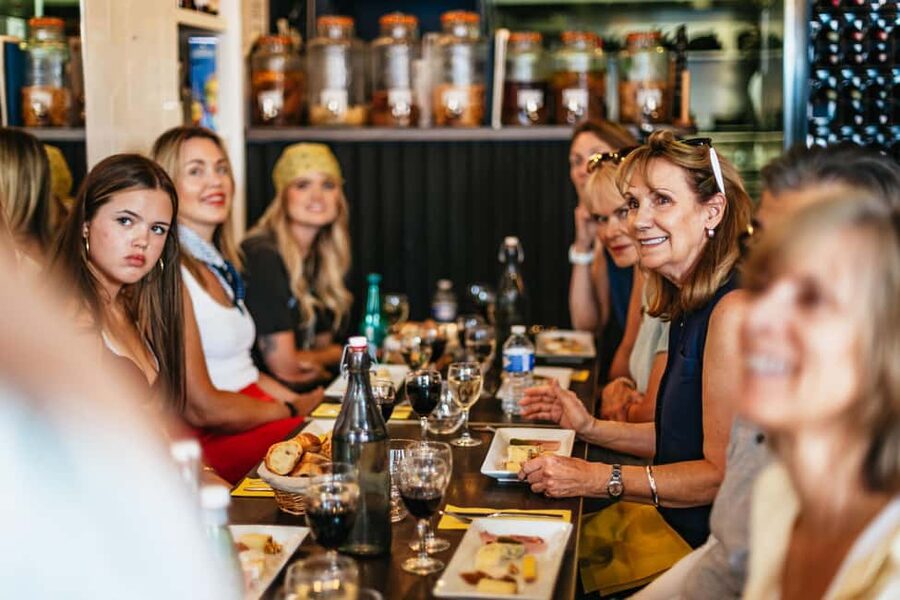
The pastry stops are one of the tour’s strongest features. You may sample several different French pastries rather than receiving one oversized dessert. That variety lets you compare textures and styles, and it keeps the meal from becoming too heavy too early.
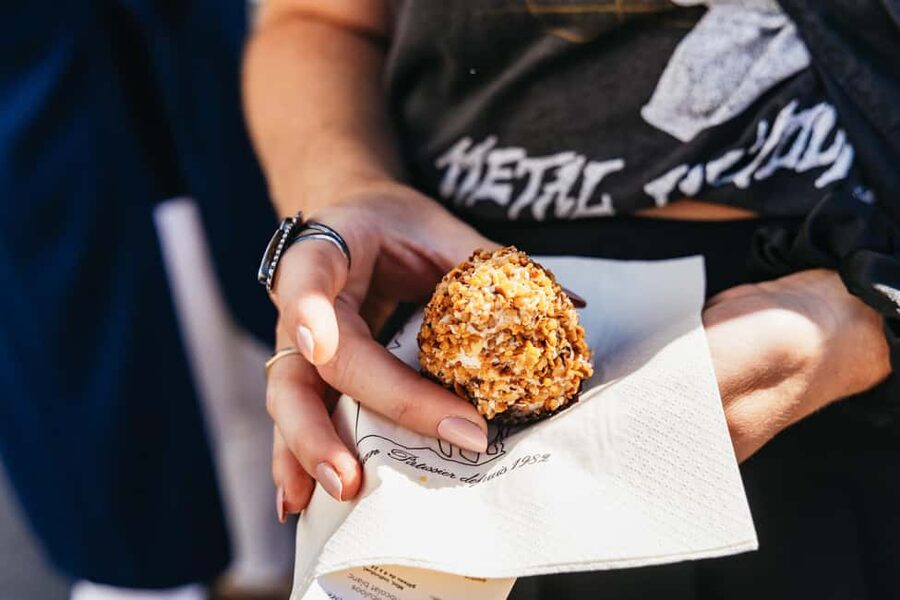
Specific tastings described on the route include croissants, éclairs, macarons, and merveilleux. A merveilleux is a light meringue-based sweet with a soft, melting texture. It is a useful reminder that French pastry is not limited to the familiar croissant and macaron.
The chocolate stop adds another layer. Homemade chocolate candies and single-source chocolate have appeared among the tastings, giving the guide a chance to explain how flavor changes with the origin and handling of the cocoa. You do not need to be a pastry expert. The point is to notice what you like and learn how to recognize quality.
One useful tip is to eat only a light breakfast. The portions are described as sensible at individual stops, but the food keeps coming. By the cheese and charcuterie stop, you may have had enough to replace dinner, especially if you also sample wine.
For me, this is a better arrangement than one giant meal. A croissant or pastry eaten while walking feels tied to the neighborhood. It also leaves room for the savory foods that follow.
Cheese, charcuterie, baguette, and French wine
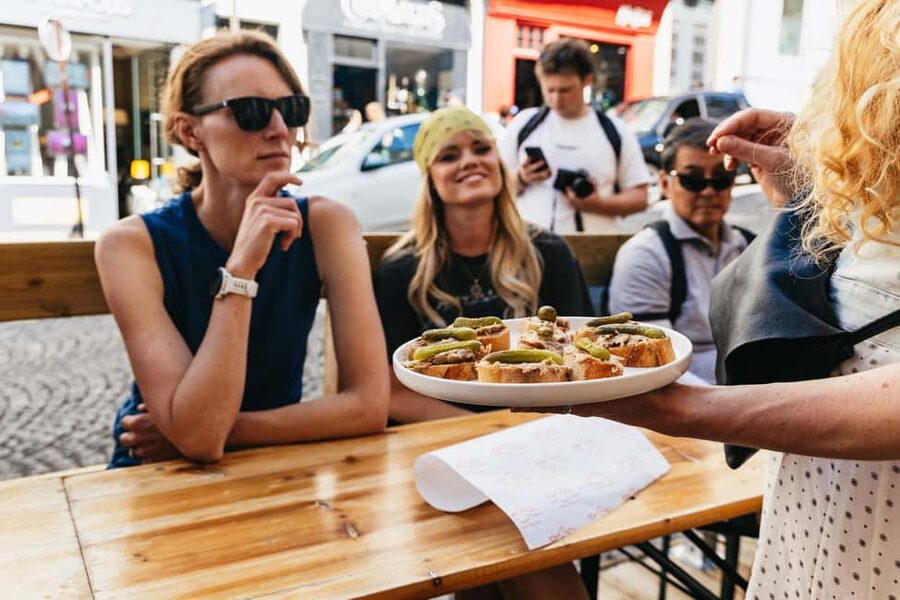
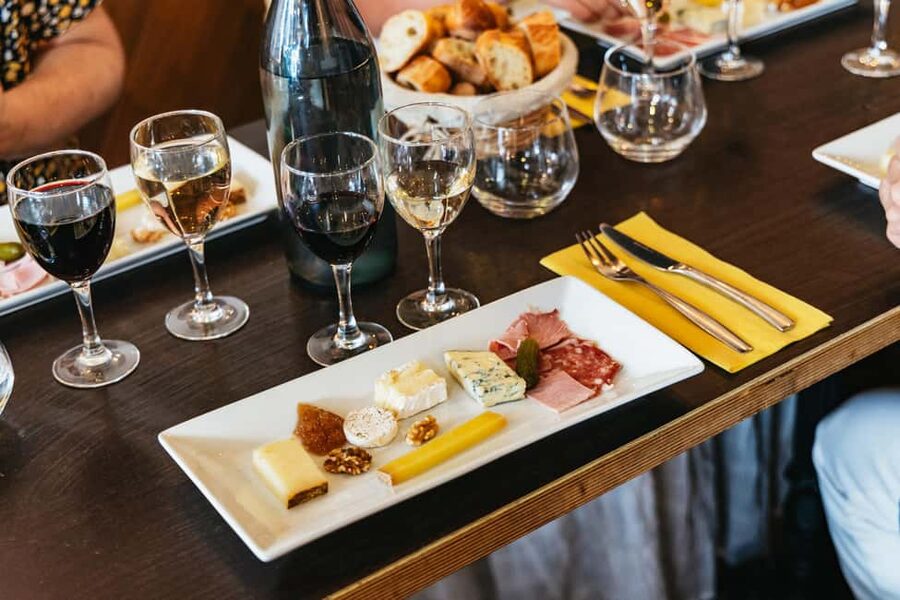
The savory part gives the tour more substance. Expect selected cheeses, charcuterie, baguette, and wine, with examples such as pork rillettes and olive tapenade appearing in the tasting mix. These are not just filler between pastries. They show how French meals build from bread, preserved meats, spreadable foods, and cheese.
The sit-down cheese and charcuterie stop is especially useful because you can slow down and focus on what is in front of you. Guides explain the cheeses and wines, and you have time to ask questions. This break also gives your feet a rest after the first stretch of cobbled streets.
The wine is paired with the food rather than treated as a separate bar visit. That makes the tasting more approachable for people who know little about French wine. You can pay attention to how the wine works with cheese or charcuterie without needing a long technical lesson.
If you do not drink wine, check the current arrangements before booking, since the advertised experience centers on wine pairings. The supplied details do not specify alternate drinks or substitutions.
The tour can work for non-foodies, too. One participant joined friends who cared more about food and wine and still enjoyed the history, neighborhood stories, and explanation of how fresh ingredients reach local shops. That is an important point: the food is the hook, but the tour is also a walking introduction to Parisian habits and Montmartre life.
More Cheese Walking and Food Tours in Paris
- Le Marais Walking Food Tour with Cheese, Wine & Pastries
★ 4.7 · 339 reviews - Paris Le Marais Historical Walking Tour with Wine and Cheese Tasting
★ 4.0 · 32 reviews - Paris Marché d’Aligre Walking Tour with Chocolate and Cheese Tasting
★ 3.5 · 24 reviews
From local shops to Place du Tertre
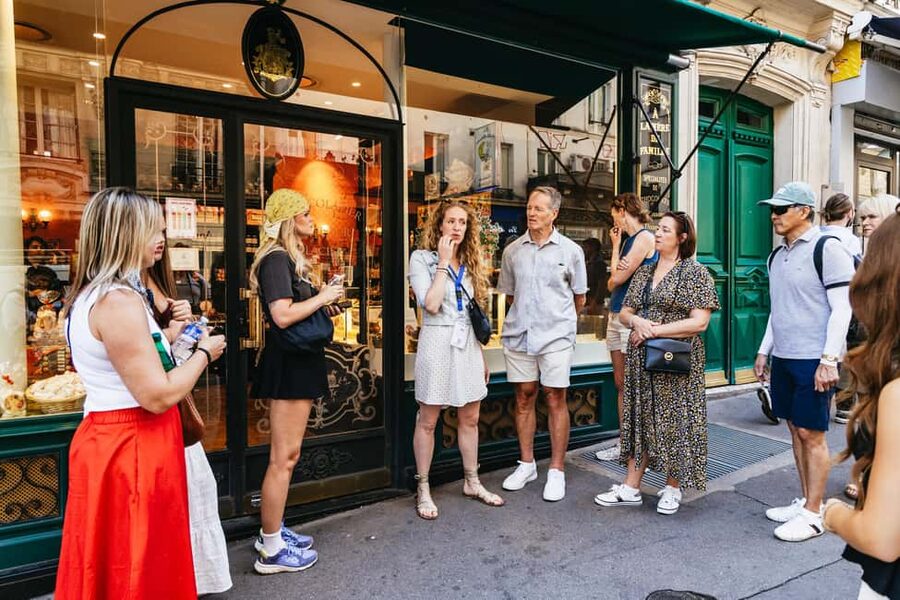
The route visits food institutions and artisan businesses rather than keeping you inside one restaurant. That gives the experience a stronger connection to everyday Montmartre. You may meet shop owners, see the products up close, and learn why freshness matters in French cooking.
Place du Tertre is one of the central sights. Its painters, cafés, and strong tourist presence make it one of Paris’s most recognizable squares. A guide helps you see both sides of it: the famous artist-square image and the practical reality of a busy public space.
Do not expect the square to feel hidden or empty. It is popular for good reason, and its charm comes partly from the long connection between artists and Montmartre. The tour places it within a larger walk, so you are not left with the impression that the whole neighborhood is one café-lined photo set.
Along the way, you may also hear about Montmartre’s windmills and vineyards. These details are easy to miss if you walk straight to Sacré-Coeur. They show that the area once had a more rural character, despite its position within modern Paris.
Reaching Sacré-Coeur without rushing
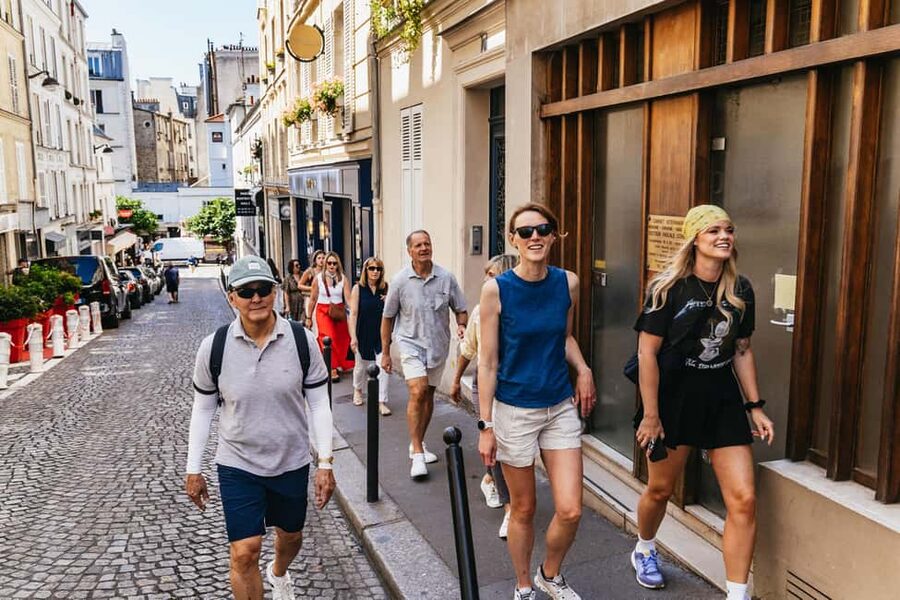
The route heads toward the Basilique du Sacré-Coeur, where you get wide views over Paris. This is the payoff for the uphill walk, but it is not the only reason to go.
The guide can lead you up through Montmartre’s streets rather than sending you directly up the long staircase. That makes the climb feel like part of the neighborhood visit instead of a fitness test. You should still plan for uneven surfaces and an incline, but the route can be easier than the most direct approach.
At the top, allow yourself a moment to look beyond the basilica. The panorama is one of the best reasons to include Montmartre in a Paris visit, and it gives you a clear sense of the city’s scale. After tasting food in narrow streets and small shops, the open view feels like a natural finish.
The tour does not list an interior visit to Sacré-Coeur, so treat the basilica and viewpoint as visual highlights rather than a guided church tour. If you want detailed information about the interior, plan a separate visit.
How much food do you get?
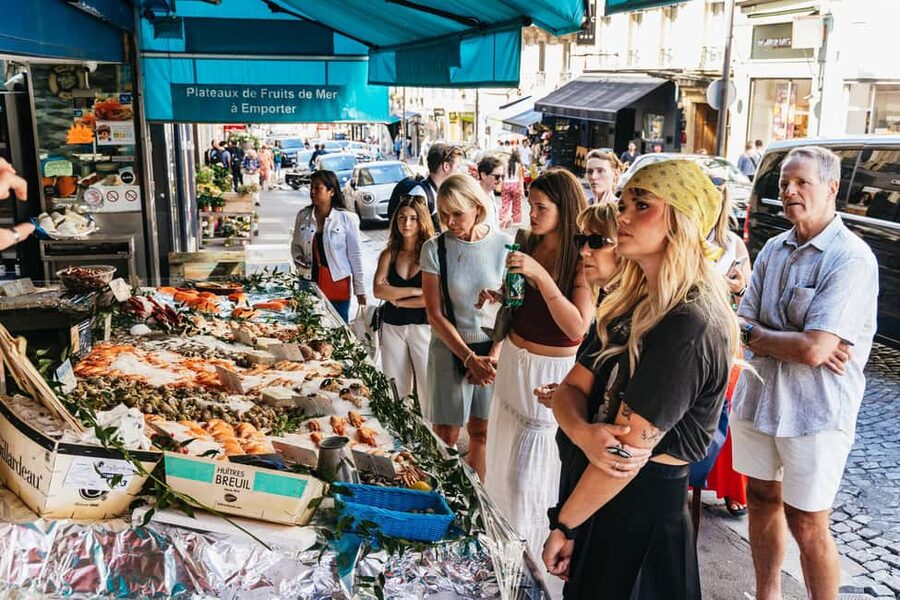
The advertised selection includes different French pastries, homemade chocolate candies, cheese, charcuterie, and wine. The route has enough variety to function as a generous snack or light meal, and several descriptions indicate that the total can be substantial.
You should not expect eight full restaurant courses. The strength is the range of small tastings: buttery pastry, chocolate, savory spreads, cured meat, cheese, bread, and wine. This format suits people who want to try many things without committing to one dish.
The balance between sweet and savory is important. A pastry-only tour could leave you hungry, while a cheese-and-wine tour might feel repetitive. Here, the sequence changes often enough to keep the walk interesting.
Dietary needs are not covered in the supplied information. If you have allergies, follow a strict diet, or do not eat meat, contact the provider before booking rather than assuming each stop can adapt.
Is $127 a fair price?
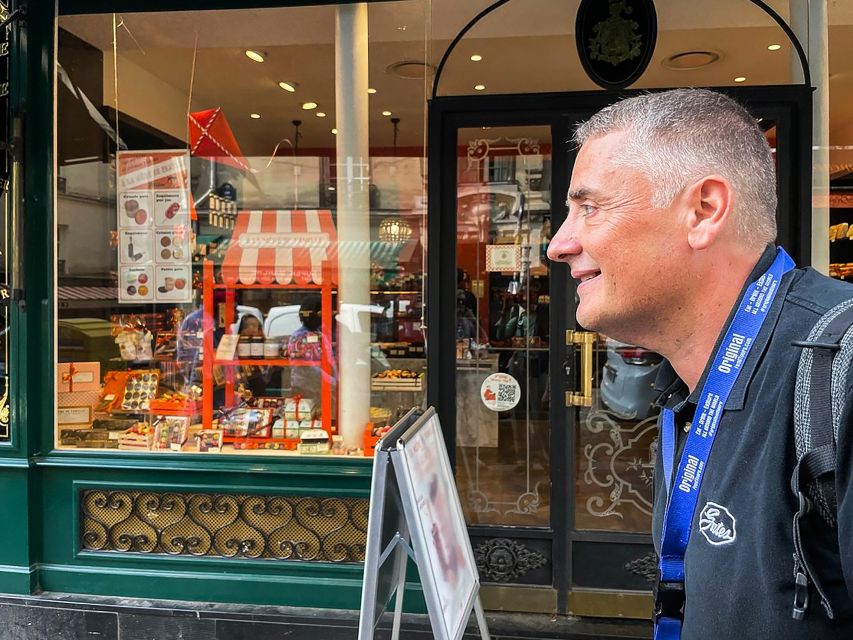
At $127 per person, this is not a cheap way to get breakfast or a snack. You are paying for more than the ingredients. The price includes a live English-speaking guide, three hours of route planning, several food stops, neighborhood interpretation, and the convenience of linking major sights with places you might not choose on your own.
The value is strongest if you want a first orientation to Montmartre. A good guide can save you from wandering past the area’s best food shops, and the historical explanation gives meaning to streets that might otherwise blur together.
The value is weaker if you already know Montmartre well, prefer to choose every restaurant yourself, or mainly want a fast visit to Sacré-Coeur. You could spend less by buying a pastry and walking the neighborhood independently. You would also lose the tasting sequence, local introductions, and the chance to ask questions as you go.
For a couple or small group, the price can feel reasonable if you treat the tour as both lunch and sightseeing. For a family with young children, it may be less practical because children under four cannot join and the pace involves cobbles and hills.
The guides make the difference
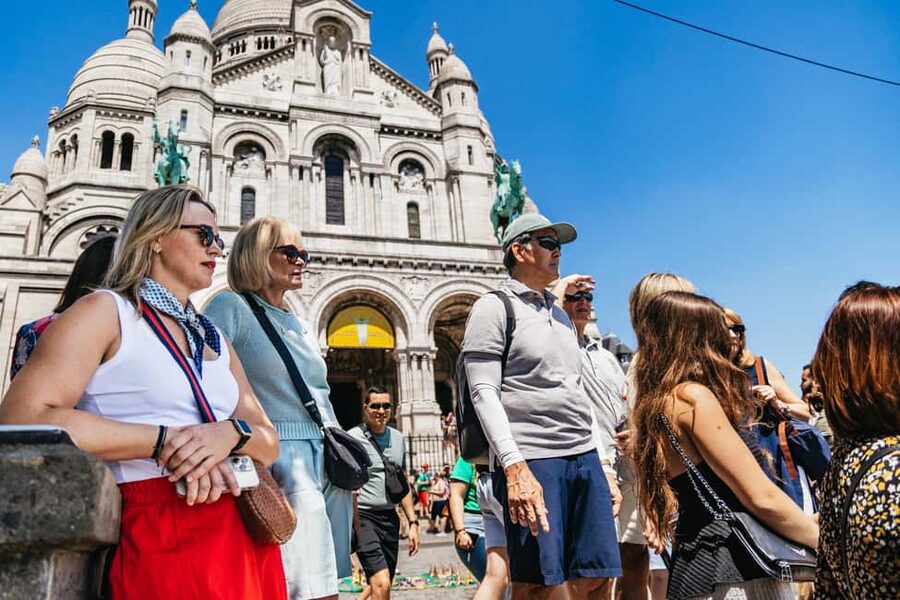
The guide is central to this experience. Food tours depend on timing, conversation, and the ability to explain unfamiliar products without turning lunch into a lecture.
Oscar has been praised for his humor, local background, and clear explanations. Julie brings the useful perspective of someone who lives in Montmartre, while Arthur has shown care with walking pace and route choice. Marie, Catherine, Elliott, Manon, Emeline, Emily, Natalie, Pierre-Edouard, and others have also led tours with a mix of food, history, and personal recommendations.
You cannot choose a specific guide from the information provided, so book for the structure of the experience rather than a particular person. Still, the repeated strength of the guiding is encouraging. The best guides here appear to do three jobs at once: explain the food, interpret the neighborhood, and help you make better choices for the rest of your Paris stay.
Who should book this tour?
I would choose this walk for a first-time Paris visitor who wants Montmartre to feel like a real neighborhood rather than a set of famous viewpoints. It is also a good pick for couples, solo visitors, and small groups who enjoy trying several foods and talking with a local guide.
It suits you especially well if you like:
- French pastry but want savory food too
- History tied to streets and buildings
- Small local shops and artisan products
- A moderate walking route with an uphill finish
- Practical restaurant and sightseeing suggestions
I would think twice if you dislike wine, have serious mobility limits, need a fully accessible route, or want a quiet private experience. You should also avoid scheduling it immediately after a large meal. The tastings are varied, and the later cheese and charcuterie stop can be filling.
Practical details before you book
The tour lasts three hours and is conducted in English. Meet outside the Starbucks and pharmacy near Blanche Metro station on Line 2.
Wear comfortable shoes and clothing suited to the weather. Bring enough energy for cobbled streets and uphill walking. The tour is not suitable for wheelchair users or children under four.
Free cancellation is available up to 24 hours before the start for a full refund. You can also reserve now and pay later, which helps if your Paris plans are still shifting.
Should you book the Montmartre food tour?
Book it if you want food, views, and neighborhood stories in one well-paced outing. The strongest reason to go is the combination of variety and guidance: you taste pastry, chocolate, cheese, charcuterie, and wine while moving from Blanche toward Sacré-Coeur through the streets that make Montmartre distinctive.
I would schedule it early in your Paris stay. That way, you can return to a bakery, cheese shop, or café that catches your attention. At $127, it is an investment, but the mix of food and orientation makes it more useful than a simple tasting session. If you want Montmartre explained as well as seen, this is a strong choice.
FAQ
How long does the Montmartre food tour last?
The tour lasts three hours.
What language is the tour conducted in?
The live tour guide speaks English.
Where is the meeting point?
Meet outside the Starbucks and the pharmacy near Blanche Metro station on Line 2.
How many food stops are included?
The walking tour includes eight different tasting stops.
What food will I taste?
The advertised selection includes French pastries, homemade chocolate candies, cheese, charcuterie, baguette, and French wine. Specific products can vary, but tastings include both sweet and savory items.
Does the tour include wine?
Yes. French wine is paired with the cheese and charcuterie and other selected tastings.
Will I visit Sacré-Coeur?
The route takes you up to Sacré-Coeur, where you can enjoy broad views over Paris. The provided details do not state that the tour includes a guided interior visit.
Does the tour visit Place du Tertre and Le Moulin Rouge?
Yes. The experience includes both Place du Tertre and Le Moulin Rouge among its Montmartre sights.
Is the tour suitable for children?
Children under four are not permitted on the tour.
Is the tour accessible to wheelchair users?
No. The tour is not suitable for wheelchair users, and some walking on cobbled streets and uphill routes is involved.
More Wine and Cheese Tastings in Paris
- Paris Art of Pairing Cheese and Wine Tasting in a Cheese Cellar
★ 5.0 · 386 reviews - Paris: Wine and Cheese Tasting with a Chef Sommelier
★ 4.7 · 277 reviews - Paris: French Wine and Cheese Guided Tasting
★ 5.0 · 201 reviews - Cheese and Wine Tasting in the Latin Quarter with Chef Alex
★ 4.5 · 169 reviews
More Wine and Cheese Tastings in France
- Paris: Wine and Cheese Lunch
★ 4.9 · 596 reviews - Cheese & Wine Tasting in Montmartre with Local Cheesemonger
★ 5.0 · 470 reviews - French Wine, Champagne And Cheese Tasting Paris SECRET WINE DOOR
★ 5.0 · 464 reviews - Paris Wine Tasting plus Cheese Lunch with an Expert Sommelier
★ 5.0 · 424 reviews
New cheese trips in Paris
- Paris: Wine and Cheese Pairing★ 5.0 · 4 reviews
- Paris Wine with Cheese Pairing & Tasting Small Group Class★ 5.0 · 6 reviews
- French Wine and Cheese Master Class Near the Eiffel Tower★ 5.0 · 6 reviews
- Paris Wine and Cheese Tastings Class near Le Marais★ 5.0 · 4 reviews
- Paris Marché d’Aligre Walking Tour with Chocolate and Cheese Tasting★ 3.5 · 24 reviews
- Paris Wine and Cheese Pairing Private Masterclass in a Bistrot★ 5.0 · 7 reviews
- Wine and cheese tasting at Latin Quarter★ 5.0 · 15 reviews
- Wine & Cheese in Montmartre: A True Taste of France 6-ppl Max★ 5.0 · 6 reviews
Cheese Walking and Food Tours, compared.
Private Montmartre Food Tour with Wine, Cheese & Pastries
Read our review →
Paris Le Marais Food Tour With 10+ Tastings, Cheese, Wine & More
Read our review →
Zadar Walking Tour sponsored by Gligora Cheese and deli
Read our review →
Ultimate London Cheese Crawl : Guided Food Tour
Read our review →
Paris St Germain Food Tour with Cheeses, Foie Gras, Wines & More
Read our review →
Le Marais Walking Food Tour with Cheese, Wine & Pastries
Read our review →