
Reviewed · PARMESAN AND BALSAMIC TOURS
Parma: Parmigiano-Reggiano Tour and Tasting
Parmigiano-Reggiano is not simply cheese on a tasting board. At this Parma dairy, you see the curdling, shaping, salting, and long aging that turn milk into those famous hard wheels. I like the small group of up to seven, and I like that the visit takes place at a working producer rather than a city-center demonstration.
I also like the final tasting, where different ages let you notice how the cheese changes over time. The main drawback is practical: you must drive yourself to a dairy outside Parma, and the exact meeting place can change with availability. Get the final directions before setting out.
Key points at a glance
- Watch the cheese being made: Follow the process from curdling in copper heaters to salting and aging.
- Taste different ages: The closing tasting helps you compare the flavor and texture of younger and older Parmigiano-Reggiano.
- Small shared group: The group is limited to seven people, making it easier to hear the guide and see the work.
- A real producer outside Parma: This is a dairy visit, not a general food museum or downtown tasting.
- Plan your own transport: The dairy is not in the city center, and you need your own vehicle.
- Allow two hours: The visit is compact but gives enough time for the production tour and tasting.
Why this Parma cheese visit is worth your time
I like food tours that explain why a product tastes the way it does. This one gives you that connection. You do not just taste Parmigiano-Reggiano and hear that it is famous. You see the early stages that shape the final wheel, then taste the result at different ages.
The dairy makes Parmigiano-Reggiano PDO, or Protected Designation of Origin cheese. The title matters because the cheese is tied to its traditional production area and method. The tour focuses on the craft behind that name, including work done by hand in a tradition linked to Benedictine monks about 10 centuries ago.
That long story is useful only when it connects to what you can see. Here, it does. The copper heaters, the curdling, the salting, and the aging rooms give you a clear sequence. The process feels less like a factory lecture and more like watching a food take shape.
The visit has earned a strong 4.7 rating from 55 reviews, with particular praise for the guides, the clear explanations, and the chance to see cheese at several stages. You should still keep your expectations realistic. This is a working dairy, so the exact guide, meeting point, and timing may change.
More Parmesan and Balsamic Tours in Parma
- Tour Parmigiano Reggiano dairy and Parma ham
★ 5.0 · 601 reviews - Parma: Parmigiano Production and Parma Ham Tour & Tasting
★ 4.9 · 554 reviews - Guided group tour TastyBus: Parmesan Cheese and Parma Ham
★ 5.0 · 241 reviews
Arriving at the dairy outside Parma
Your first task is getting to the right dairy. The meeting point is not fixed in the city center because it depends on which producer has room for the visit. The provider sends a web link and practical information through the booking messages, with the details normally supplied the day before.
That means you should not type a generic Parma address into your navigation app and assume you are set. Check the messages carefully. The meeting point and start time can differ from the basic description, and the activity provider asks you to contact the emergency number if the details have not arrived within three days of the tour.
You need your own vehicle. Transportation to the dairy is not included, and there is no city-center departure built into the experience. For a road trip through Emilia-Romagna, this is fairly easy to fit into your plans. If you are staying in Parma without a car, the transport issue is the biggest reason to choose another food experience.
Wear comfortable shoes. You are visiting a working dairy, not attending a formal indoor tasting in a hotel, and practical footwear will make the visit easier. You may also bring a camera, though you should follow the dairy staff’s instructions about where photography is allowed.
Following the cheese from copper heaters to the aging room
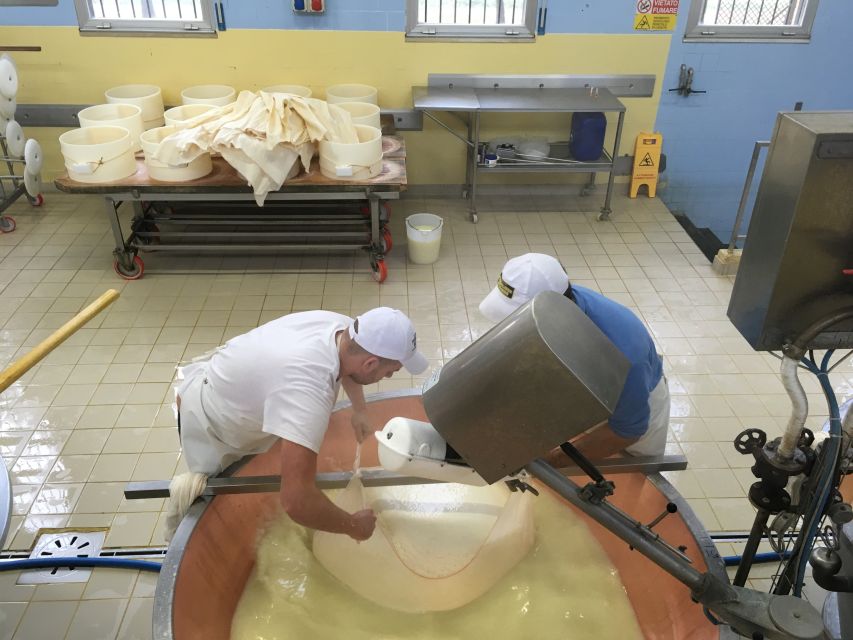
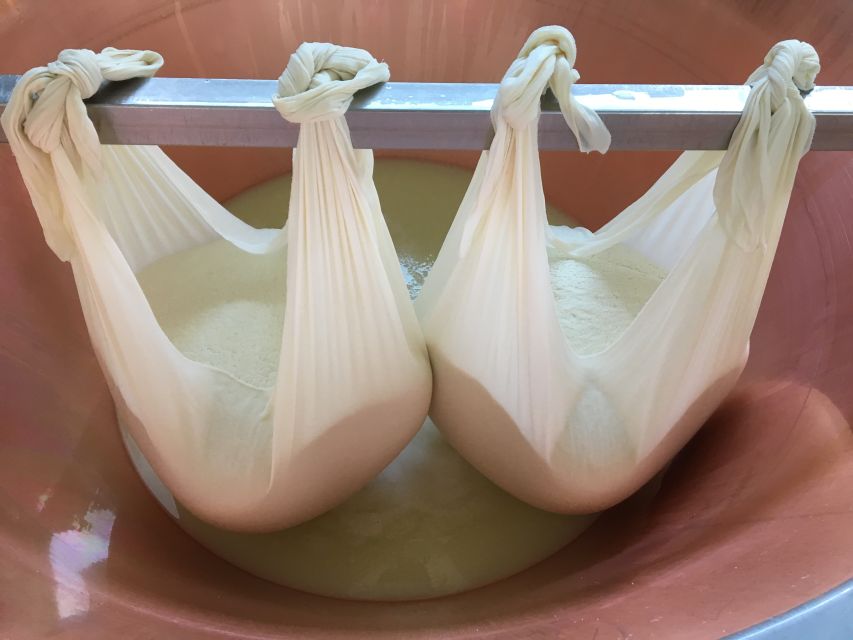
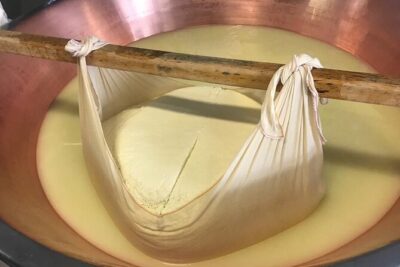
The tour begins with a guided visit around the dairy. The staff explains how Parmigiano-Reggiano is made, starting with the curdling stage in the traditional copper heaters.
Copper is one of the visual details that makes this tour memorable. The large heaters help you understand that this is not a simple matter of pouring milk into a mold and waiting. The curdling stage is part of a chain of carefully timed work, and the guide walks you through how the mixture becomes the firm cheese associated with Parma.
From there, you see later stages including salting and aging. The tour does not promise that every wheel will be at exactly the same point in production on your visit, since this is an operating dairy. Still, the format gives you a view of almost the complete process rather than stopping at a single display.
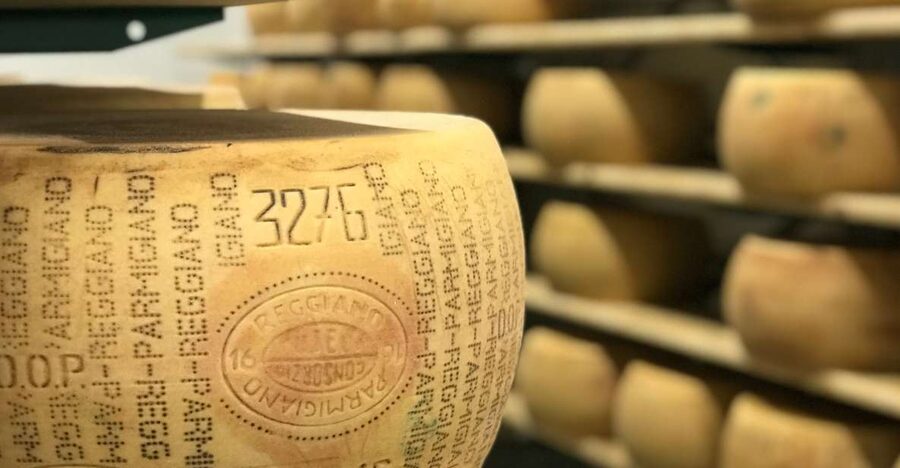
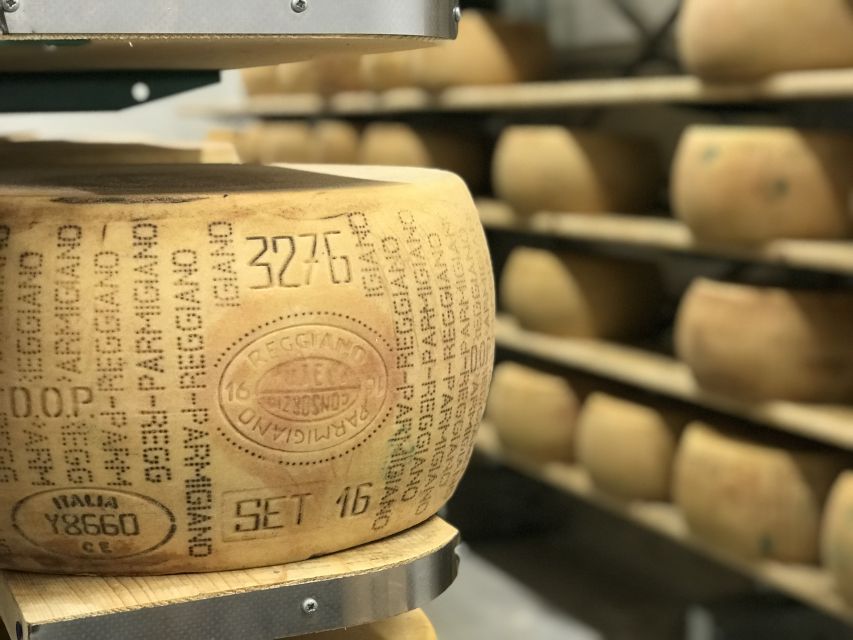
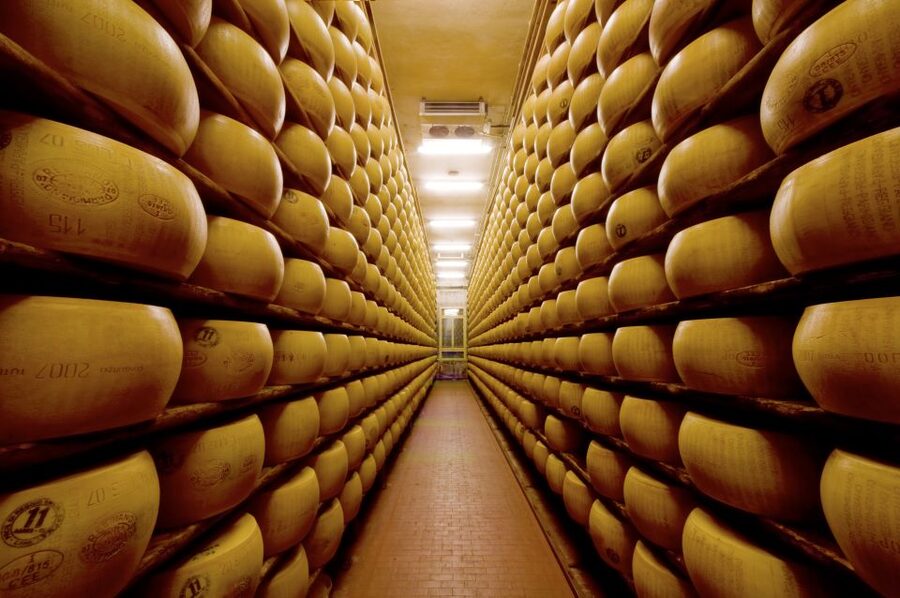
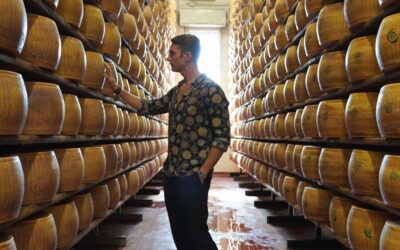
The aging rooms are called wheel cathedrals, a fitting name for rows of round cheeses resting until they reach the needed age. This is the part of the tour that puts the tasting into context. The cheese you eat at the end has spent time in this room, developing the qualities you will compare on the plate.
A strong feature here is the sense of scale. You see the cheese as a finished wheel, not only as neat portions in a shop. That helps explain why Parmigiano-Reggiano is sold by age and why a piece from one wheel can taste different from a younger piece.
What the different ages add to the tasting
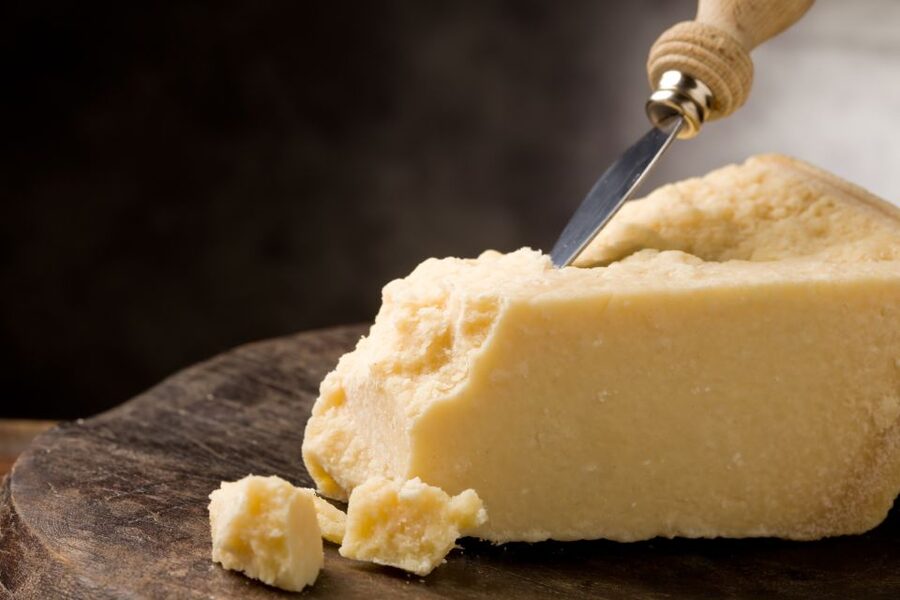
The tasting is included in the two-hour visit and features different ages of Parmigiano-Reggiano. It is the payoff, but it is also part of the lesson.
A younger cheese and a more mature cheese can have noticeably different character. The tasting gives you a chance to compare those changes directly instead of relying on a guide’s description. You can pay attention to the texture, intensity, and finish as the ages change.
The useful point is not deciding that one age is automatically better. It is learning what you prefer. A younger version may suit someone who wants a milder bite, while a more mature piece can appeal to someone who likes a stronger and more developed flavor. The supplied details do not specify the exact ages served, so do not expect a fixed tasting menu.
I would treat the tasting as a focused sampling rather than a full meal. The experience is built around cheese production, not lunch. If you are hungry, plan another meal before or after the visit.
The cheese is the star, but the guide’s explanation matters just as much. Without the tour, several pieces of hard cheese can blur together. With the production stages fresh in your mind, the differences become easier to notice.
Same region, a different board:
- Parma: Traditional Cheese Factory Visit with Tasting
★ 4.9 · 225 reviews - From Parma: Parmesan, Parma Ham & Balsamic Vinegar Tour
★ 4.9 · 187 reviews - Parmigiano Cheese, Parma Ham and Balsamic
★ 5.0 · 166 reviews - From Parma: Parmigiano and Parma Ham Guided Food Tour
★ 4.8 · 144 reviews
The guide can shape the experience
The tour is run by the dairy staff in a shared group. The listed languages are Italian and English, so check the language available for your time when you book.
One important practical detail is that the named guide may not always be the person who leads the visit. Camilla was scheduled for one visit but could not attend, and an excellent factory employee stepped in with no advance notice. The substitute guide spoke good English, explained the process clearly, and gave the group a hands-on understanding of the small factory.
That is a useful reminder to judge this as a working dairy visit rather than a performance built around one personality. Staff availability can change. The good side is that the employee who takes over may know the daily work from the inside. The less convenient side is that you might not receive advance notice if the assigned guide changes.
The strongest feedback centers on clear explanations and a friendly personal touch. One visit was described as a quick private-style tour with an experienced guide, even though the standard format is a shared small group. You should expect a group visit, but the limit of seven people keeps it intimate.
How much value do you get for $59?
At $59 per person, this is not the cheapest way to eat cheese in Parma. You can buy Parmigiano-Reggiano in a market for much less. The question is what you are paying for.
You are paying for access to a producer, a guided look at the production process, and a tasting that lets you compare ages. If you already plan to visit the Parma area by car, the price is reasonable for a two-hour food experience with a small group.
The value is strongest for people who want context. You learn why the cheese has its distinctive name and designation, see the equipment and aging rooms, and taste the finished product right after hearing how it is made. That sequence gives the price more weight than a simple retail sample.
The value is weaker if your main goal is a large meal, a long countryside outing, or convenient transport from central Parma. The activity lasts two hours, and driving time to and from the dairy is extra. You should also allow for the possibility that the exact location changes.
Free cancellation up to 24 hours before the visit and reserve-now, pay-later booking make it easier to fit into a changing schedule. Those policies do not solve the transport question, but they do reduce the risk of committing too early.
Who will enjoy this experience most?
I would recommend this tour to anyone interested in Italian food traditions, especially if you are already touring Emilia-Romagna by car. It works well for couples, small families, and friends who want a short activity with a clear focus.
It is also a good choice for visitors who do not know much about Parmigiano-Reggiano. You do not need a specialist vocabulary. The tour moves in a natural order, from production to aging to tasting, so you can follow the story even if this is your first dairy visit.
Food-focused visitors will get the most from the tasting. If you enjoy comparing products, take your time with each sample and ask the guide how age affects the cheese. The small group should make questions easier than they would be on a large coach tour.
This may be less suitable if you need a fully accessible activity. The experience is not suitable for wheelchair users. It is also a poor match if you want to avoid driving or if you need a guaranteed city-center meeting point.
Practical planning for a smooth visit
Keep the day flexible around the dairy. Since the meeting place and time can change, do not schedule a train departure or another fixed activity immediately afterward.
Read the provider’s message carefully before leaving. The information includes a web link with the final dairy location, and the provider advises checking the booking message area for the practical details. If nothing arrives within three days before the tour, use the emergency number rather than waiting until the morning of the visit.
Bring comfortable shoes and your own vehicle. A camera is allowed as a suggested item, but ask the staff before photographing production areas.
The experience is offered in Italian and English. Because it is a shared tour, the exact feel depends partly on the mix of people in your group and the staff member available that day. The seven-person limit is a useful safeguard against the visit becoming crowded.
Should you book the Parmigiano-Reggiano tour?
Book it if you want to see how Parma’s signature cheese is made and you can handle the drive outside town. The strongest reasons are the working dairy setting, the compact two-hour length, the small group, and the tasting of different ages.
Think twice if you are without a car, need wheelchair access, or want a fixed meeting point in central Parma. Also remember that the guide and location may change, so checking your messages is part of the booking process.
For a road trip through Emilia-Romagna, I think this is a sensible addition. It gives you a real connection to one of the region’s best-known foods without taking up an entire day. The final tasting is better because you have just seen the cheese in the making.
FAQ
How long does the Parmigiano-Reggiano tour last?
The activity lasts two hours, including the guided dairy visit and tasting of different ages of Parmigiano-Reggiano.
How much does the experience cost?
The price is $59 per person.
Do I need to arrange transportation to the dairy?
Yes. Transportation is not included, and you need your own vehicle because the dairy is outside Parma’s city center.
Where is the meeting point?
The meeting point changes depending on dairy availability. The provider sends a web link with the final location and practical information through the booking messages.
Is the tour available in English?
Yes. The experience is offered in Italian and English. The guide may be a dairy employee, and the assigned staff member can change depending on availability.
Is the visit suitable for wheelchair users?
No. The activity is not suitable for wheelchair users.
New cheese trips in Parma
- Parmesan and Ham Factory Tour★ 4.5 · 21 reviews
- Parmigiano Cheese Factory Visit and Tasting★ 5.0 · 22 reviews
- Parmigiano-Reggiano Tour and tastings★ 4.5 · 6 reviews
- Parmigiano Reggiano Parma Ham and Castle Private Tour & Tasting★ 5.0 · 9 reviews
- Parmigiano and Culatello Private Tour with Lunch and Farm Visit★ 5.0 · 2 reviews
- Parma Food Tour with Sightseeing and Parmesan Tasting★ 4.5 · 14 reviews
- Parmigiano Reggiano and Parma ham tour★ 5.0 · 9 reviews
- Parmigiano-Reggiano Cheese Factory Small group Tour From Parma★ 3.5 · 15 reviews
Parmesan and Balsamic Tours, compared.
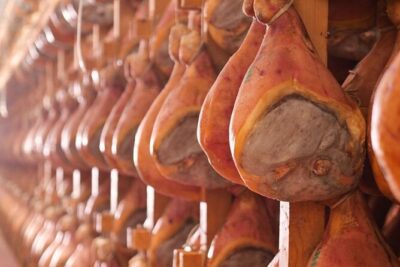
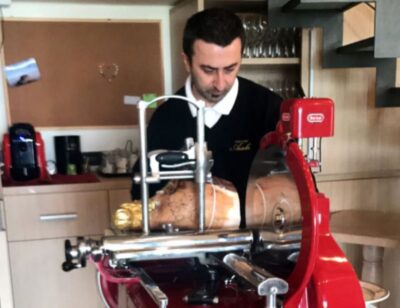
Parmigiano Production and Parma Ham Tour & Tasting
Read our review →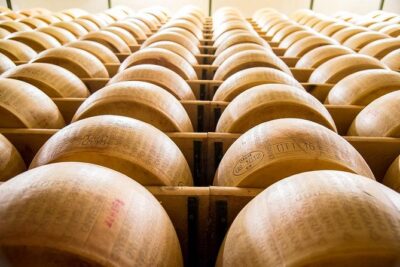
Guided group tour TastyBus: Parmesan Cheese and Parma Ham
Read our review →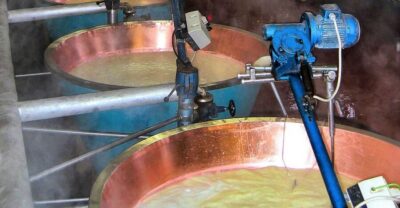
Cheese, Ham, & Balsamic Vinegar Tour with Tastings
Read our review →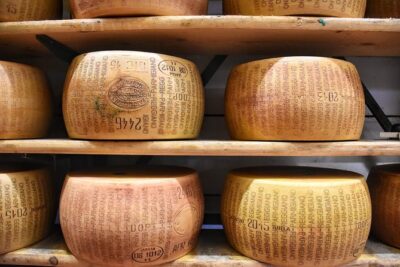
Private Full Day Parma Food Tour: Parmesan Cheese, Parma Ham, Lunch, Vinegar
Read our review →Browse the lists this tour appears in