
Reviewed · WINE AND CHEESE TASTINGS
Paris: The Ultimate Wine and Cheese Tasting in English
Paris has a fine way to turn lunch into a lesson, and this tasting does it with 10 French wines and 10 cheeses in a cellar setting. You move from five whites to five reds while learning how Bordeaux, Burgundy, the Rhône Valley, and other regions differ in grapes, soil, and style.
I like the clear English instruction, especially for anyone who wants more than a quick pour and a vague nod toward France. I also like the pairing format: tasting cheese beside each wine gives you a practical way to notice what changes in your glass.
The main consideration is the price, $128 per person for two hours. It makes sense if you value instruction and a broad tasting, but it is not the cheapest way to have a drink in Paris. This is for adults only, and non-alcoholic drinks are not included.
Key points at a glance
- Ten wines in one sitting: Taste five white wines and five red wines from major French wine regions.
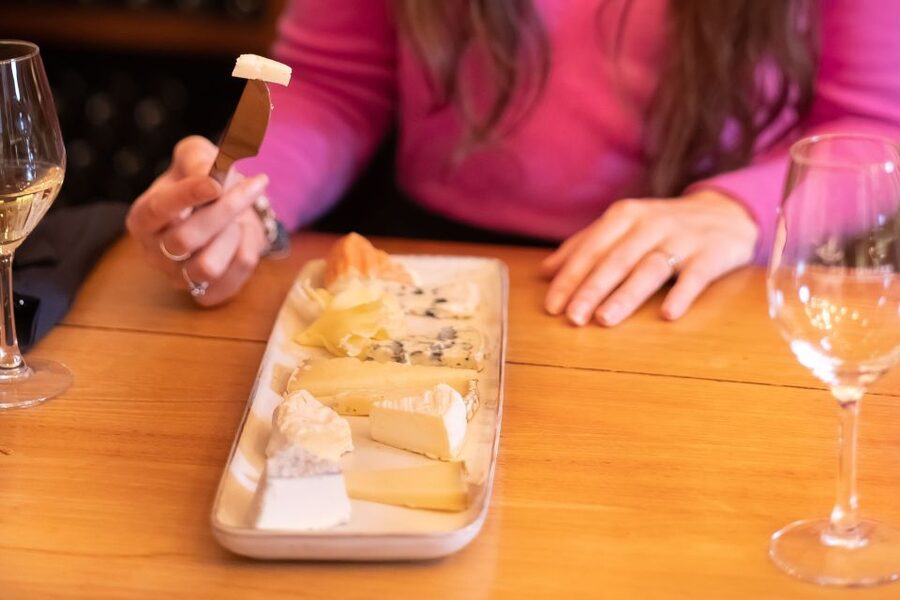
- Ten cheeses to compare: Expect French cheeses that can include Brie, blue cheese, and fresh goat cheese from the Loire Valley.
- A real lesson, not just a tasting: Learn tasting techniques, wine styles, pairing, terroir, and the AOP system.
- English-speaking instruction: Guides such as Justan, Alexis, and Clemant have led sessions with a warm, patient approach.
- Seasonal changes: The wine and cheese selection changes with the season, so the exact lineup is not fixed.
- A focused two hours: The format suits a Paris afternoon or evening, but you should plan to arrive ready to concentrate and taste rather than wander.
What happens inside the Paris tasting room
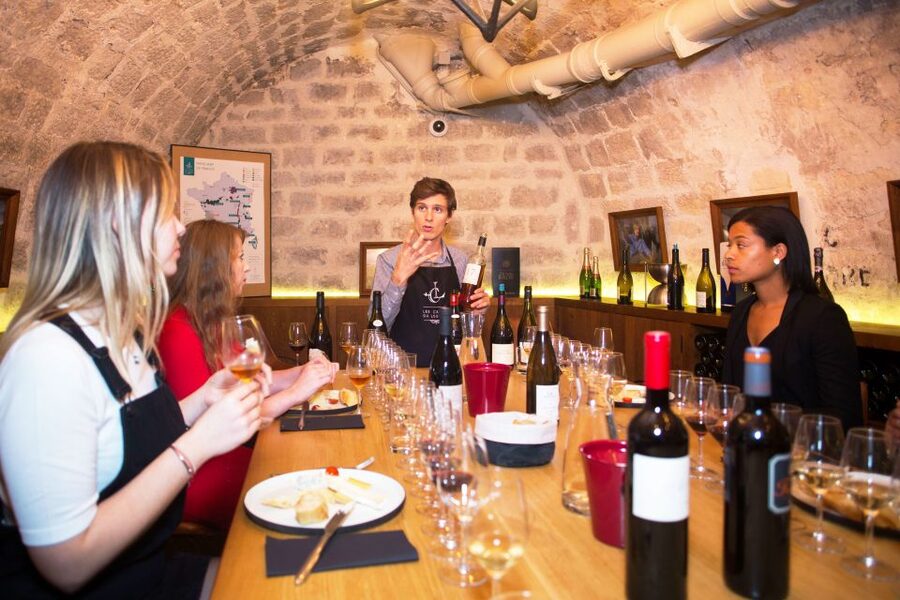
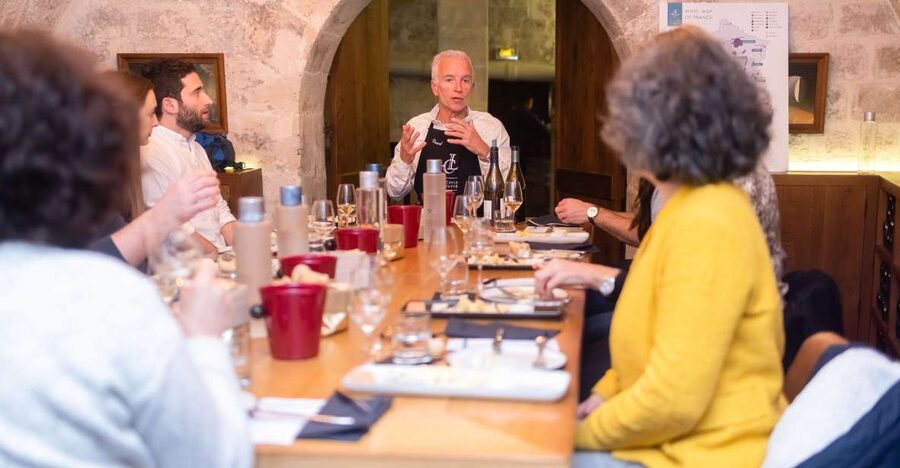
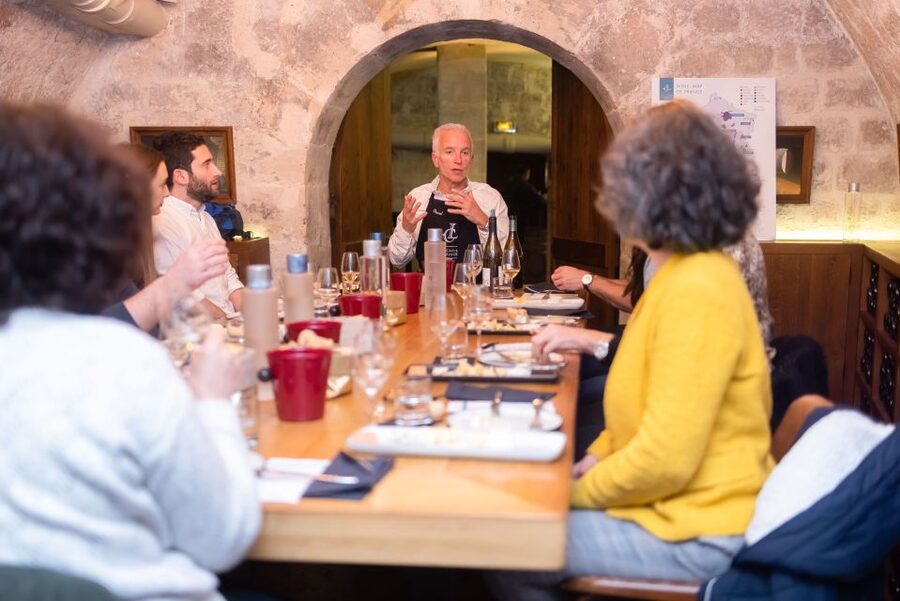
The experience takes place at Les Caves du Louvre, an authentic cellar location in Paris. The setting matters here. Wine can feel abstract when you only hear names such as Bordeaux or Burgundy, but a cellar gives the subject a proper home and helps set the mood before the first glass arrives.
You can expect a two-hour tasting class led in English. The instructor explains what you are drinking, where it comes from, and how to approach it. This is useful if French wine labels usually leave you guessing. The aim is not to turn you into a sommelier in one afternoon. It is to give you a better method for tasting and choosing wine once you leave Paris.
The format centers on ten wines paired with ten cheeses. You are not simply handed a flight and left to sort it out. The cheese gives you a second point of comparison. A wine may seem sharp on its own and softer with cheese, while a creamy cheese can make a wine taste brighter or more balanced.
That simple side-by-side approach is one of the strongest parts of the activity. You leave with something practical: an idea of how to build a pairing, not just a list of French names to remember.
More Wine and Cheese Tastings in France
- Paris: Montmartre Cheese, Wine & Pastry Guided Walking Tour
★ 4.8 · 2,255 reviews - Private Montmartre Food Tour with Wine, Cheese & Pastries
★ 5.0 · 1,027 reviews - Paris Le Marais Food Tour With 10+ Tastings, Cheese, Wine & More
★ 5.0 · 985 reviews
Five white wines and five red wines
The wine lineup is split evenly between white and red wines. That balance gives the class a useful range without making the session feel like a single-region introduction.
The white wines provide a chance to compare fresh, lighter styles with fuller examples. The red wines then bring in differences in color, body, tannin, fruit, and finish. You learn to identify wine styles rather than judge every glass by the same standard.
The selection represents French terroir, a term that brings together soil, growing conditions, climate, and place. You will hear how those factors help shape the character of a wine. One of the strongest teaching points is that a wine is not only about the grape variety. Where and how the grape grows also matter.
The regions named for the tasting include Bordeaux, Burgundy, and the Rhône Valley. These are important parts of the French wine map, but you do not need prior knowledge to enjoy the lesson. The instructor explains the differences in a direct way, using the glass in front of you instead of burying you in theory.
Bordeaux gives you a chance to think about one of France’s best-known red wine areas. Burgundy lets you consider a different regional identity and style. The Rhône Valley adds another useful comparison. The purpose is not to memorize every appellation. It is to see that French wine has distinct regional traditions, and that a bottle’s place of origin can tell you a great deal.
The exact bottles change. That is worth keeping in mind if you are hoping for one particular producer or vintage. The seasonal rotation is a plus for returning visitors, but it means the lineup cannot be treated as fixed.
Ten cheeses from Brie to Loire goat cheese
The cheese portion gives the tasting its personality. You may sample Brie, blue cheese, and fresh goat cheese from the Loire Valley, along with other handmade French cheeses selected for the session.
These are not random snacks placed beside the wine. They are part of the lesson. The instructor shows you how different textures, flavors, and levels of intensity interact with wine. A mild, soft cheese creates a different result from a strong blue cheese. Fresh goat cheese brings another contrast, with a lighter and more tangy character.
This is also a friendly format for people who are unsure about cheese. Ten choices give you room to find a style you enjoy, and perhaps one that surprises you. If you already love cheese, the value is in seeing familiar categories in a French setting and testing pairings you may not have tried.
The cheeses are described as hand-crafted and sourced from different parts of France. That regional spread supports the main lesson: French food and wine are tied closely to place. You are tasting more than flavor. You are comparing local traditions and how they work together at the table.
The class is not designed as a full meal, so do not book it expecting dinner. It is a substantial tasting, but its main purpose is education and comparison.
The lessons that make the tasting useful
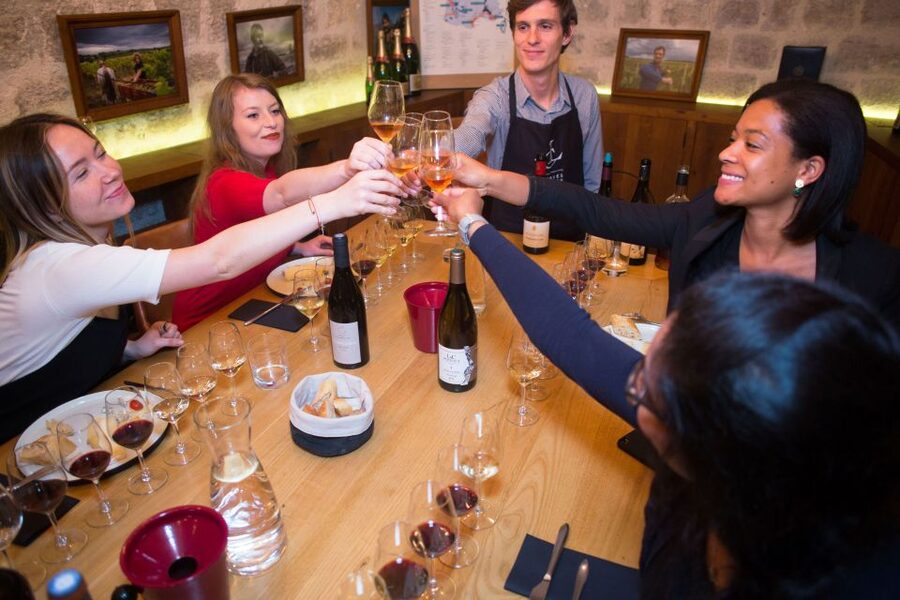
The English-speaking wine expert covers several topics during the session:
- How to taste wine
- How to choose wine
- How to pair wine with cheese
- What terroir means
- How French wine regions differ
- How to recognize different wine styles
- What AOP means in France
AOP, or Appellation d’Origine Protégée, is part of France’s system for protecting and defining regional products. Learning this idea helps explain why French labels can seem so focused on place. The name on the bottle may point you toward a region or appellation rather than clearly announcing the grape in the way many New World labels do.
This is where the class can pay off after your trip. You may not remember every bottle, but you can remember to look at region, style, and pairing. You can also make more informed choices at a wine shop or restaurant.
The teaching style appears to depend on the individual instructor, but the named guides include Justan, Alexis, and Clemant. Justan is praised for explaining regions, soil types, growing conditions, and terroir. Alexis is described as kind and ready to answer questions. Clemant is noted for explaining grape varieties and French wine regions, as well as the seasonal changes to the wine and cheese selection.
Those details point to an important strength: the session allows questions. If you are curious about a bottle, a region, or why one cheese works better than another, this is the moment to ask.
More Wine and Cheese Tastings in Paris
- Paris: Wine and Cheese Lunch
★ 4.9 · 596 reviews - Cheese & Wine Tasting in Montmartre with Local Cheesemonger
★ 5.0 · 470 reviews - French Wine, Champagne And Cheese Tasting Paris SECRET WINE DOOR
★ 5.0 · 464 reviews - Paris Wine Tasting plus Cheese Lunch with an Expert Sommelier
★ 5.0 · 424 reviews
Why the cellar setting adds value
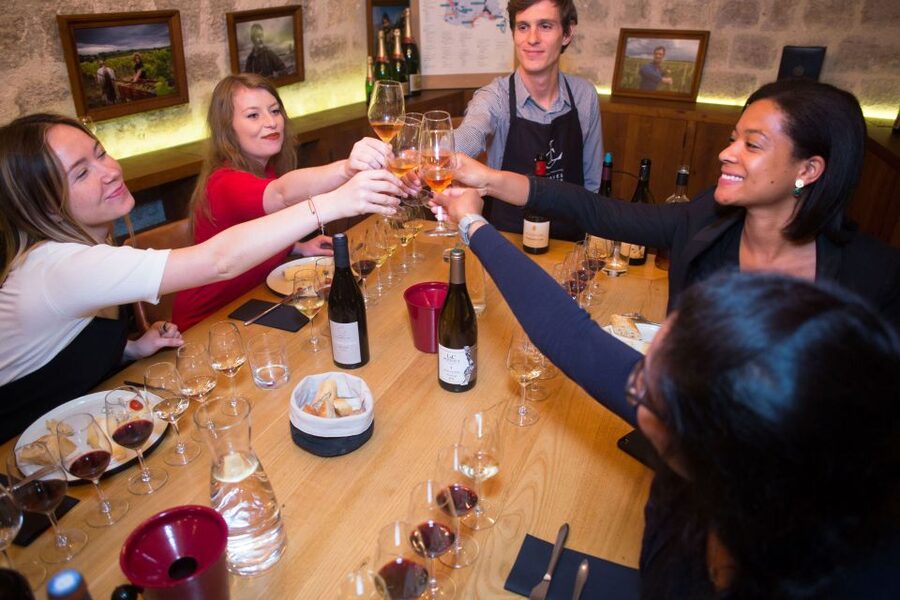
Paris has no shortage of wine bars, but a tasting room gives you a more focused experience. You are not trying to hear an explanation over a busy dinner service, and the two-hour structure keeps the subject in front of you.
The cellar atmosphere also fits the topic without turning the event into a costume show. You get an authentic wine setting, then move through a structured tasting. For a first introduction to French wine, that combination is more useful than simply ordering the most expensive item on a restaurant list.
Still, the setting does not make this a vineyard visit. You will not be walking through vineyards or meeting producers in their own villages. The experience brings several French regions to one Paris location. That is its strength, but also its limit.
If you are visiting Paris for a short time, this format saves you the long journey required to reach Bordeaux, Burgundy, or the Rhône Valley. If your main goal is to see vineyards and wineries in the countryside, you need a different kind of outing.
The value of $128 for two hours
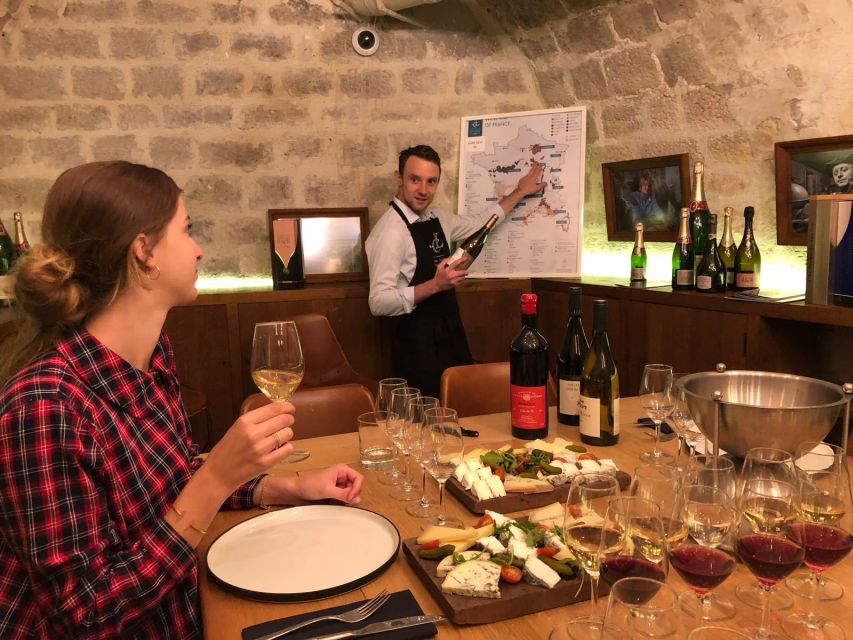
At $128 per person, the cost is significant. You are paying for ten wines, ten cheeses, the cellar entry, and a two-hour class with an English-speaking wine expert.
The value depends on how you use the experience. If you only want a glass of wine and a small cheese plate, this is too much. If you want a guided introduction that covers several major French regions in one sitting, the price is easier to justify.
Ten wines and ten cheeses create a wide tasting range. At a typical wine bar, ordering that many separate combinations could quickly become expensive, and you would not necessarily receive a lesson on AOP, terroir, or French wine styles.
I would especially consider the price worthwhile for a couple or small group who plans to talk about the tasting afterward and use the new information during the rest of the trip. It can help you order more confidently at a restaurant, choose a bottle for a picnic, or understand why two French wines with similar prices taste so different.
The price does not include hotel pickup or drop-off, so you arrange your own way to the cellar. It also does not include a non-alcoholic beverage. Those are small points, but they matter if someone in your party is not drinking.
Who should book this experience
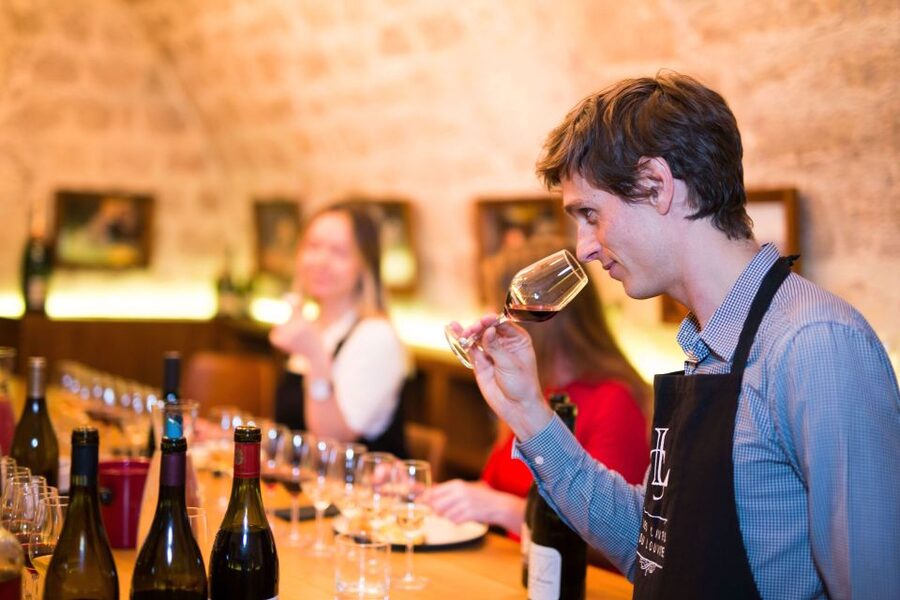
This tasting suits adults who want a clear introduction to French wine without needing previous experience. You do not need to know your Bordeaux from your Burgundy before arriving. The class is built to explain the basics while giving you plenty to taste.
It is also a good pick for an adult birthday celebration or a special afternoon in Paris. One couple used it for a birthday, and the format has the right balance of occasion and substance. You get an activity to talk about, not just a meal that ends when the plates are cleared.
Cheese lovers will have plenty to enjoy, but you do not need to be devoted to cheese. Ten different samples increase the odds that you will find a favorite. The range also gives you a chance to understand why some pairings work even if you would not choose that cheese by itself.
I would be more cautious about booking it for anyone who dislikes alcohol, has little interest in wine, or prefers a casual drink without instruction. The class is built around tasting and learning, so the educational side is not something you can easily ignore.
Children under 18 are not permitted. The activity is for adults only.
Practical timing and planning advice
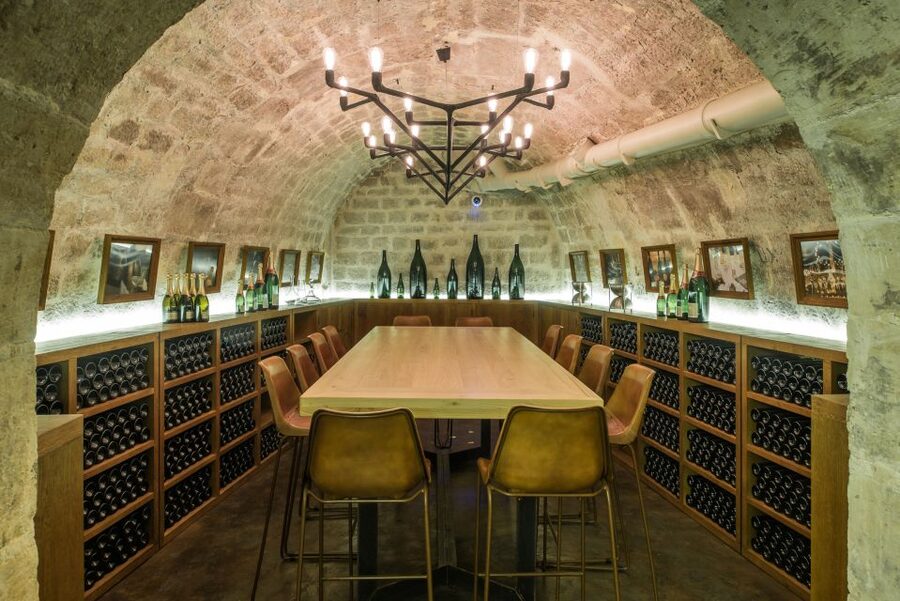
The tasting lasts two hours, with starting times based on availability. That length is enough to cover ten wines and ten cheeses without turning the class into a rushed sampler.
I would avoid scheduling it immediately before another fixed appointment. Wine tasting takes concentration, and you may want a little time afterward before moving on to a museum, show, or formal dinner. The activity can work well as a planned afternoon stop or as part of an evening centered on food.
Come ready to ask questions. The instructors have covered subjects ranging from soil and growing conditions to grape varieties and pairings, so you can get more from the session if you speak up when something catches your attention.
You should also keep an open mind about the cheese. Brie may be familiar, while blue cheese or fresh goat cheese may be less predictable. The point is not to like every sample. It is to notice how the cheese changes the wine and how the wine changes the cheese.
Cancellation is free up to 24 hours in advance, and you can reserve now and pay later. Those terms are useful if your Paris schedule is still shifting, though you should check the available start times before building the rest of your day around it.
The strongest reasons to choose it
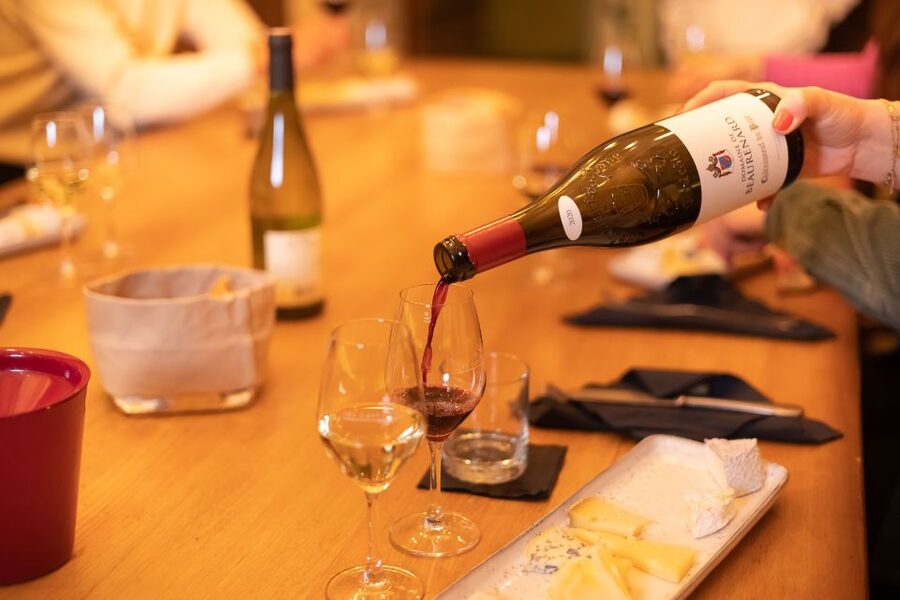
The best part of this activity is its range. Ten wines and ten cheeses let you compare instead of forming an opinion from one glass. Five whites and five reds also keep the class from leaning too heavily toward one style.
The second strong point is the teaching. Justan, Alexis, and Clemant have each been praised for clear explanations, thoughtful pairings, and willingness to answer questions. The subject matter goes beyond tasting notes and includes soil, growing conditions, grape varieties, regions, and the AOP system.
The seasonal change is another benefit. If you return to Paris, you may find a different set of wines and cheeses. That makes the experience more than a one-time fixed menu, though it also means you cannot guarantee a particular bottle or cheese.
Finally, the cellar setting gives the class a sense of place. You are not just sampling imported products in a generic room. You are learning about French wine and cheese in Paris, with the atmosphere doing some of the work.
Should you book this Paris wine and cheese tasting?
Book it if you want an English-language introduction to French wine that is broad, structured, and easy to follow. The combination of five white wines, five red wines, ten cheeses, and an expert lesson gives you far more context than a standard wine flight.
I would choose it for a first visit to Paris, a birthday treat, or a rainy afternoon when you want a food experience with substance. The $128 price is fair for the amount of wine, cheese, and instruction, but only if you care about learning as well as tasting.
Skip it if you are looking for a vineyard excursion, a full meal, or a cheap glass of wine. For everyone else, Les Caves du Louvre offers a practical way to understand French wine regions and pairings before you continue eating and drinking your way through Paris.
FAQ
Where does the wine and cheese tasting take place?
The experience takes place at Les Caves du Louvre in Paris, in a cellar setting.
How long does the experience last?
The tasting lasts two hours.
How many wines are included?
You taste 10 wines: five white wines and five red wines.
How many cheeses are included?
You taste 10 French cheeses.
Which wine regions are covered?
The selection includes wines representative of French terroir, with regions such as Bordeaux, Burgundy, and the Rhône Valley included.
What types of cheese might be served?
The selection can include Brie, blue cheese, and fresh goat cheese from the Loire Valley, along with other French cheeses.
Is the tasting held in English?
Yes. The instructor teaches in English, and English is the listed language for the activity.
What will I learn during the class?
You learn tasting techniques, wine and cheese pairing, how to choose wine, the meaning of terroir, the AOP system, French wine regions, and different wine styles.
Is the activity suitable for children?
No. Children under 18 are not permitted.
Are hotel transfers or non-alcoholic drinks included?
No. Hotel pickup and drop-off are not included, and non-alcoholic beverages are not included.
Can I cancel for a refund?
Yes. You can cancel up to 24 hours in advance for a full refund.
Can I reserve without paying immediately?
Yes. The reserve-now-and-pay-later option lets you hold a place and pay later.
New cheese trips in Paris
- Paris: Wine and Cheese Pairing★ 5.0 · 4 reviews
- Paris Wine with Cheese Pairing & Tasting Small Group Class★ 5.0 · 6 reviews
- Paris Wine and Cheese Tastings Class near Le Marais★ 5.0 · 4 reviews
- French Wine and Cheese Master Class Near the Eiffel Tower★ 5.0 · 6 reviews
- Paris Marché d’Aligre Walking Tour with Chocolate and Cheese Tasting★ 3.5 · 24 reviews
- Paris Wine and Cheese Pairing Private Masterclass in a Bistrot★ 5.0 · 7 reviews
- Wine and cheese tasting at Latin Quarter★ 5.0 · 15 reviews
- Wine & Cheese in Montmartre: A True Taste of France 6-ppl Max★ 5.0 · 6 reviews
Wine and Cheese Tastings, compared.
Classic Saloon Boat Cruise with Cheese & Wine
Read our review →
Montmartre Cheese, Wine & Pastry Guided Walking Tour
Read our review →
Evening Candle Light Cruise With Wine & Cheese
Read our review →
Vila Nova de Gaia: Port Wine Tasting with Cheese Pairing
Read our review →
Private Montmartre Food Tour with Wine, Cheese & Pastries
Read our review →
Paris Le Marais Food Tour With 10+ Tastings, Cheese, Wine & More
Read our review →
Browse the lists this tour appears in