
Reviewed · CHEESE AND CHARCUTERIE BOARDS
Saint-Emilion: Grand Cru Classé Cheese & Charcuterie Visit
The clever idea here is simple: in 90 minutes, you see two Saint-Émilion Grand Cru Classé wineries and compare how tradition and modern technology shape the wine. One cellar feels firmly tied to local architecture and methods. The other uses a modern facility and current viticulture techniques to make a more forward-looking style.
I like the small group of no more than 10 people, which gives the guide room to answer questions. I also like the finish: three commented tastings, then cheese and charcuterie on a terrace with vineyard views. The main drawback is access. The wineries are 3 kilometers from Saint-Émilion, and walking from town can take about 30 minutes, with no ride included between town and the property.
Key points at a glance
- Two classified wineries in one visit: Compare Château Tour Baladoz and Château La Croizille rather than seeing only one cellar.
- Traditional and modern styles: The two facilities show different approaches to wine production and vineyard work.
- Three commented tastings: The guide explains the wines as you taste, then you choose a glass for the final food pairing.
- Terrace views over the vines: The cheese and charcuterie course takes place outdoors when conditions allow.
- Small groups: The experience is limited to 10 participants and is offered in French, English, or Spanish.
- Plan transport carefully: The meeting point is outside Saint-Émilion, and the walk from town may be hot and longer than expected.
Two Saint-Émilion estates, one useful comparison
Many wine visits in Bordeaux focus on a single estate. This one gives you two, and that changes the whole feel of the outing. You are not just hearing how one château makes wine. You are seeing two different answers to the same question: how should Saint-Émilion wine be made today?
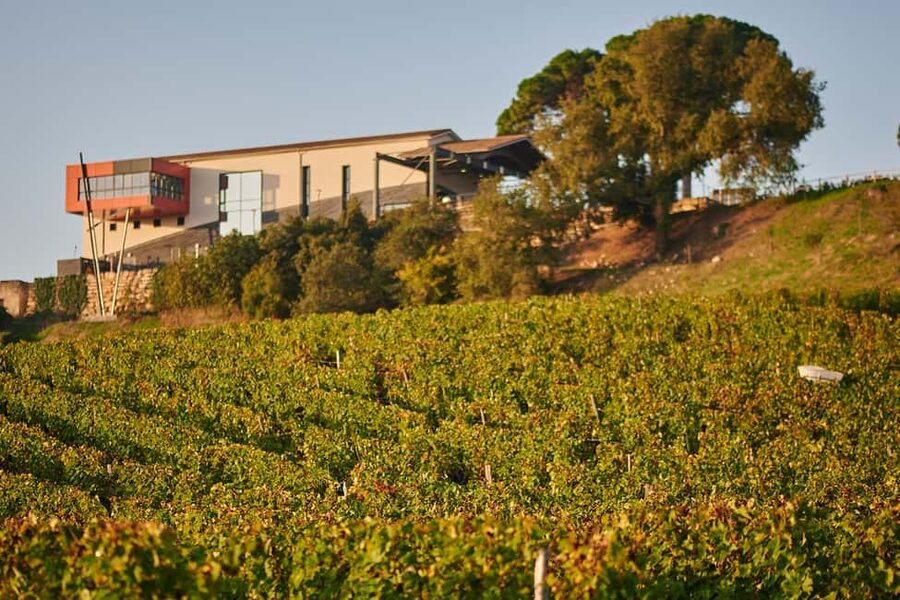
Your check-in is at Château Tour Baladoz, a charming limestone building with the look many people expect from the area. You should also look for the modern winery of La Croizille, marked by its orange, black, and white exterior. These buildings set up the main contrast before the tasting even begins.
The tour covers both wineries, and each is classified as a Saint-Émilion Grand Cru Classé. That classification gives the visit extra interest, especially if you are trying to understand why certain Bordeaux estates carry more prestige and command higher prices. The tour does not leave you with just a label and a tasting glass. It connects the wine to the place, the cellar, and the way the producer works.
I find this format particularly useful if you are new to Bordeaux wine. You can taste three wines after seeing the production spaces, so the explanations have something concrete to attach to. If you already know Bordeaux well, the modern versus traditional comparison may be the part that keeps the visit fresh.
More Cheese and Charcuterie Boards in France
- Tasting of 6 Bordeaux wines and pairing charcuterie & cheese
★ 5.0 · 199 reviews - Bordeaux: Wine Masterclass with Cheese and Charcuterie Board
★ 4.9 · 184 reviews - Introduction to Bordeaux wines paired with cheeses & charcuterie
★ 5.0 · 175 reviews
Château Tour Baladoz and the traditional cellar
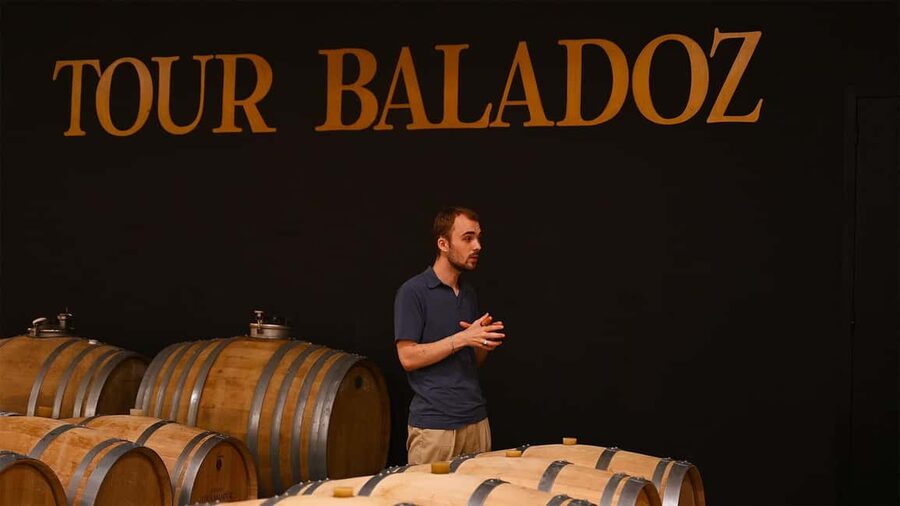
The first stop introduces a more traditional side of Saint-Émilion. Château Tour Baladoz has typical regional architecture and an authentic cellar, giving you a clearer sense of the local setting than a sleek tasting room alone would provide.
Expect the guide to explain how the château produces a traditional style of wine for the region. The value here is not in racing through technical facts. It is in seeing how the physical character of the estate connects to the wine in the glass.
The limestone building matters because Saint-Émilion is known for this pale local stone and its old winemaking identity. You get a visual reference for the sort of estate many people picture when they think of Bordeaux. The cellar also helps make the production process less abstract. You are looking at a working wine property, not only a polished retail display.
The tour is guided in French, English, or Spanish. One particularly useful detail is that the English guide has been praised for speaking clearly while still using technical wine terms. If English is not your first language, that balance should make the explanations easier to follow without reducing them to basic tasting notes.
This part of the visit should suit you if you want context before you drink. You can pay attention to the difference between the traditional facility and what comes later, rather than treating the two wineries as interchangeable photo stops.
Château La Croizille and modern winemaking
The second winery offers a sharp change of mood. La Croizille has a modern cellar and uses current technology and viticulture techniques to produce a different, more innovative style of wine.
That does not mean the visit turns into a lecture about machines. The useful point is the comparison. Modern equipment can change how a producer handles grapes, manages fermentation, and aims for a particular style. The tour gives you a chance to hear how technology fits into the winemaker’s choices.
The exterior is easy to identify, with its orange, black, and white design. Use that as your visual cue when arriving. The meeting instructions direct you to check in at Château Tour Baladoz, so allow a moment to find the reception rather than heading straight to the most striking modern building.
I like this second stop because it adds a little tension to the usual Bordeaux story. Saint-Émilion is strongly associated with old stone, established estates, and long traditions. La Croizille shows that producers in the region are also using new methods and fresh ideas.
The contrast is most useful when the guide explains both places in the same visit. You can ask how the styles differ and listen for the connection between vineyard work, cellar technology, and the final wine. The group limit of 10 should help here. In a very large group, this kind of comparison can get lost. With fewer people, you have a better chance of asking a direct question.
Three wines, then a glass with your board
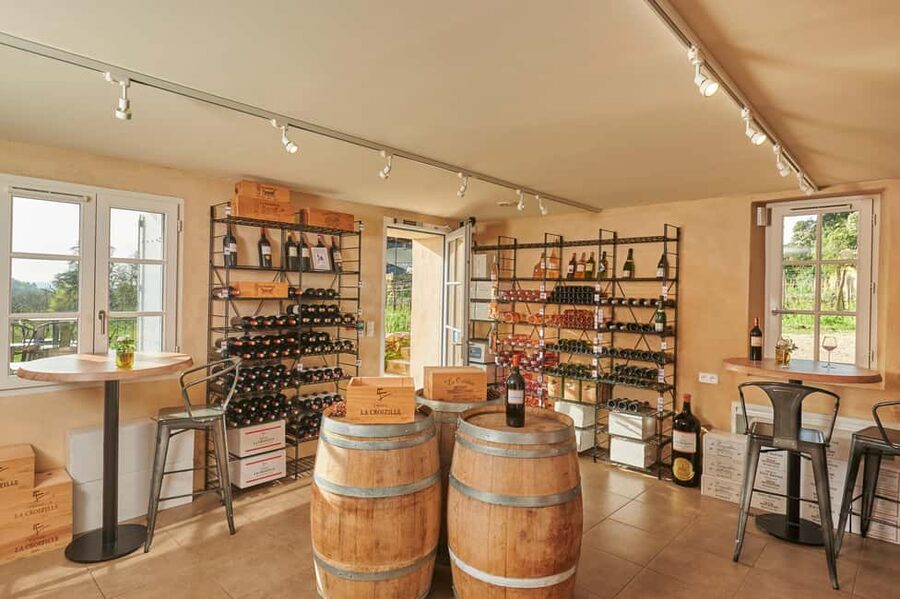
After the winery visits, you sit down for a commented tasting of three wines. The selection comes from the Bordeaux region, and the guide explains what you are drinking rather than simply pouring the glasses and moving on.
The tasting is the practical heart of the tour. You have already seen two different production settings, so you can think about how the wines relate to them. I suggest taking small sips and noticing what changes from one glass to the next. You do not need a trained palate. Listen for the guide’s descriptions, then decide which details you can actually detect.
The final included drink is a glass of your choice. Options listed for the experience include Saint-Émilion Grand Cru, Margaux, Bordeaux Supérieur, white, or rosé. This is a nice touch because it lets you choose the style you prefer instead of receiving one fixed pour.
If you mainly drink red Bordeaux, the white or rosé option gives you a reason to try something outside the usual order. If you want the most direct link to the local setting, Saint-Émilion Grand Cru is the obvious choice. Margaux and Bordeaux Supérieur give you a broader taste of the Bordeaux region.
The guide also explains the art of wine and food pairing. That makes the final glass more than a bonus drink. You are encouraged to consider how salt, fat, texture, and acidity affect the wine. Even a simple pairing lesson can change how you approach wine with meals later in your trip.
Same region, a different board:
- Paris: Montmartre Cheese, Wine & Pastry Guided Walking Tour
★ 4.8 · 2,255 reviews - Private Montmartre Food Tour with Wine, Cheese & Pastries
★ 5.0 · 1,027 reviews - Paris Le Marais Food Tour With 10+ Tastings, Cheese, Wine & More
★ 5.0 · 985 reviews - Paris: Wine and Cheese Lunch
★ 4.9 · 596 reviews
Cheese, charcuterie, and terrace views
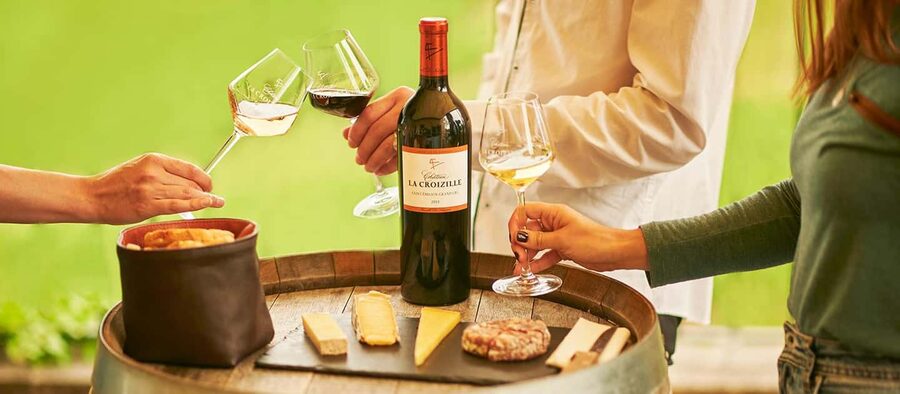
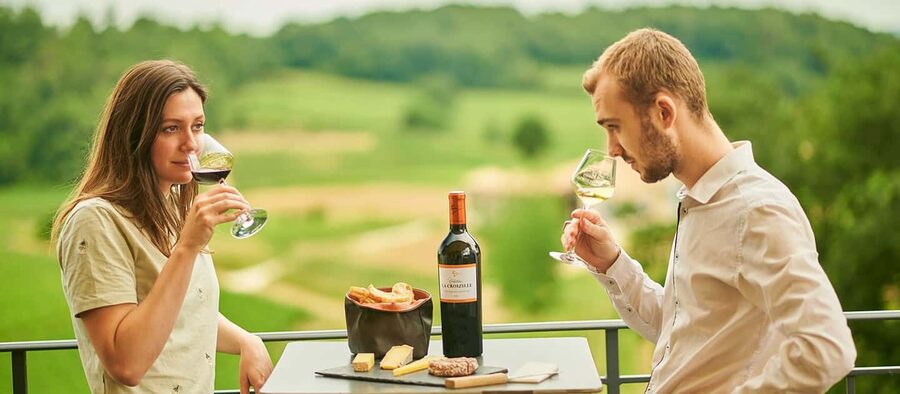
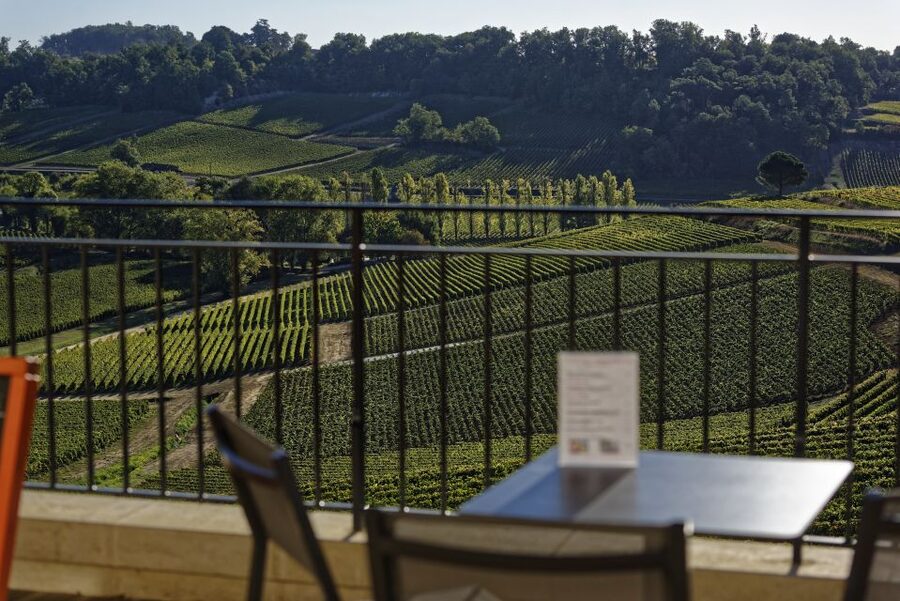
The tasting ends with a plate of local cheese and charcuterie, served with the glass you selected. You enjoy it from the outdoor seating areas, where the views stretch across the vineyard.
This is the most relaxed part of the visit. The first half asks you to listen and compare. The final course gives you time to sit, eat, and look out over the vines. The terrace is also one of the strongest reasons to schedule this experience when you want a slower break from sightseeing in Saint-Émilion.
The pairing board is not suitable for vegans because it includes both cheese and charcuterie. Vegetarians can request a hummus spread instead of the charcuterie. That option is helpful, but the experience does not offer a vegan version, so vegans should choose another tasting.
The food portion is worth viewing as part of the overall value, not as a full meal. You receive one board and one glass of wine. It should work well as a substantial snack or light lunch, but you should not book it expecting a large restaurant meal.
The outdoor setting can also affect your comfort. On a warm day, shade and sun exposure matter, particularly if you have walked from town. Bring water for the approach and dress for time outside. The views are a major part of the appeal, but the setting is not an excuse to ignore the heat.
Getting there from Saint-Émilion
The meeting point is about 3 kilometers from central Saint-Émilion. By car, the trip takes roughly four minutes. By bike, it takes about 11 minutes, while walking takes around 30 minutes according to the stated distance and timing.
Those figures sound easy, but the walk is the main practical issue to plan around. One person reported walking about half an hour each way under the sun and felt that a transfer to the winery would have made the price easier to justify. Another found the walk from the station scenic but still described the venue as hard to reach without a car.
I would choose a car or bicycle if you have that option. A bicycle can be especially convenient for the short ride from Saint-Émilion, though bicycles are available in town rather than at the station. If you arrive by train, you need to account for the additional trip from the station to town or the winery.
From Bordeaux, the property is about 45 kilometers away. The stated journey is around 45 minutes by car, while the train journey to Saint-Émilion is listed at about 35 minutes. From Bergerac, allow about an hour by car, with the train journey listed at roughly 45 minutes to Saint-Émilion.
The activity is wheelchair accessible, but the information provided does not explain the exact surfaces or transfer arrangements between areas. If you need specific access details, contact the provider before booking.
Is $44 a fair price?
At $44 per person, the price is reasonable if you value the full package: two classified wineries, three tastings, one cheese and charcuterie board, and a glass of your chosen wine. A single château visit can cost a similar amount, so seeing two different facilities gives this experience a clear advantage.
The price becomes less attractive if you must pay for a taxi or other transport to reach the property. The visit itself lasts 90 minutes, and the venue is not in the center of Saint-Émilion. Add transport costs and the total can rise quickly for a couple or family.
I would judge the value in two ways. If your priority is learning how Bordeaux wine is produced, the two-estate format is strong. If your priority is a long meal, extensive cellar time, or a full-day vineyard tour, this is a shorter and more focused outing.
The small group also helps justify the price. With a maximum of 10 participants, the guide can keep the tasting personal and respond to questions. You are paying for access, instruction, food, and the setting, not simply three sample pours.
Who will enjoy this visit most?
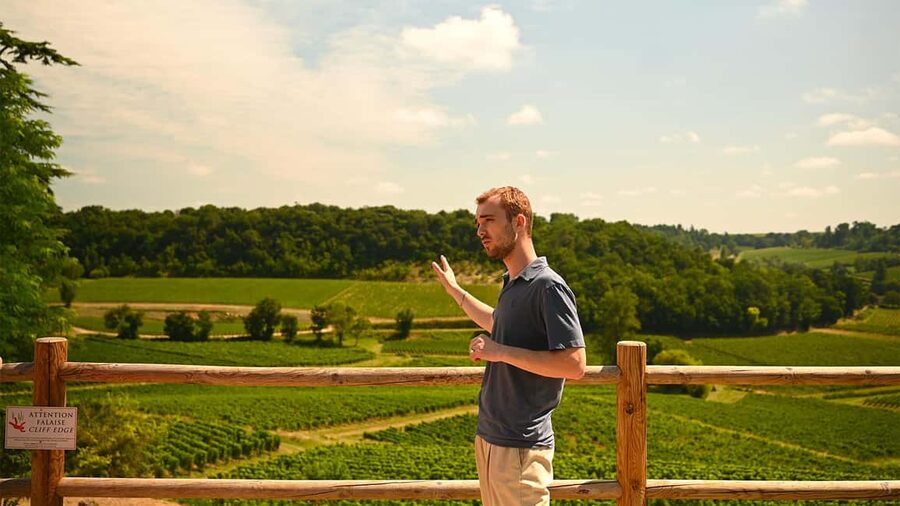
I would recommend this tour to wine drinkers who want a clear introduction to Saint-Émilion without spending a whole day on a formal wine course. It works especially well for couples, small groups, and people who enjoy comparing old and new approaches.
It also suits you if you want scenery with your tasting. The terrace and vineyard views give the visit a pleasant sense of place, and the food makes it feel less like a standing tasting at a counter.
You should think twice if you are vegan, if you dislike cheese or charcuterie, or if you need a fully planned transport service from Saint-Émilion. The vegetarian substitution is hummus, but there is no vegan board.
This may also be less suitable for anyone seeking a large selection of wines. The tasting includes three wines, followed by one glass of your choice. The strength is explanation and comparison, not quantity.
Booking details worth knowing
The experience lasts 90 minutes, with starting times based on availability. French, English, and Spanish are offered, and the group is limited to 10 participants.
Pets are not allowed. You can cancel up to 24 hours in advance for a full refund, and the reserve-now, pay-later option lets you hold a place without paying immediately.
The provider is Châteaux La Croizille and Tour Baladoz. At arrival, look for the modern La Croizille winery with its orange, black, and white exterior, then complete check-in at the reception of Château Tour Baladoz, the limestone building.
Should you book it?
Book this experience if you want two contrasting Saint-Émilion wineries, clear guidance in a small group, and a relaxed cheese and wine finish with vineyard views. The traditional cellar and modern winery give you more to think about than a single-estate tasting.
Skip it if the walk from Saint-Émilion will be difficult, if you need a vegan menu, or if you want a full meal and a longer cellar visit. For most wine-loving visitors with a car, bicycle, or planned transfer, $44 is a fair price for the variety and setting.
FAQ
How long does the Saint-Émilion winery experience last?
The experience lasts 90 minutes.
How much does the visit cost?
The price is $44 per person.
How many wineries do you visit?
You visit two wineries, Château Tour Baladoz and Château La Croizille. Both are classified as Saint-Émilion Grands Crus Classés.
How many wines are included in the tasting?
The visit includes a commented tasting of three wines, followed by a complimentary glass of your choice.
Which wines can I choose for the final glass?
The listed choices are Saint-Émilion Grand Cru, Margaux, Bordeaux Supérieur, white, or rosé.
Is food included?
Yes. The experience includes one plate of local cheese and charcuterie.
Is there a vegetarian option?
Yes. The charcuterie can be replaced with a hummus spread.
Is there a vegan option?
No. The experience does not offer a vegan option because the boards include cheese and charcuterie.
How far is the winery from Saint-Émilion?
The meeting point is about 3 kilometers from Saint-Émilion, or approximately four minutes by car, 11 minutes by bicycle, or 30 minutes on foot.
What languages are available?
The host or greeter can provide the experience in French, English, or Spanish.
New cheese trips in France
- Wine Masterclass & Cheese Tasting Workshop in Bordeaux★ 5.0 · 2 reviews
- Wine, Cheese and Charcuterie tasting★ 4.9 · 17 reviews
- Wine and Cheese experience★ 4.5 · 18 reviews
- Paris: Wine and Cheese Pairing★ 5.0 · 4 reviews
- Cheese food-tour through downtown Toulouse★ 4.5 · 7 reviews
- Wine and Cheese Tasting★ 4.5 · 17 reviews
- Paris Wine with Cheese Pairing & Tasting Small Group Class★ 5.0 · 6 reviews
- Paris Wine and Cheese Tastings Class near Le Marais★ 5.0 · 4 reviews
Cheese and Charcuterie Boards, compared.
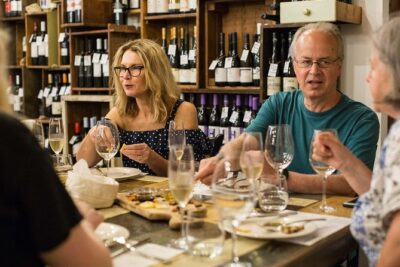
Hungarian Wine Tasting (with Cheese and Charcuterie) in Budapest
Read our review →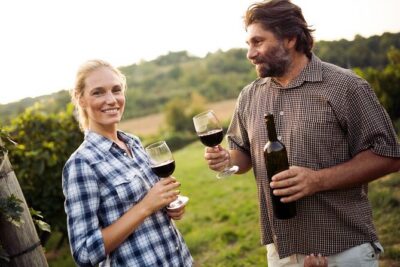
Full-Day Group Wine Tour (with cheese and charcuterie) in Niagara-on-the-Lake
Read our review →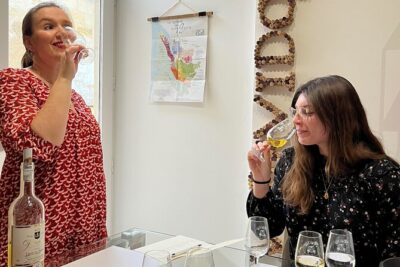
Tasting of 6 Bordeaux wines and pairing charcuterie & cheese
Read our review →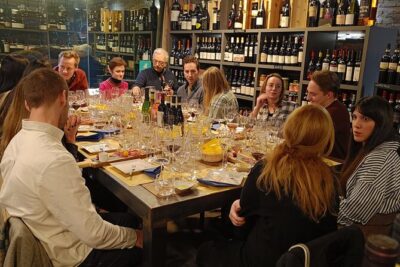
Taste of Lake Como: 4 Wines Paired with Local Cheese Charcuterie
Read our review →
Wine Masterclass with Cheese and Charcuterie Board
Read our review →
Introduction to Bordeaux wines paired with cheeses & charcuterie
Read our review →
Between the Lines Cheese and Charcuterie Picnic
Read our review →Browse the lists this tour appears in