
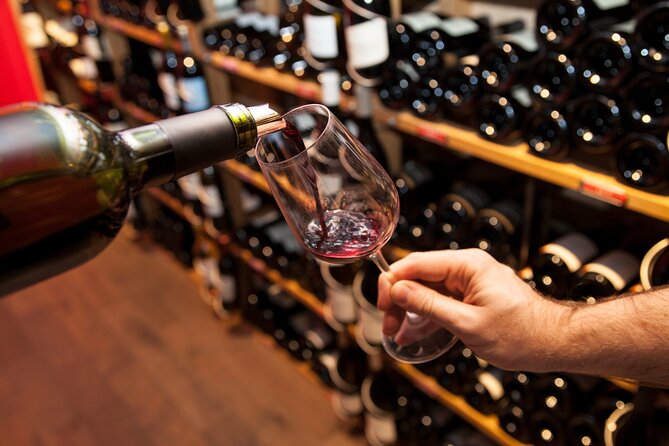
Reviewed · WINE AND CHEESE TASTINGS
Wine and cheese tasting in Bastille
Three French wines, French cheese, and a map of France make this a friendly way to get past the usual Paris food clichés. At 30 Rue Faidherbe, near Bastille, Camille guides you through the wines, their regions, and the basics of tasting without making the subject feel stiff or academic. I like the small group size and the chance to ask questions as you go.
I also like the practical pairing lesson: you taste two or three French cheeses with fresh baguette while comparing a dry white, a rosé, and a red. The main consideration is the short 90-minute format. You get a useful introduction rather than a full wine course, and the $46.13 price feels best if you value instruction as much as the drinks.
Key points to know before booking
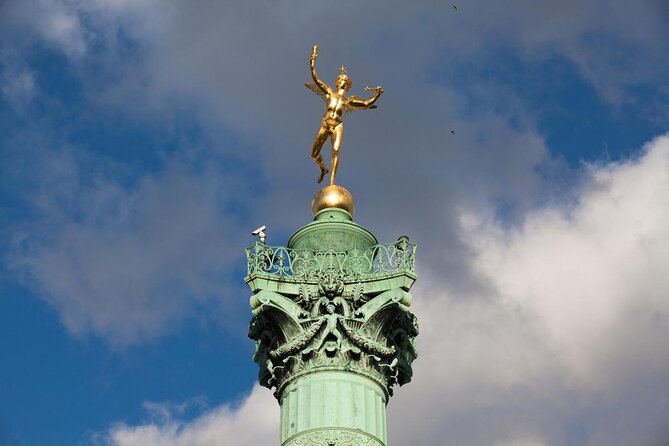
- Three wines from different French regions: The tasting covers a white, a rosé, and a red, with attention to grapes, origin, and style.
- Cheese and baguette are part of the lesson: Two or three French cheeses help show how food changes the way wine tastes.
- Camille brings a map of France: You can connect each bottle with its production region instead of tasting without context.
- Small groups keep the conversation open: The maximum is eight people, which suits visitors who want to ask questions.
- A central Bastille meeting point: Begin and end at 30 Rue Faidherbe at 3:30 pm.
- English-language guidance: The experience is offered in English and lasts about an hour and a half.
What the 90-minute Bastille tasting is really about
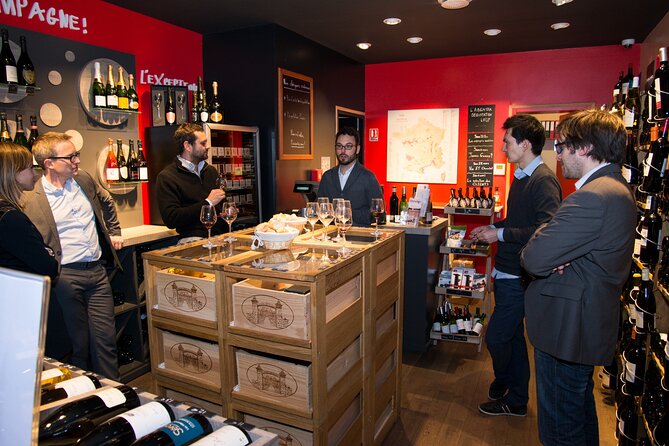
This is not a winery visit, a formal meal, or a long walking tour through Paris. It is a seated introduction to French wine, built around conversation, tasting, and simple food.
You meet at 30 Rue Faidherbe in the Bastille area at 3:30 pm. The activity returns to the same meeting point, so you do not need to arrange a pickup or figure out a second location at the end. That makes it easy to connect with an evening plan in Paris, though you should allow enough time to arrive before the start.
The group can have no more than eight people. That limit matters. In a large tasting, you often listen while someone else asks the useful questions. Here, you have a better chance to speak directly with the host, compare impressions, and ask about a wine you do not understand.
Le Vin qui Parle presents the session in English. Camille is the wine expert named in the tasting details, while Loïc also helps host the experience. The tone is conversational. You are encouraged to talk about wine, food, France, and your own country, so this is not meant to be a silent exercise in swirling glasses.
More Wine and Cheese Tastings in France
- Paris: Montmartre Cheese, Wine & Pastry Guided Walking Tour
★ 4.8 · 2,255 reviews - Private Montmartre Food Tour with Wine, Cheese & Pastries
★ 5.0 · 1,027 reviews - Paris Le Marais Food Tour With 10+ Tastings, Cheese, Wine & More
★ 5.0 · 985 reviews
Starting with French cheese and fresh baguette
The food is simple: two French cheeses, or possibly three, served with fresh baguette. That may sound modest, but it is the right kind of food for this format. Cheese gives you something substantial to taste while you compare the wines, and baguette helps clear your palate between pairings.
The tasting is not advertised as a full lunch. If you arrive hungry, plan to eat before or after. Think of the cheese as a teaching tool and a snack, not a meal that will replace dinner.
The pairing element is one of the strongest parts of the experience. A wine can taste sharper, softer, fruitier, or more rounded depending on what you eat with it. You get to notice those changes rather than treating wine as a drink that exists on its own.
The exact cheeses are not specified in advance. That is useful to know if you have strong preferences or dietary limits. You can expect French cheese and baguette, but you should not book this assuming a particular cheese, a large spread, or a fully planned menu.
Three wines, three useful points of comparison
The tasting includes three different French wines. The examples described are a very dry white, a distinctive rosé, and a pleasing red. This gives you a broad comparison across color and style in a short amount of time.
The white is described as very dry. If you usually prefer sweet wines, this is a good chance to learn what dry really means. It may also help you describe what you like more accurately when ordering wine later in France.
The rosé is presented as different from the kind many people usually drink. That makes it useful for comparison. Rosé is not one fixed style, and this tasting gives you a chance to notice how French production and regional character can change the result.
The red completes the trio. You can compare its structure and flavor with the lighter white and rosé, then see how cheese affects each one. The point is not to pick a winner. It is to build a few reference points so that future wine lists feel less mysterious.
The hosts explain the wines’ regions of production, grape varieties, and characteristics. Camille uses a map of France to show where each wine comes from. I particularly like that detail because French wine labels can be confusing. The name on the bottle may refer to a place rather than a grape, and a map gives that system some shape.
Learning how to taste without the usual fuss
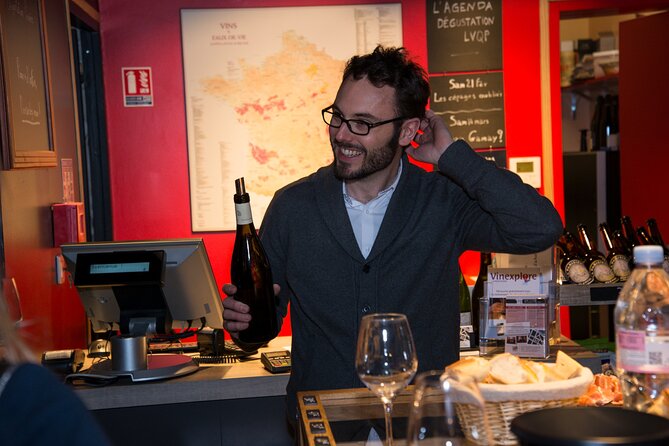
You do not need prior wine experience. The session explains how to taste and appreciate wine in plain terms, making it suitable for a complete beginner.
You also do not need to arrive with a polished vocabulary. If you know only that you like red wine or dislike dry white wine, that is enough to start. The value comes from tasting three examples side by side and hearing why they differ.
At the same time, the experience can work for someone who already knows wine. One participant with considerable wine-tasting experience still found value in learning the French approach. That makes sense, since French wine has its own way of organizing bottles by region, tradition, and production area.
The host’s role is important here. The strongest praise centers on Camille’s enthusiasm, clear explanations, and ability to make the lesson fun. That balance is worth seeking in any tasting. Too much technical talk can drain the pleasure, while too little explanation leaves you with three glasses and no idea what you just drank.
You should expect a friendly educational session, not a certification course. You will leave with a better framework for tasting, but not with expert-level knowledge of every French region.
More Wine and Cheese Tastings in Paris
- Paris: Wine and Cheese Lunch
★ 4.9 · 596 reviews - Cheese & Wine Tasting in Montmartre with Local Cheesemonger
★ 5.0 · 470 reviews - French Wine, Champagne And Cheese Tasting Paris SECRET WINE DOOR
★ 5.0 · 464 reviews - Paris Wine Tasting plus Cheese Lunch with an Expert Sommelier
★ 5.0 · 424 reviews
Why the Bastille location works well
The meeting point is in Paris’s 11th arrondissement, at 30 Rue Faidherbe. The activity description notes that it is near public transportation, which is helpful for reaching the appointment without a private vehicle.
Because the experience begins and ends at the same address, you can treat it as a compact addition to a day in eastern Paris. The stated start time is 3:30 pm, placing it between lunch and dinner. That timing can work well if you want an afternoon activity before an evening meal.
There is no sightseeing route built into the tasting, so do not choose it for monuments or city views. Its Paris appeal comes from the local food and drink setting rather than from a list of famous sights.
A practical tip: give yourself a little extra time to find 30 Rue Faidherbe. The information provides the address but not a detailed entrance description. Having the mobile ticket ready on your phone is useful, and confirmation is sent when you book.
Is $46.13 a fair price?
At $46.13 per person, the value depends on what you want from a tasting. If you are paying only for three pours and a little cheese, the price may feel high compared with buying wine in a shop. You are also paying for the host’s explanations, regional context, pairing guidance, and the convenience of a planned English-language session.
The small group limit improves the value. A maximum of eight gives the host room to answer questions and adjust the conversation to the group. It also makes the experience more personal than a large, standardized tasting.
The cheese and baguette add a useful food component, though you should not count on a meal. The real benefit is the chance to taste the wines in relation to food, which is harder to reproduce if you simply buy a bottle and drink it without guidance.
The experience becomes especially worthwhile if you are new to French wine, want help choosing bottles, or plan to visit wine shops and restaurants during your stay. One participant left with two bottles, and another bought all three wines tasted. You are not required to buy anything, but the session can help you make more confident choices if you do want to take a bottle home.
Who will get the most from this experience?
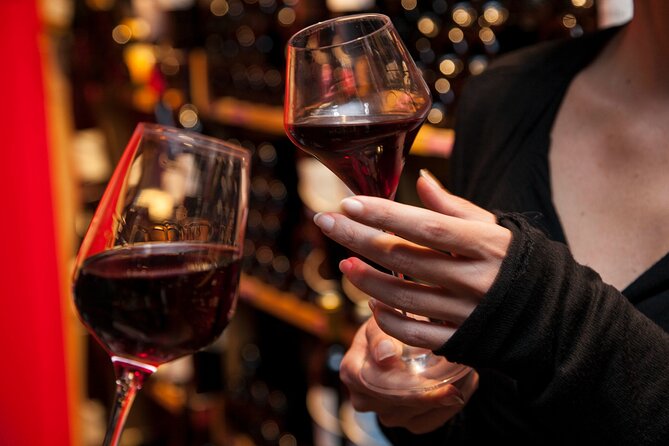
I would recommend this tasting to first-time visitors who want a gentle introduction to French wine without committing to a long class. The English guidance and small group make it accessible, even if wine terminology is new to you.
It also suits couples and friends who enjoy talking about food. The social side matters here. The host invites conversation about France and your own country, so the session feels like a shared table experience rather than a lecture.
Wine fans can enjoy it too, particularly if French labels or regional styles still feel confusing. The map of France helps connect each bottle to a place, and the mix of white, rosé, and red gives you a compact refresher.
I would be more cautious if you want a large meal, a full vineyard visit, or a highly technical course. The food is limited to cheese and baguette, the session stays at one meeting point, and the entire activity lasts about 90 minutes.
The menu may also require a quick check if you have dietary restrictions. The listed food is French cheese and fresh baguette, but no other dietary information is provided.
Timing, accessibility, and cancellation details
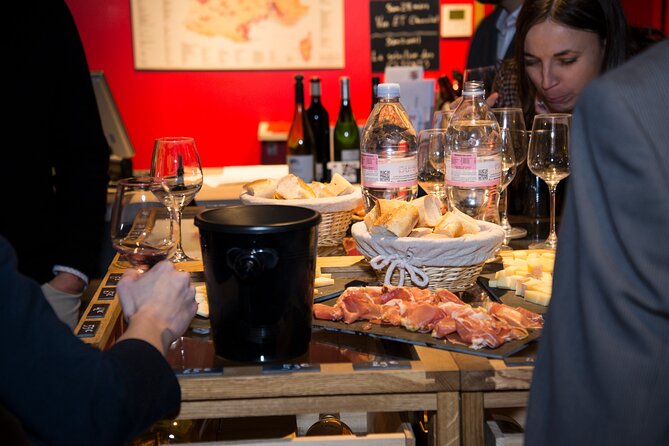
The experience starts at 3:30 pm and lasts approximately one hour and 30 minutes. It ends back at the starting point, so you can plan around it without arranging transportation from another neighborhood.
You receive confirmation at booking, and a mobile ticket is accepted. The activity is near public transportation, and service animals are allowed.
Free cancellation is available if you cancel at least 24 hours before the local start time. Cancel within 24 hours, or request changes during that period, and you will not receive a refund. Keep that deadline in mind before fixing dinner reservations or other timed activities.
Should you book the Bastille wine tasting?
Book it if you want a friendly, compact introduction to French wine with real food pairing and an English-speaking host. The three-wine format, Camille’s map-based explanations, and the group limit of eight give you more than a quick sip at a bar.
The best reason to choose it is the balance between instruction and conversation. You learn how French wine is linked to place, taste a dry white, a different style of rosé, and a red, then see how cheese and baguette change the experience.
Skip it if you are looking for a full meal, a countryside vineyard, or a long professional course. For everyone else, the $46.13 cost is reasonable when you want useful wine guidance in Paris without giving up an entire day.
FAQ
Where does the wine and cheese tasting take place?
The meeting point is 30 Rue Faidherbe, 75011 Paris, France. The activity ends back at the same meeting point.
What time does the experience begin?
The stated start time is 3:30 pm.
How long does the tasting last?
The activity lasts approximately one hour and 30 minutes.
How many wines will I taste?
You will taste three different French wines. The tasting includes a white, a rosé, and a red.
What food is included?
The food includes two or three French cheeses and fresh baguette. The sample menu identifies French cheese with two different cheeses and baguette.
Is the experience offered in English?
Yes. The tasting is offered in English, and Camille is identified as the wine expert for the experience.
How many people can join the group?
The group has a maximum of eight travelers.
Can I cancel for a full refund?
Yes. You can cancel at least 24 hours before the experience start time for a full refund. Cancellations or changes made less than 24 hours before the start are not refunded or accepted.
New cheese trips in Paris
- Paris: Wine and Cheese Pairing★ 5.0 · 4 reviews
- Paris Wine with Cheese Pairing & Tasting Small Group Class★ 5.0 · 6 reviews
- Paris Wine and Cheese Tastings Class near Le Marais★ 5.0 · 4 reviews
- French Wine and Cheese Master Class Near the Eiffel Tower★ 5.0 · 6 reviews
- Paris Marché d’Aligre Walking Tour with Chocolate and Cheese Tasting★ 3.5 · 24 reviews
- Paris Wine and Cheese Pairing Private Masterclass in a Bistrot★ 5.0 · 7 reviews
- Wine and cheese tasting at Latin Quarter★ 5.0 · 15 reviews
- Wine & Cheese in Montmartre: A True Taste of France 6-ppl Max★ 5.0 · 6 reviews
Wine and Cheese Tastings, compared.
Classic Saloon Boat Cruise with Cheese & Wine
Read our review →
Montmartre Cheese, Wine & Pastry Guided Walking Tour
Read our review →
Evening Candle Light Cruise With Wine & Cheese
Read our review →
Vila Nova de Gaia: Port Wine Tasting with Cheese Pairing
Read our review →
Private Montmartre Food Tour with Wine, Cheese & Pastries
Read our review →
Paris Le Marais Food Tour With 10+ Tastings, Cheese, Wine & More
Read our review →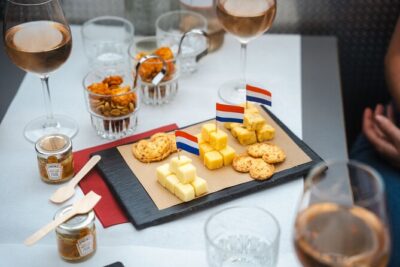
Browse the lists this tour appears in