
Reviewed · CHEESE WALKING AND FOOD TOURS
Zadar Walking Tour sponsored by Gligora Cheese and deli.
Zadar’s old town is a history book written in stone, and this compact walking tour helps you read it. In about 100 minutes, you move from People’s Square and medieval wells to Roman remains, an unusual Byzantine church, the fish market, and some of Croatia’s finest church art.
I like the central meeting point on Narodni Trg, and I like the practical local advice about where to eat and shop. The chance to visit the market and sample Pag cheese adds a welcome taste of present-day Zadar, not just old dates and dead rulers.
The main consideration is pace. Ten stops in under two hours means the tour gives you a broad introduction rather than long visits inside each church. Summer heat can also make the walk less comfortable, especially in streets with little breeze.
Key points at a glance
- People’s Square is an easy starting point: You meet in the middle of Zadar’s old town, close to several major sights.
- The route links several eras: Roman ruins, medieval churches, Venetian defenses, Austrian-era gardens, and modern market life all appear in one walk.
- The market adds local flavor: You see the green market and fish market, with a chance for cheese tasting on some departures.
- The guides make the difference: Guides named in the tour feedback include Melina, Jasmina, Sara, Inez, Lucinja, Hajdi, and others.
- It is good value at $18.14: For a guided orientation lasting about 1 hour and 40 minutes, the price is modest.
- It suits first-time visitors best: You get context and restaurant advice before exploring more of Zadar on your own.
Why this short walk works in Zadar
Zadar can feel confusing at first. Its old town is compact, but its story is not. Roman columns sit beside medieval churches. Venetian military works support parks and promenades. A market that once occupied the Roman Forum now sells fish, fruit, vegetables, and local products a short walk away.
This tour gives you a useful framework. Instead of seeing a pile of attractive buildings, you learn how the city changed hands, rebuilt itself, defended itself, and kept daily life going through all of it.
I would take it early in a stay, ideally on your first morning or afternoon in Zadar. The guide can point out places you might otherwise pass, then give you suggestions for meals and shopping that help shape the rest of your visit.
The price is $18.14 per person, which is reasonable for a local guide and a route covering much of the historic center. You are not paying for admissions to major attractions here, since the listed stops are viewed from outside or entered without a separate ticket during the tour. The value comes from explanation, orientation, and the chance to ask questions.
Departures are offered three times in the morning or afternoon, giving you some freedom around meals, ferry plans, or a day at the coast. The tour is offered in English, and group size can reach 30 people. Some departures may be much smaller, which can make it easier to ask questions and hear the guide clearly.
More Cheese Walking and Food Tours in the world:
- Paris: Montmartre Cheese, Wine & Pastry Guided Walking Tour
★ 4.8 · 2,255 reviews - Private Montmartre Food Tour with Wine, Cheese & Pastries
★ 5.0 · 1,027 reviews - Paris Le Marais Food Tour With 10+ Tastings, Cheese, Wine & More
★ 5.0 · 985 reviews
Starting at People’s Square
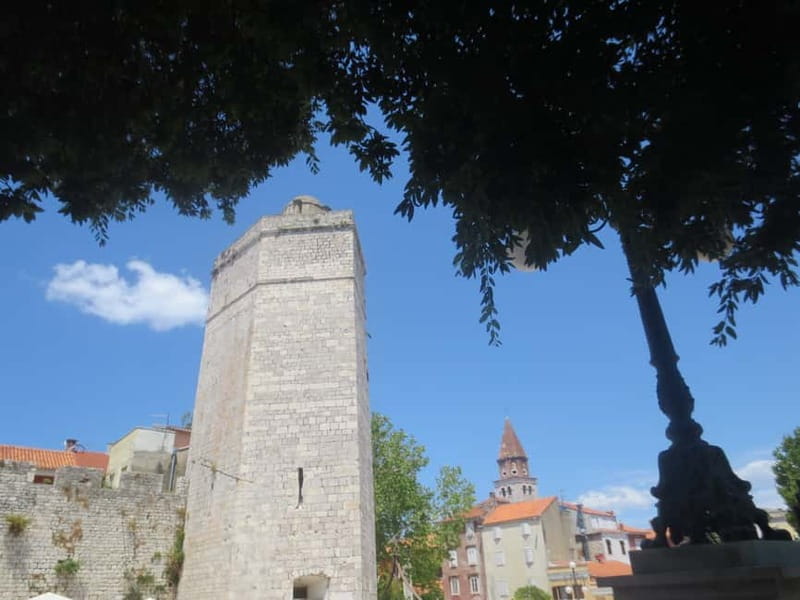
The meeting point is Narodni Trg, also called People’s Square. This is a practical place to begin because it sits in the old town and is easy to connect with on foot from nearby streets.
The square began in the Middle Ages as the center of public life. On its northern side, the City Guard building dates from 1562 and was designed by Venetian architect Michele Sanmicheli. That detail gives you an early clue to Zadar’s past: local life developed under strong Venetian influence, and public buildings often had both civic and defensive roles.
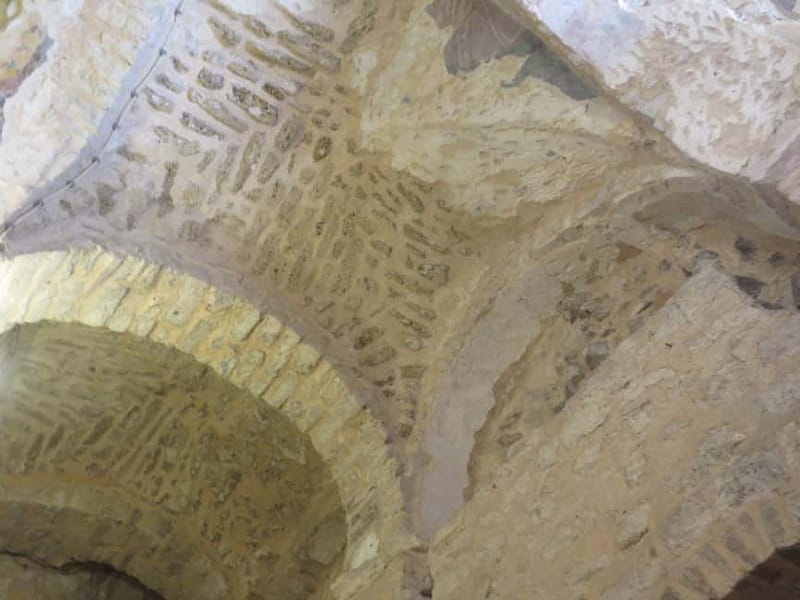
The first two stops are both on Narodni Trg. You see the City Guard area and the remains of St. Lawrence Church, an 11th-century pre-Romanesque church. The church is reached through the premises of Cafe Lovro, an unusual arrangement that makes this stop easy to miss when you are walking alone.
Each of these first stops lasts about 10 minutes. That is enough time for a clear explanation and a look around, but not a long architectural study.
One practical note matters here. One person had trouble locating the guide at the square because the meeting instructions were not clear enough. I would arrive a little early, check the exact confirmation details, and stay near the stated meeting point rather than wandering off to take photos.
St. Simeon and Zadar’s medieval treasure
The Church of St. Simeon brings the tour into one of Zadar’s more unusual religious stories. Inside a silver casket is the mummified body of Simeon the God-receiver, the elderly figure described in the Gospel of Luke as holding the infant Jesus.
The casket is considered one of Croatia’s most valuable works of medieval goldsmith art. Even if religious relics are not your main interest, the stop gives you a sense of Zadar’s importance during the Middle Ages. The city was not merely a port and a military prize. It also had the wealth and skilled craftsmen needed to produce major sacred objects.
The scheduled stop lasts about 10 minutes. Ask questions here if you want more context, since the story can otherwise pass quickly. The guide’s explanation is especially useful for connecting the biblical figure, the city’s patron saint, and the object that preserves his memory.
Five Wells and Queen Jelena’s park
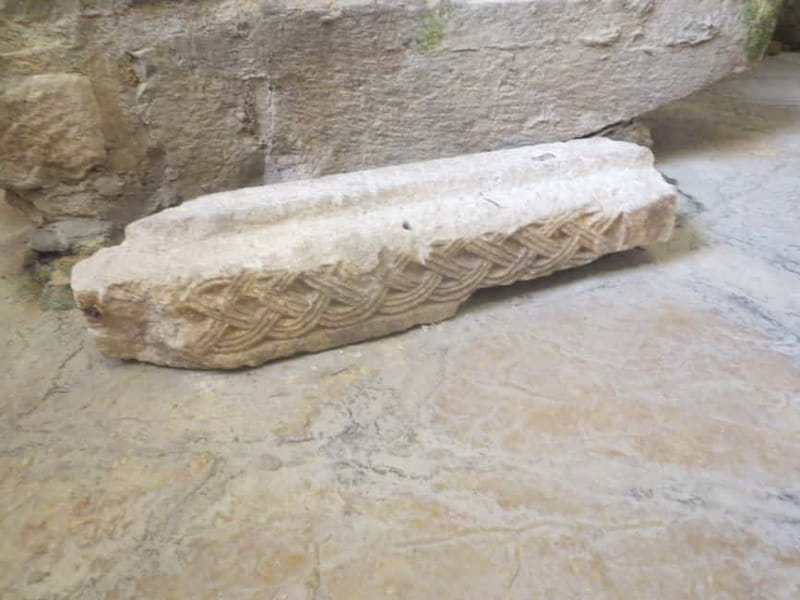
At Five Wells Square, the tour shifts from church history to military engineering. The square sits between the medieval city walls and the Renaissance Grimani bastion. Its five wellheads are lined up in a row, exactly as the name promises.
The wells were part of a large cistern built by the Venetians in the 16th century. Zadar needed a dependable water supply during Turkish sieges, when access to the countryside could be cut off. The site makes a practical point: fortifications were not only walls and cannons. Water could decide how long a city survived.
Above the old military works is Queen Jelena Madijevka Park. Founded in 1829 by Austrian commander and botanist Baron Franz Ludwig von Welden, it was the first public park in Dalmatia. Building a garden on top of a bastion was an unusual choice, but it gave Zadar a calm green space where a defensive structure once dominated.
The two stops together take about 20 minutes. I like this section because it shows how one part of the city can change purpose without losing its earlier story. You see defense, water supply, botany, and public recreation in a small area.
More cheese tours worth booking in the world:
- Amsterdam Classic Saloon Boat Cruise with Drinks and Cheese
★ 5.0 · 31,825 reviews - Amsterdam: Classic Saloon Boat Cruise with Cheese & Wine
★ 4.6 · 27,035 reviews - Krakow–Zakopane: Cable Car, Chocholow Baths, Cheese & Vodka
★ 5.0 · 10,720 reviews - Krakow–Zakopane: Cable Car, Chocholow Baths, Cheese & Vodka
★ 4.8 · 8,989 reviews
Zadar Market and the taste of Pag cheese
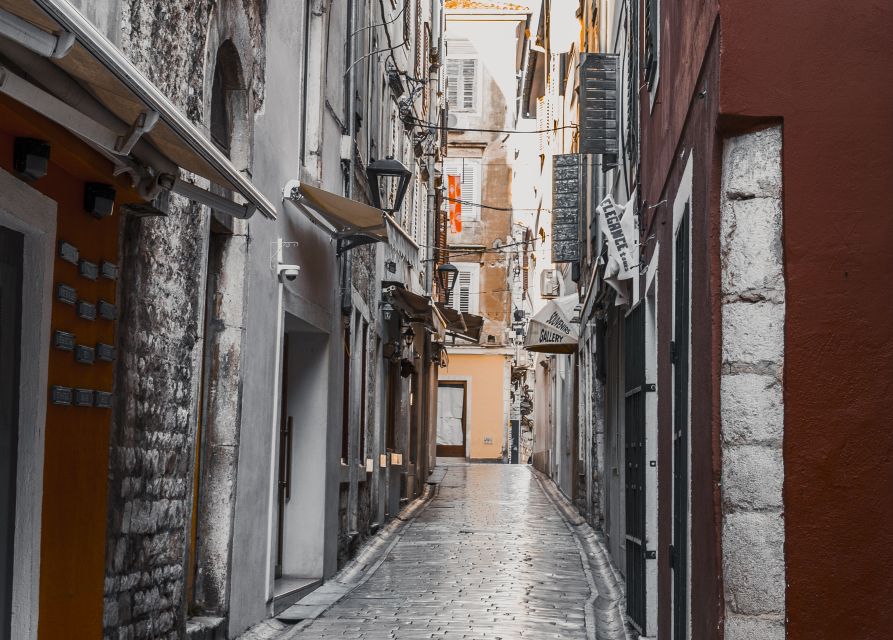
The main market is one of the most useful stops for anyone staying in Zadar beyond a single meal. Trznica Zadar includes the open green market and a covered fish market on the peninsula.
The current market has been in this location since 1952, but market life in Zadar reaches back much further. In earlier times, the main market operated around the Roman Forum. Today, you may see fruit, vegetables, fish, meat, traditional products, and souvenirs in one concentrated area.
The tour is sponsored by Gligora Cheese and deli, and some guides include a cheese tasting here or at the shop. Pag cheese is a particularly good local reference point because it connects food to the nearby island of Pag and gives you something specific to seek out after the tour.
Do not expect a full food tour. The market stop is scheduled for about 10 minutes, so the emphasis is on orientation and local context rather than a long tasting session. Still, this is one of the tour’s best features. A church can tell you about the past, but a market shows you how the city eats today.
The practical advice can be worth nearly as much as the sightseeing. Guides have offered suggestions about restaurants, shops, and other places to visit during the rest of a Croatian trip. Write down names as you go, since recommendations are easy to forget once you return to the waterfront.
St. Chrysogonus and the city’s royal connections
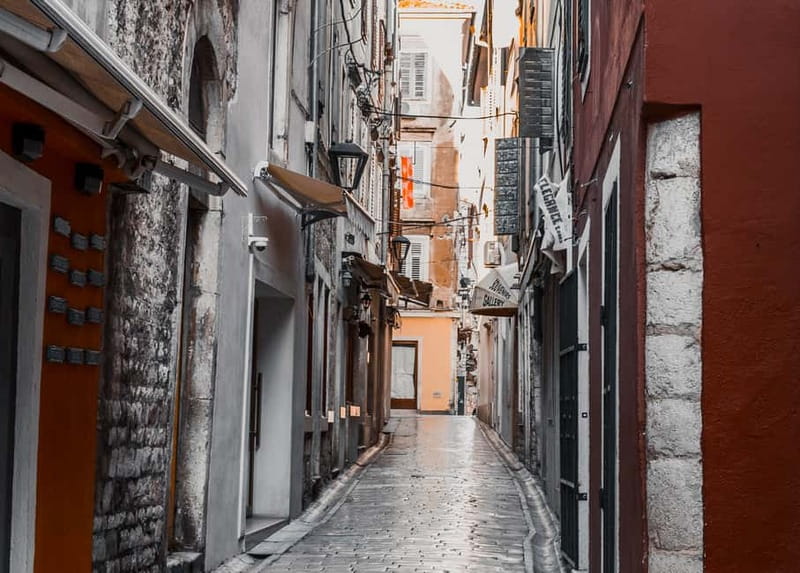
The Church of St. Chrysogonus is a Romanesque church consecrated in 1175. It was built on the site of a Roman emporium and is the only remaining part of a much larger medieval Benedictine abbey.
The church also has a connection to Elizabeth of Bosnia, the murdered queen dowager of Hungary and Dalmatia. She was secretly buried here in 1387, and her body remained in the church for three years before being transferred to the basilica at Székesfehérvár.
A planned bell tower begun in 1485 was never completed. That unfinished work is a reminder that historic cities are full of projects interrupted by politics, money, war, or changing priorities.
The stop is scheduled for about 10 minutes. The outside view may be the main part of your visit, since access to historic churches can vary. The guide supplies the context that helps you understand why this relatively quiet building matters.
The Cathedral of St. Anastasia
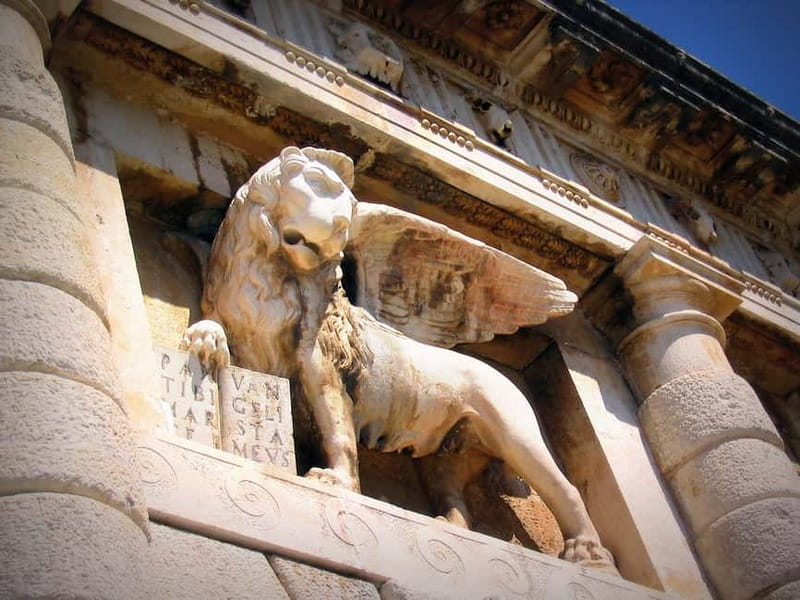
Zadar’s cathedral dates from the 12th and 13th centuries and has a decorated facade with a three-nave interior. Inside are traces of frescoes, a marble sarcophagus containing the relics of St. Anastasia, and carved choir stalls.
The cathedral was badly damaged during World War II and later reconstructed. That fact adds another layer to the walk. Zadar’s buildings are not frozen pieces of medieval Europe. Many have been damaged, repaired, altered, and put back into use over centuries.
The stop lasts about five minutes, shorter than most others. A glass vestibule lets you look inside when the cathedral is closed, which happens often. If you want a longer look at the interior, check opening arrangements separately and return on your own.
This is a good example of how to use the tour well. Treat the stop as an introduction, then decide which sites deserve a second visit later.
The Roman Forum and St. Donatus
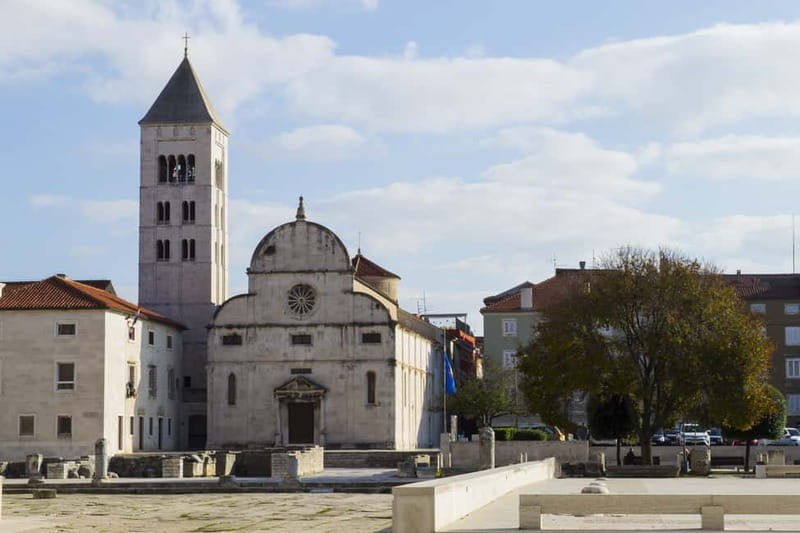
The ancient Roman Forum is one of Zadar’s most important outdoor spaces. It was built between the first century BC and the third century AD, and it remains close to the center of public and religious life.
Roman fragments appear around the old town, sometimes in places that seem random. The guide helps you spot what belongs to the Forum and what was added later. That explanation matters because the ruins are not arranged like a single enclosed museum. You need some help reading the site.
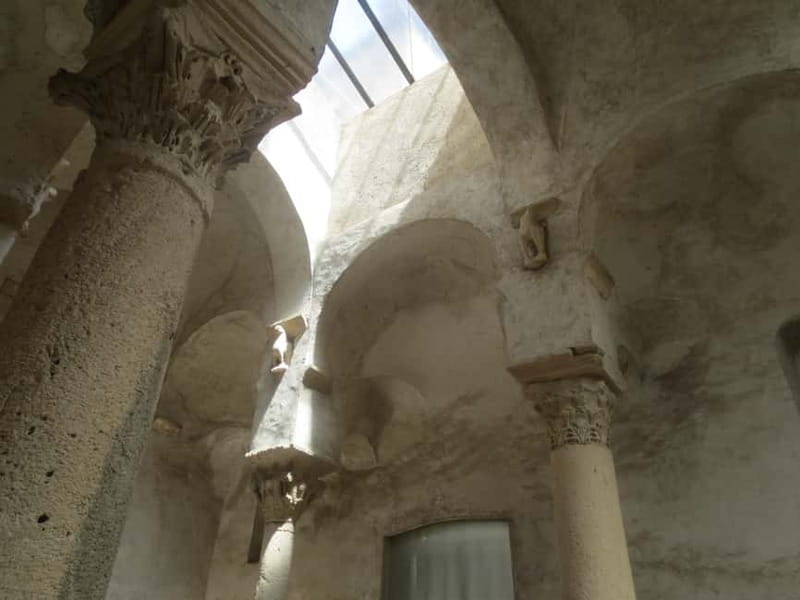
St. Donatus dominates one side of the Forum. The circular church dates from the beginning of the ninth century and was commissioned by the bishop after whom it is named. Its Byzantine-style form makes it unlike most churches you see in Croatia.
Inside, two complete Roman columns were reused from the Forum. Paving slabs from the Roman complex were also uncovered after the original church floor was removed. This is a fine example of Zadar’s layers sitting on top of one another rather than being neatly separated.
The church has not been used for services for about 200 years. Today, it often serves as a concert hall or exhibition space. The tour schedules two short sections here, about seven minutes each, one for the Forum and one for the church.
If St. Donatus is open and you want to see more, ask the guide how to return. A brief exterior explanation may be enough for some people, but the unusual round interior is worth extra time for anyone interested in early Croatian architecture.
What the guides add to the route
The tour has been led by several guides, including Melina, Jasmina, Sara, Inez, Lucinja, Hajdi, Angela, Mirena, Milena, and others. The strongest pattern is a friendly, clear presentation with plenty of historical detail and room for questions.
Melina has been especially good at answering children’s questions, including those from a 10-year-old and a grandson named Robert. Jasmina is described as funny and helpful with local recommendations, while Lucinja has offered a more personal account of Zadar’s past and local stories.
Guide quality can vary on any scheduled walking tour, but the names and comments here suggest a team with different strengths. You may get a compact lecture on architecture, a lively account of local history, or more practical food advice.
The best approach is to participate. Ask about places to eat, the market, the church interiors, or which sights deserve a return visit. The tour is short enough that a few well-chosen questions can shape the whole experience.
Heat, walking pace, and group size
This is an easy city walk for most people, and most participants can take part. It is not a strenuous hike, but you will be outside for about 100 minutes and moving between several stops.
Heat deserves attention. One September walk was described as warm and uncomfortable in areas with little breeze. Morning departures are probably the safer choice if you are sensitive to heat, though the available schedule may determine what works best.
Wear comfortable shoes and bring water. The old town has many hard surfaces, and the route includes open squares where shade may be limited. Since there are no major admission stops built into the schedule, you should not need to carry much beyond the basics.
The group limit is 30 people. A group that size can work in wide squares, but narrow streets and church entrances may feel crowded. Smaller departures have also occurred, including one with six people and one private-feeling departure with a single participant.
The meeting point is near public transportation. Service animals are allowed, and confirmation is received when you book. Free cancellation is available up to 24 hours before the start time. Cancellations or changes made later are not accepted for a refund.
Who should book this Zadar walk
I would recommend this tour to a first-time visitor who wants the old town explained without spending half a day in a museum. It is also a good fit for history fans who want a connected story about Roman, medieval, Venetian, and Austrian layers.
Families can do well here, especially when the guide keeps younger participants involved with questions and stories. The route also suits people on a short stop who need to see the main historic areas quickly.
I would be more cautious if you want long interior visits, extensive food sampling, or a slow photography walk. The schedule is full, and most stops are short. You will see a lot, but you may need to return later for a closer look.
Should you book it?
Book this Zadar walking tour if you want strong orientation for a modest price. The route covers the key historic center, the market adds a useful local touch, and the guides provide restaurant and shopping advice that can improve the rest of your stay.
The tour works best as an introduction, not a complete study of every church. Arrive early at Narodni Trg, choose a cooler departure if possible, and keep time afterward for St. Donatus, the cathedral, or the market if one of them catches your interest.
At $18.14, the combination of history, local guidance, and practical tips makes this a sensible first activity in Zadar.
FAQ
Where does the Zadar walking tour begin?
The tour begins at People’s Square, Narodni trg, in Zadar’s old town.
Where does the tour end?
The tour ends back at the meeting point on People’s Square.
How long does the tour last?
The walking tour lasts approximately 1 hour and 40 minutes.
What language is the tour offered in?
The tour is offered in English.
How much does the tour cost?
The listed price is $18.14 per person.
How many people can join the tour?
The tour has a maximum group size of 30 participants.
What sights are included?
The route includes People’s Square, St. Lawrence Church, St. Simeon’s Church, Five Wells Square, Queen Jelena Madijevka Park, Zadar Market, St. Chrysogonus Church, the Cathedral of St. Anastasia, the Roman Forum, and St. Donatus Church.
Is the tour suitable for most people?
Yes. Most participants can take part, and the tour is near public transportation. Service animals are allowed.
Can I cancel for a refund?
You can cancel for a full refund up to 24 hours before the experience begins. Cancellations or changes made less than 24 hours before the start time are not accepted.
New cheese trips in the world
- Zermatt: Outdoor fondue “group experience under the stars”★ 4.7 · 3 reviews
- Zurich: Lucerne Trip, Igloo Fondue and Titlis Rotair Option★ 4.9 · 5 reviews
- Zurich Open-top Tour and Chocolate and Cheese Countryside★ 3.5 · 11 reviews
- Zaanse Schans & Volendam Private Tour: Windmills and Cheese★ 5.0 · 5 reviews
- Wine Masterclass & Cheese Tasting Workshop in Bordeaux★ 5.0 · 2 reviews
- Wine Tasting with Cured Meats & Cheeses in Florence★ 5.0 · 2 reviews
- Amsterdam: Zaanse Schans E-Bike Tour with Windmills & Cheese★ 4.5 · 12 reviews
- Wine, Cheese and Charcuterie tasting★ 4.9 · 17 reviews
Cheese Walking and Food Tours, compared.

Montmartre Cheese, Wine & Pastry Guided Walking Tour
Read our review →
Private Montmartre Food Tour with Wine, Cheese & Pastries
Read our review →
Paris Le Marais Food Tour With 10+ Tastings, Cheese, Wine & More
Read our review →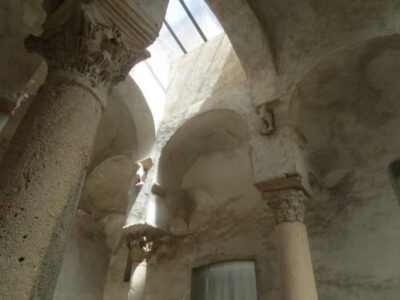
Zadar Walking Tour sponsored by Gligora Cheese and deli
Read our review →

Ultimate London Cheese Crawl : Guided Food Tour
Read our review →
Paris St Germain Food Tour with Cheeses, Foie Gras, Wines & More
Read our review →
Le Marais Walking Food Tour with Cheese, Wine & Pastries
Read our review →Browse the lists this tour appears in