
Reviewed · WINE AND CHEESE TASTINGS
Paris Wine with Cheese Pairing & Tasting Small Group Class
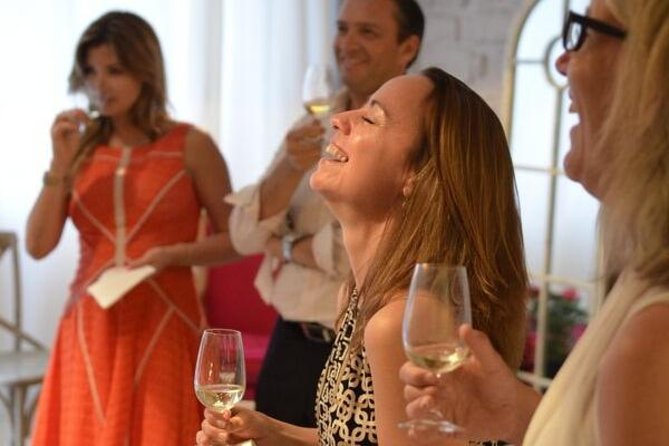
The most entertaining part of this Paris class may be the Champagne bottle opened with a sword. But the real lesson is how wine and cheese work together, from the first sniff to the last bite. Sommelier Stéphane leads the roughly two-hour session at Le Foodist, a cookery school near the Panthéon.
I like the broad French tasting lineup, with four regional wines plus Champagne, and I like the way the class moves beyond nibbling into terroir, cheese families, and practical pairing tips. The main consideration is simple: at $113.49 per person, this is not a casual glass of wine. You are paying for instruction, food, and a hosted class, so it makes the most sense if you want to learn as well as taste.
Key points at a glance
- Five cheese families: Taste examples from the major French cheese categories and compare their textures and flavors.
- Four wines plus Champagne: The tasting covers different parts of France rather than focusing on one region.
- Stéphane’s lively instruction: Expect humor, clear explanations, and useful guidance for first-time wine and cheese tasters.
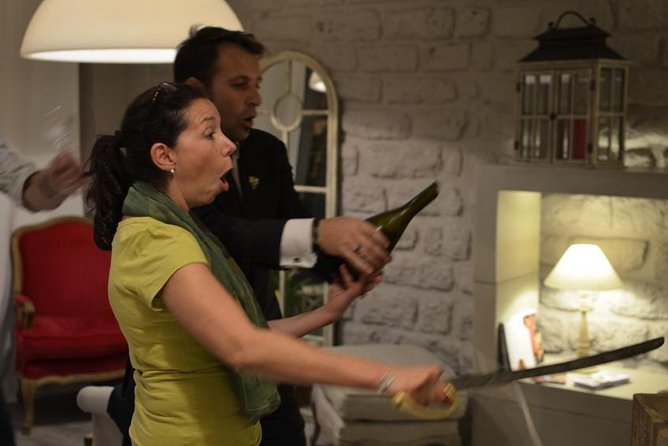
- Champagne sabering: You may get a chance to open a bottle with a sword, then share the result with the group.
- Small class setting: The maximum of 16 people allows room for questions and personal attention.
- Central Paris location: Le Foodist is at 59 Rue du Cardinal Lemoine, close to the Panthéon and public transportation.
Starting at Le Foodist near the Panthéon
You meet your sommelier at Le Foodist, 59 Rue du Cardinal Lemoine, in the 5th arrondissement. The school is close to the Panthéon and near public transportation, which makes this an easy mid-day addition to a day in the Latin Quarter.
The class starts at noon and ends back at the same address. That fixed start matters in Paris, where a late museum entry or long lunch can quickly throw off your plans. I would leave extra time to find the school and arrive ready to begin at noon, rather than trying to squeeze in a last-minute stop nearby.
Le Foodist is a cookery school rather than a grand wine cellar or formal restaurant. That gives the class a practical feel. You are there to taste, ask questions, and handle the food, not simply sit through a polished presentation.
The group can include up to 16 people. That is large enough to create a social atmosphere, but still small enough for a sommelier to keep the class active. If you prefer a quiet, private tasting, this may feel more communal than intimate. If you enjoy meeting other food lovers, the shared table works in its favor.
More Wine and Cheese Tastings in France
- Paris: Montmartre Cheese, Wine & Pastry Guided Walking Tour
★ 4.8 · 2,255 reviews - Private Montmartre Food Tour with Wine, Cheese & Pastries
★ 5.0 · 1,027 reviews - Paris Le Marais Food Tour With 10+ Tastings, Cheese, Wine & More
★ 5.0 · 985 reviews
Learning to taste four French wines
The wine portion includes four samples from different French regions, followed by one Champagne sample. The point is not to drink large pours. It is to compare styles and notice how a wine changes when paired with different foods.
Your host explains the basic mechanics of tasting: look at the wine, smell it, taste it, and consider what happens after the sip. You also learn how geography affects what is in your glass. This is where the idea of terroir enters the lesson.
Terroir is a useful concept for anyone planning to buy French wine after the trip. It connects the taste of a product to its place, including local soil, climate, and traditional production. You do not need a serious wine vocabulary to follow the class. The teaching is designed to help beginners understand what they are noticing without making the subject feel like an exam.
The regional approach is valuable because France is not one uniform wine country. A wine from one part of the country can feel very different from another in its acidity, body, aroma, or finish. Tasting several examples side by side gives you a better sense of those differences than ordering one bottle at a Paris restaurant.
This is also where Stéphane’s personality matters. He is described as charming, humorous, and good at keeping the class interesting. That combination suits a subject that can become dry if it is reduced to grape names and production rules. You should expect a lesson with plenty of conversation and laughter, not a silent technical seminar.
Five cheese families, not just a plate of cheese
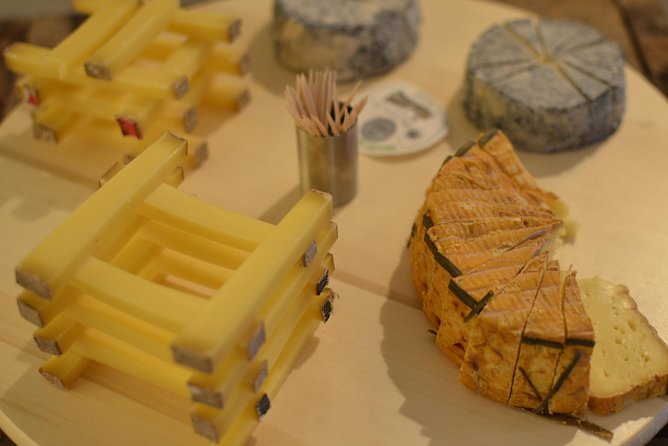
The class introduces the five major French cheese families and gives you samples from each. This is one of the strongest reasons to choose the experience over a simple cheese board.
A cheese family refers to the way a cheese is made and matured. Those methods affect firmness, aroma, moisture, and how the cheese behaves with wine. By comparing several families, you can begin to understand why one cheese may soften a wine while another makes it taste sharper or fruitier.
The tasting is not only about naming cheeses. Your host explains their geographical and historical origins, then gives you a chance to notice the differences yourself. That direct comparison helps you remember the lesson later, when you are standing in front of a market counter or choosing a plate at a Paris bistro.
For a first-time visitor, this is useful because French cheese can be confusing. Labels, regions, and textures do not always tell you how a cheese will taste. The class gives you a framework for asking better questions and making more confident choices.
The cheese is served with bread, sliced ham, and olives. These extras are not filler. They show how a pairing changes when you add salt, fat, crunch, or a neutral base. Try the cheese alone first, then with the wine, then with one of the other foods. That simple comparison is likely to teach you more than tasting everything in one bite.
Pairing wine and cheese at the table
The class focuses on the interaction between food and wine. You may notice that a cheese brings out a fruit note in a wine, makes its acidity more apparent, or smooths out a stronger edge. These are small discoveries, but they are exactly the sort of practical knowledge you can use at home.
I like that the experience includes bread, ham, and olives alongside the core tasting. A wine and cheese lesson can become too narrow if you only move from one cheese to another. The extra nibbles make it feel more like a meal and give you a fuller sense of how French people build a spread.
There is also a social advantage to sharing the tasting. You can compare impressions with classmates, and the class format encourages discussion. You do not have to arrive with a trained palate. In fact, the experience is particularly suited to people who feel unsure about French wine or cheese and want someone to explain the basics without fuss.
That said, the class is only about two hours. You will receive an introduction, not a complete education in French wine and cheese. If you already work in wine or know French regions well, some of the material may feel basic. For most holidaymakers, though, the compact format is a plus. It gives you useful information without taking up half a day.
More Wine and Cheese Tastings in Paris
- Paris: Wine and Cheese Lunch
★ 4.9 · 596 reviews - Cheese & Wine Tasting in Montmartre with Local Cheesemonger
★ 5.0 · 470 reviews - French Wine, Champagne And Cheese Tasting Paris SECRET WINE DOOR
★ 5.0 · 464 reviews - Paris Wine Tasting plus Cheese Lunch with an Expert Sommelier
★ 5.0 · 424 reviews
The Champagne moment and the sword
The class includes Champagne, and one of its memorable features is the chance to learn how to saber a bottle. You take a knife or sword and use it to open the bottle in the traditional way, under the instructor’s guidance.
This is a playful part of the class, but it also gives the session a clear high point. The bottle is opened, the Champagne is shared, and everyone gets a celebratory taste. If you prefer to watch rather than handle the sword, that is part of the appeal too. You can enjoy the spectacle without needing to take the turn yourself.
The Champagne lesson also fits the broader theme of the class. You are not only drinking a sample. You are learning a bit of French wine culture and the rituals that make a bottle feel special. One of the class’s recurring subjects is a little-known Champagne secret, although the exact detail is not specified in the available information.
The sabering activity may be less appealing if you want a calm, formal tasting with no theatrics. For many people, however, it is exactly the sort of lighthearted memory that makes the class different from an ordinary wine flight.
What the two-hour schedule feels like
At roughly two hours, the class is long enough to cover the wines, cheese families, pairing exercises, and Champagne without feeling like a full-day commitment. It also leaves you with time to continue exploring Paris afterward.
The noon start works well for a food-focused day. You can attend the class, then walk toward the Panthéon, the Latin Quarter, or the Seine. The activity ends at the meeting point, so you are not left on the opposite side of the city.
The pace will depend on the group and the amount of discussion. With as many as 16 people, questions and conversation may stretch some sections. That is part of the small-group tradeoff: you get a social class and personal contact with the instructor, but the experience is not built around a private schedule.
The minimum drinking age is 18. Since the experience includes several wine samples, Champagne, and food, plan it as a focused tasting rather than something to fit between multiple other alcohol-based activities.
Is $113.49 a fair price?
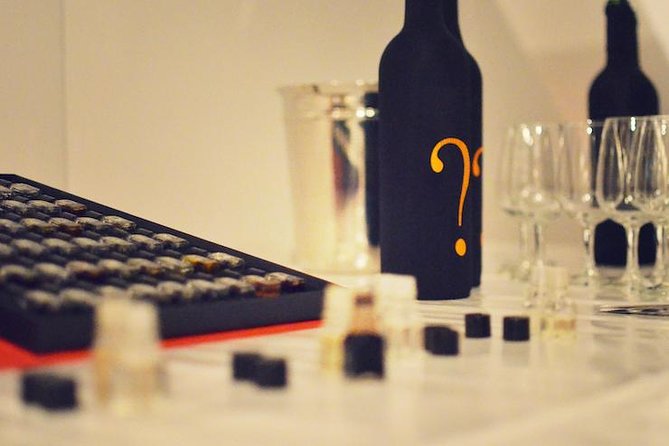
At $113.49 per person, this costs more than buying a bottle of wine and a few cheeses at a Paris shop. That comparison is fair, but incomplete. Here, the price also covers a sommelier, five wine samples, cheese from five families, Champagne, bread, olives, ham, instruction, and the hosted sabering activity.
I see the best value for people who would otherwise book a food tour, wine tasting, or cooking lesson. You get a little of each: local food, regional context, guided tasting, and hands-on entertainment. The class can also help you avoid spending money later on a bottle or cheese that does not suit your taste.
The value is weaker if you mainly want a generous lunch. This is still a lesson, and the pours are samples. You should expect enough food to support the tasting, but not a full restaurant meal.
The strongest part of the price is the instruction. Stéphane’s humor and ability to make beginners comfortable are central to the experience. If you want to build confidence with French wine and cheese, the cost is easier to justify. If you already know exactly what you like and only want to eat, a market visit may be a cheaper choice.
At the end, you receive a Drop-Stop pourer. It is a small practical souvenir designed to help prevent drips when you pour wine at home. It does not change the value of the class by itself, but it gives you something useful to take away rather than just a memory.
Who should book this Paris tasting?
I would recommend this class to first-time Paris visitors who want a friendly introduction to French food culture. It suits couples, friends, and solo food lovers who enjoy learning in a group.
It is also a good choice if you feel intimidated by wine language. The session is built around tasting and explanation, and the tone appears playful rather than judgmental. You can arrive with little knowledge and still take part.
The class may appeal less to children or anyone who does not drink, since the central activity is wine and the minimum drinking age is 18. It may also be too introductory for an experienced wine professional seeking advanced analysis.
Because the class is capped at 16, it offers more contact than a large bus tour or general food walk. Still, do not book it expecting a private lesson unless your reservation specifically states that it is private. The experience can be lively, and you will share the table with other participants.
If your plans may change, pay close attention to the cancellation rules. A full refund requires cancellation at least six full days before the local start time. Cancellation two to six full days before the class receives a 50 percent refund, while cancellation less than two full days before the start receives no refund. Changes inside those cutoffs are not accepted, and the class may be rescheduled or refunded if its minimum number is not reached.
Should you book the Le Foodist wine and cheese class?
Book it if you want more than a plate of cheese. The combination of regional wine, five cheese families, and Champagne sabering gives you a clear reason to spend two hours here rather than simply ordering a tasting board.
I especially like it for a first Paris visit. You leave with a better sense of terroir, a few pairing ideas, and a practical Drop-Stop pourer. Stéphane’s humor helps keep the lesson relaxed, while the small group leaves room for questions.
Skip it if your priority is a long lunch, a private setting, or advanced wine study. But if you want a social, well-focused introduction to French wine and cheese near the Panthéon, the $113.49 price is reasonable for the amount of tasting and instruction included.
FAQ
Where does the wine and cheese class meet?
The class meets at Le Foodist, 59 Rue du Cardinal Lemoine, 75005 Paris. It ends back at the same location.
What time does the class start?
The class starts at 12:00 pm and lasts approximately two hours.
How many wines are included?
You receive four wine samples from different French regions, plus one Champagne sample.
What food is included with the tasting?
The class includes cheeses from the five major French cheese families, along with bread, olives, and sliced ham.
Can I participate in the Champagne sabering?
The class teaches the art of opening a Champagne bottle with a knife or sword. The available information describes the activity but does not guarantee that every participant will take a turn.
What is the minimum drinking age?
The minimum drinking age is 18.
New cheese trips in Paris
- Paris: Wine and Cheese Pairing★ 5.0 · 4 reviews
- Paris Wine and Cheese Tastings Class near Le Marais★ 5.0 · 4 reviews
- French Wine and Cheese Master Class Near the Eiffel Tower★ 5.0 · 6 reviews
- Paris Marché d’Aligre Walking Tour with Chocolate and Cheese Tasting★ 3.5 · 24 reviews
- Paris Wine and Cheese Pairing Private Masterclass in a Bistrot★ 5.0 · 7 reviews
- Wine and cheese tasting at Latin Quarter★ 5.0 · 15 reviews
- Wine & Cheese in Montmartre: A True Taste of France 6-ppl Max★ 5.0 · 6 reviews
- Wine and cheese tasting in Bastille★ 5.0 · 5 reviews
Wine and Cheese Tastings, compared.
Classic Saloon Boat Cruise with Cheese & Wine
Read our review →
Montmartre Cheese, Wine & Pastry Guided Walking Tour
Read our review →
Evening Candle Light Cruise With Wine & Cheese
Read our review →
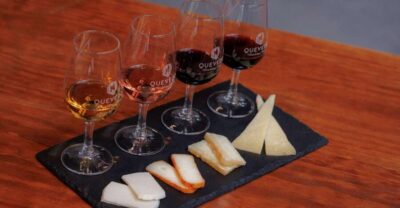
Vila Nova de Gaia: Port Wine Tasting with Cheese Pairing
Read our review →
Private Montmartre Food Tour with Wine, Cheese & Pastries
Read our review →
Paris Le Marais Food Tour With 10+ Tastings, Cheese, Wine & More
Read our review →
Browse the lists this tour appears in