
Reviewed · CHEESE MAKING WORKSHOPS
Wine Masterclass & Cheese Tasting Workshop in Bordeaux
Bordeaux’s wine map can look like a puzzle until someone explains it clearly. This 90-minute workshop uses four wines from different appellations, plus cheese, bread, and chocolate, to show how soil, climate, and grape varieties shape the glass. The class takes place at ComplanTerra on Rue Sainte-Colombe, in the old town.
I like the small group limit of 10, which leaves room for questions and personal advice. I also like the practical angle: you learn how to taste, serve, choose, and pair wine at home, not just how to swirl a glass and nod solemnly. The main consideration is that four small pours and shared snacks make this a tasting class, not a meal or a vineyard visit.
Key points at a glance
- Four Bordeaux appellations: Compare wines with different regional styles, grapes, soils, and climates.
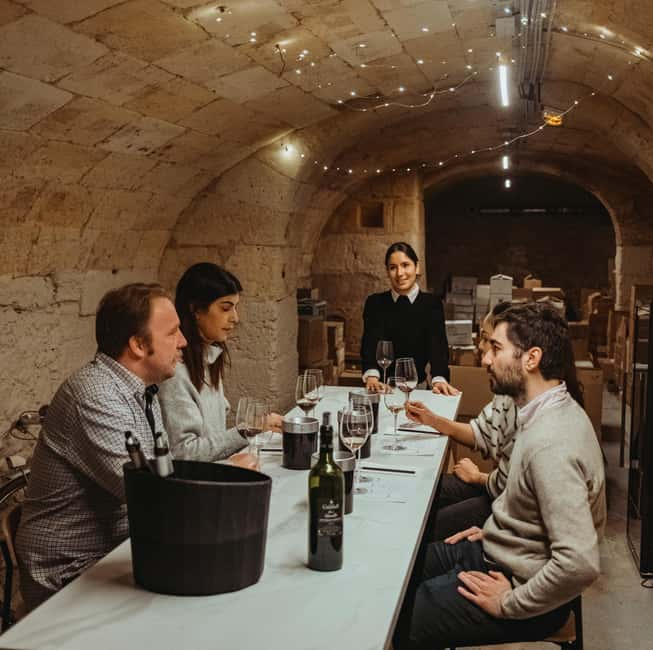
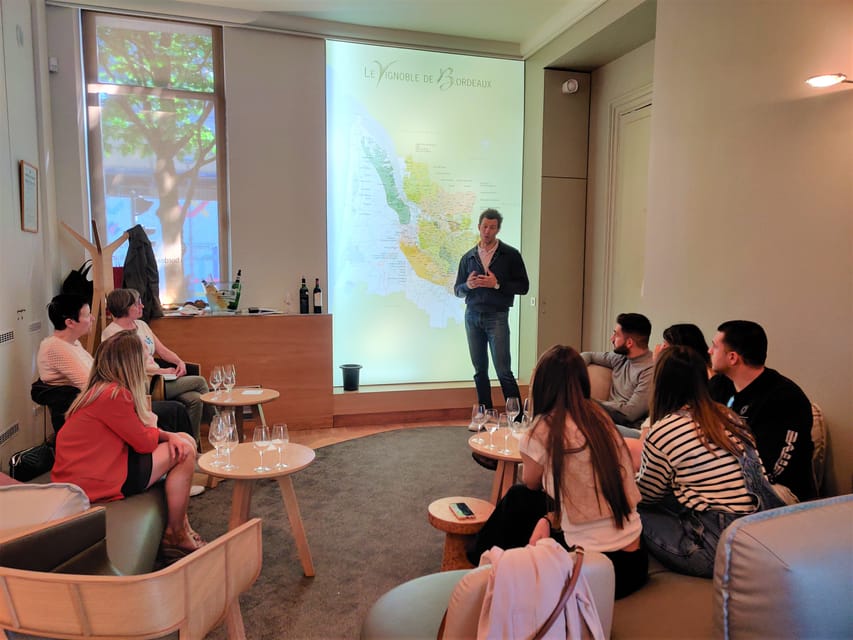
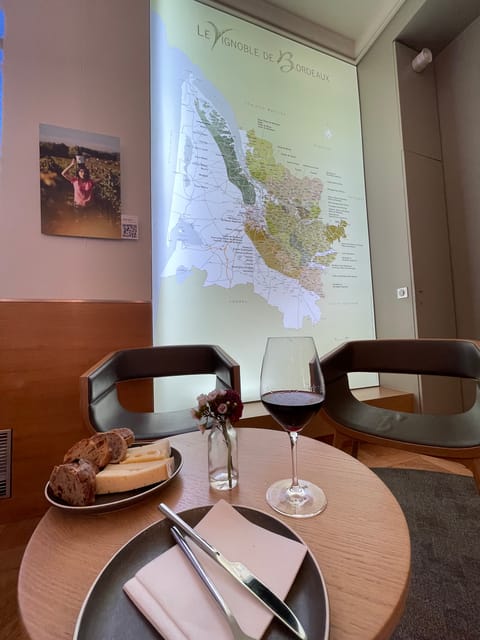
- A cellar-style setting: The class begins in an atmospheric wine space, with a large Bordeaux map used to explain the sub-regions.
- Cheese and chocolate pairings: Taste local cheeses, bread, and chocolates alongside the wines.
- Approachable instruction: Guides such as Jon, Jonathan, Laura, and Alex have been praised for making the class relaxed and easy to follow.
- Useful take-home skills: Learn how to taste, serve wine to others, and make better food pairings at home.
- Compact and central: The workshop lasts about 1 hour 30 minutes and starts at ComplanTerra, 42 Rue Sainte-Colombe.
Why this Bordeaux workshop works for beginners
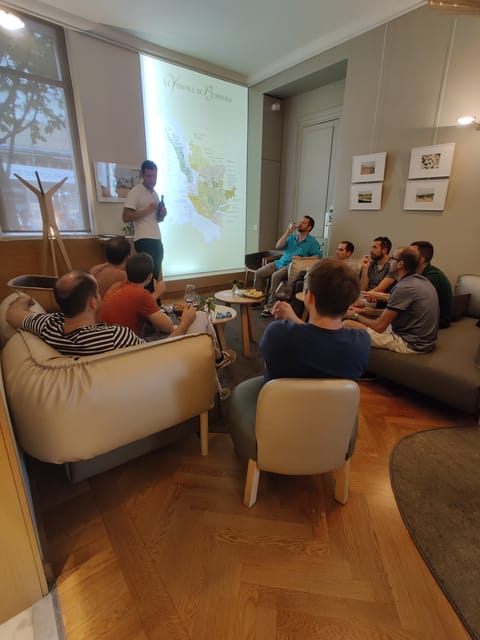
Bordeaux has a reputation for serious wine, serious prices, and serious terminology. That can make a first tasting feel like an exam. This class takes a friendlier route. You begin with the basics, then use actual wines to understand the differences between Bordeaux’s main areas.
I like this teaching method because it gives the geography a job to do. Instead of hearing a list of appellations and forgetting them before the next glass, you taste wines from different parts of Bordeaux and connect their character to place. The guide explains the role of soil, climate, and grape varieties, then shows you how those factors appear in the wine.
You do not need to arrive with a trained palate. The class is designed to teach the correct approach to tasting, including how to look at the wine, smell it, taste it, and recognize its main qualities. The goal is not to find the most fashionable answer. It is to help you form an opinion and understand why the wine tastes the way it does.
That makes the experience useful for a first-time wine drinker, but it is not limited to beginners. People with more experience can use the session to organize what they already know and ask focused questions about Bordeaux.
More Cheese Making Workshops in France
- Bordeaux Food Tour : Sweets, Cheese & Wine pairing workshop
★ 5.0 · 8 reviews - Wine Masterclass & Cheese Tasting Workshop in Bordeaux
★ 5.0 · 2 reviews - Paris Cheesemaking Workshop including Wine and Cheese Tasting with an Expert
★ 5.0 · 141 reviews
Starting at ComplanTerra on Rue Sainte-Colombe
The meeting point is ComplanTerra, at 42 Rue Sainte-Colombe in Bordeaux’s old town center. You return to the same place when the class ends, so there is no transport between stops and no complicated route to follow.
The setting is part of the appeal. The class can begin with an introduction to the cellar or wine space, which gives the workshop a more grounded feel than a tasting held in a generic classroom. A large map of Bordeaux’s wine sub-regions helps put the lesson in place before the glasses arrive.
This matters because Bordeaux wine names can be confusing when you first encounter them. The name on the bottle may refer to an appellation, estate, or wider wine area. A map gives you a visual reference and helps you understand how the regions relate to one another.
The location is also near public transportation, which is handy if you are staying elsewhere in the city. You should still allow enough time to find 42 Rue Sainte-Colombe and arrive ready for the start. The experience is not a walking tour, so the old town is your setting rather than an itinerary of sightseeing stops.
Four wines, four Bordeaux perspectives
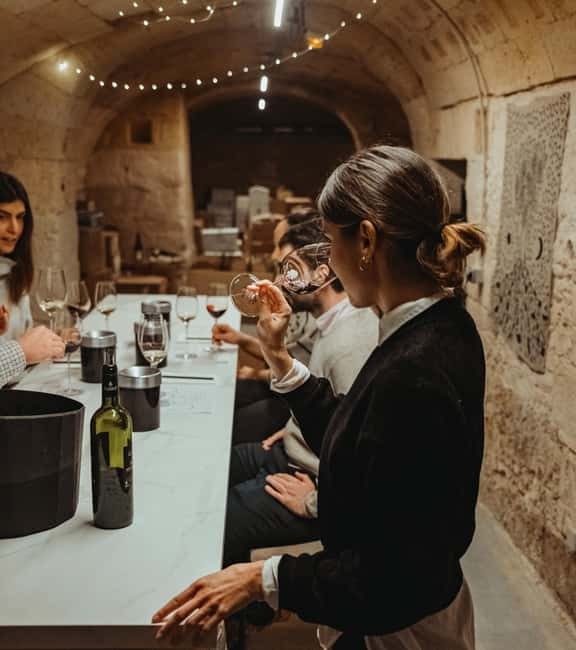
The heart of the class is a tasting of four wines from various Bordeaux appellations. Each person receives four glasses of 8 cl, giving you enough wine to assess each selection without turning a short educational session into an overly heavy afternoon.
The wines are chosen to show different styles and characters. Your guide explains the specific region behind each wine, including its soil, climate, and main grape varieties. You then taste for the differences rather than treating Bordeaux as one single style.
This is one of the strongest parts of the workshop. Bordeaux is often discussed as if it were a single wine identity, but the region contains many distinct areas. A comparison of four appellations lets you notice how one wine can feel different from another even when both come from the same broad region.
The guide also explains how to identify those differences. You might consider aroma, acidity, body, tannin, fruit character, and finish, but you are not expected to master technical vocabulary in one sitting. A good class gives you a simple framework that you can reuse the next time you open a bottle.
The pours are modest, which is worth noting if you want a full evening of drinking. This experience is better understood as a focused lesson with alcohol included. You will taste enough to compare the wines, but you will not receive full glasses.
Cheese, bread, and chocolate on the table
The food pairing is more than decoration. You receive a cheese platter, bread, and chocolates to share, with local cheeses from different parts of France included in the tasting. The food gives you a chance to see how the same wine changes when you eat it with something salty, creamy, or sweet.
Cheese and wine are a natural teaching pair because the contrast can be immediate. A cheese may soften a wine, sharpen its fruit, or make its tannins more noticeable. The class gives you room to decide what works for your own palate rather than insisting that every pairing is universally correct.
Chocolate adds a different challenge. Dark chocolate with red wine can be satisfying, but the result depends on the wine and your personal taste. One pairing may seem harmonious while another may feel too bitter or intense. That is useful information. Wine pairing is not a set of rigid laws, and your own preference matters.
The food is described as a starter and shared accompaniment, not lunch. If you are hungry, eat beforehand or plan a meal afterward. The bread, cheese, and chocolate should help you taste the wine, but they are not intended to replace a full meal.
More Wine and Cheese Tastings in France
- Professional – Bordeaux Wine and Cheese Tasting with a walking tour
★ 5.0 · 218 reviews - Tasting of 6 Bordeaux wines and pairing charcuterie & cheese
★ 5.0 · 199 reviews - Bordeaux: Wine Masterclass with Cheese and Charcuterie Board
★ 4.9 · 184 reviews - Introduction to Bordeaux wines paired with cheeses & charcuterie
★ 5.0 · 175 reviews
Learning to taste without overthinking it
The guide’s teaching style makes a large difference here. Jon, Jonathan, Laura, and Alex have each hosted sessions associated with this experience, and the strongest pattern is an informal approach that keeps the class social while still giving it structure.
That balance is important. A wine class can become stiff if the instructor treats every question as a test. Here, the emphasis is on tasting wine in the moment and learning through comparison. You can ask why a wine smells or feels a certain way without worrying that your answer is wrong.
I especially like the practical instruction on serving wine. You learn how to present wine to other people, how to approach a tasting with more confidence, and how to think about food pairings at home. Those skills are more useful than memorizing a long list of Bordeaux estates.
The guides also add local advice beyond the formal lesson. Restaurant suggestions have been part of the experience, which can be valuable on a short stay in Bordeaux. A good food recommendation can save you from spending your evening in a place that happens to be close but does not suit your budget or interests.
What the Bordeaux map adds to the lesson
The large map is not just a visual prop. It helps explain why Bordeaux wines can vary so much within a relatively compact area. The class connects the sub-regions to their soil, climate, and grape varieties, then links those facts to the wines in front of you.
This is the point where the workshop moves beyond a standard wine bar tasting. You are not simply handed four glasses and told which one is expensive or popular. You get a basic explanation of how Bordeaux developed as a wine-producing area and why its vineyard areas have their own identities.
The historical introduction is short, as it should be in a 90-minute session. You will not receive a full account of Bordeaux’s wine trade or a detailed study of every estate. Instead, you get enough background to understand the regional names and take a more informed look at the bottle labels you encounter later.
If you plan to visit Bordeaux’s vineyards separately, this class can act as a useful primer. It will not substitute for going into the countryside, meeting a producer, or seeing a vineyard. It can help you know what to ask when you do.
How much value do you get for $54.06?
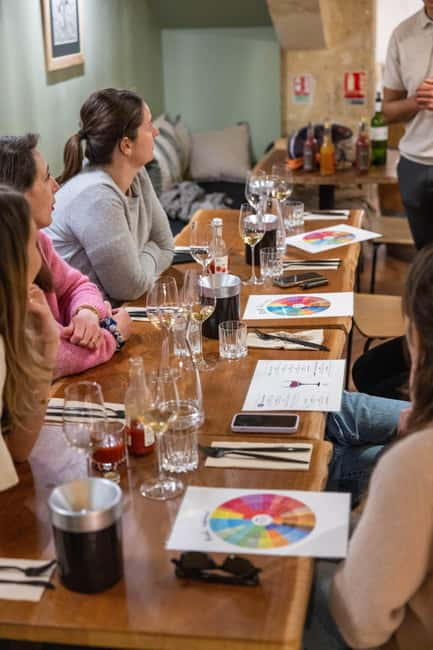
At $54.06 per person, this is priced above a casual glass of wine and a snack, but the comparison is not quite fair. You are paying for four tastings, shared food, a central venue, and the time of a local wine professional who explains the wines and answers questions.
The value is strongest if you want a lesson. Four wines on their own may not justify the price for someone who simply wants to drink Bordeaux wine. Four wines with a clear comparison, regional explanation, tasting instruction, and pairing guidance offer more practical value.
The small group also matters. With a maximum of 10 people, the session should feel more personal than a large public tasting. The minimum is two people, so solo booking is not guaranteed to operate unless another participant joins. If the minimum is not reached, the experience may be canceled and you will be offered another date or a full refund.
The price does not include gratuities or lunch. That is easy to handle, but it is worth building into your plan. The class includes enough food to support the tasting, not a complete midday meal.
Who will get the most from the 90 minutes?
This class suits you if you want a structured introduction to Bordeaux wine without committing to a full-day vineyard excursion. It is also a good choice if your Bordeaux schedule is short and you want a useful wine lesson in the city center.
You will likely get the most from it if you are:
- New to Bordeaux wine and want the basic regional picture.
- A casual wine drinker who wants more confidence at restaurants or shops.
- Traveling with a partner or small group and looking for a social indoor activity.
- Interested in cheese and chocolate pairings as well as wine.
- Planning a vineyard visit and wanting some context first.
- Looking for local restaurant suggestions during your stay.
It also works for a mixed group. One person can be a wine beginner while another already knows the basics. The tasting format gives both people something to consider, and the informal teaching style keeps the session from feeling too academic.
This is less suitable if you want a full meal, a countryside vineyard tour, or a long list of rare and expensive wines. It is a compact educational tasting, not a day among the vines.
Practical details before you book
The experience is offered in English and uses a mobile ticket. Confirmation is sent at booking. The activity lasts about 1 hour 30 minutes and finishes back at the meeting point.
A moderate level of physical fitness is requested, though this is primarily a seated or stationary tasting rather than a strenuous activity. Service animals are allowed, and the venue is near public transportation.
The class requires at least two participants and accepts a maximum of 10. You can cancel for a full refund up to 24 hours before the local start time. Cancellations or changes made less than 24 hours ahead are not refunded or accepted.
Because this experience is often booked well in advance, leaving it until the last few days of your Bordeaux stay may limit your choices. Planning ahead is sensible, especially if your schedule has fixed restaurant reservations or a short visit.
Should you book this Bordeaux wine class?
I would book it if you want to understand Bordeaux wine rather than simply sample it. The combination of four appellations, a map-based regional explanation, cheese and chocolate, and practical serving advice gives the class a clear purpose.
The strongest reason to choose it is the teaching. Guides such as Jon and Laura are described as warm and approachable, while Alex and Jonathan bring a friendly style that keeps the lesson from becoming formal. That matters when you are learning something as personal as taste.
Skip it if you want a substantial meal, a vineyard walk, or a full-day countryside outing. But if you have 90 minutes in Bordeaux and want a small, central, useful introduction to the region’s wines, this is a sensible choice. You should leave with a better idea of what you like, how to describe it, and what to order next.
FAQ
Where does the wine masterclass take place?
The class starts and ends at ComplanTerra, 42 Rue Sainte-Colombe, 33000 Bordeaux, France.
How long does the experience last?
The workshop lasts approximately 1 hour 30 minutes.
How many wines will I taste?
You will taste four different Bordeaux wines from various appellations. Each person receives four glasses of 8 cl.
Is food included?
Yes. The tasting includes a shared cheese platter, bread, and chocolates. It is not a full lunch.
Is the class offered in English?
Yes. The experience is offered in English and includes a local wine professional as host.
Can I cancel for a full refund?
Yes. You can cancel at least 24 hours before the local start time for a full refund. Cancellations made less than 24 hours before the start are not refunded.
More Wine and Cheese Tastings in Bordeaux
- Bordeaux Gourmet Experience: Cheese & Wine Tasting
★ 4.6 · 169 reviews - Bordeaux Wines Masterclass paired with cheeses & charcuterie
★ 5.0 · 110 reviews - Bordeaux Gourmet Experience : tasting of French cheeses & wines
★ 4.5 · 71 reviews - Bordeaux Afternoon Food Tour : Sweets, Wine and Cheese
★ 5.0 · 38 reviews
More Cheese Making Workshops in Bordeaux
- Dijon: Cheese and Burgundy Wine Tasting Workshop
★ 4.8 · 122 reviews - Fuerteventura: Artisan Goat’s Cheese Making at Local Farm
★ 4.9 · 112 reviews - Troodos Mountains Halloumi Making: All Inclusive Workshop & Tour
★ 5.0 · 109 reviews - Paris: Butter and Cheesemaking Workshop
★ 4.9 · 103 reviews
New cheese trips in Bordeaux
- Wine Masterclass & Cheese Tasting Workshop in Bordeaux★ 5.0 · 2 reviews
- Wines and Cheeses: Learning to combine perfectly★ 4.5 · 7 reviews
- Tasting of Bordeaux White Wines Wine and Cheese Pairing★ 5.0 · 10 reviews
- Highlights of Bordeaux Walking Tour + Wine & Cheese Tasting★ 4.5 · 5 reviews
- Tasting of Bordeaux red wines, wine and charcuterie pairings★ 5.0 · 24 reviews
- Bordeaux Food Tour : Sweets, Cheese & Wine pairing workshop★ 5.0 · 8 reviews
- Bordeaux Gourmet Experience : tasting of French cheeses & wines★ 4.5 · 71 reviews
- Bordeaux Night Walk Ending with Delicious wine & cheese Tasting★ 5.0 · 10 reviews
Cheese Making Workshops, compared.
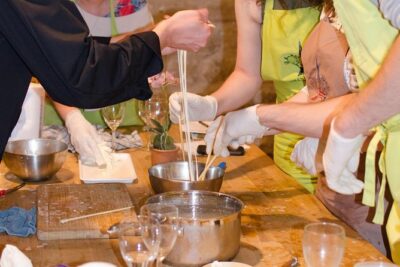
Paris Cheesemaking Workshop including Wine and Cheese Tasting with an Expert
Read our review →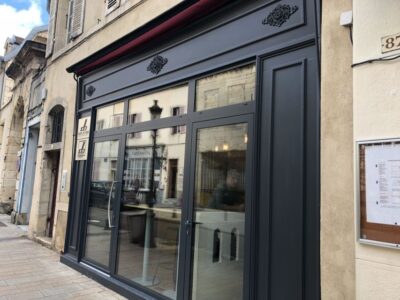
Troodos Mountains Halloumi Making: All Inclusive Workshop & Tour
Read our review →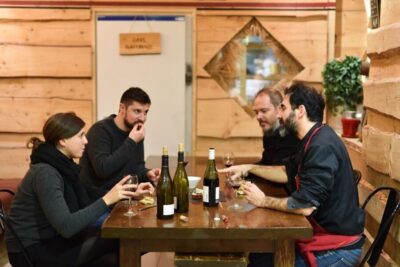
Central Madrid: Sangría Workshop & Tasting with Local Cheese
Read our review →Troodos Mountains Halloumi Making: All Inclusive Workshop & Tour
Read our review →Browse the lists this tour appears in