
Reviewed · CHEESE MAKING WORKSHOPS
Cheese Making Workshop in Fuerteventura with Breakfast
The best part of this Fuerteventura experience is that you do not simply look at a cheese counter and hear a short farm talk. You milk Majorera goats, help turn that fresh milk into cheese, then take your labeled creation home. I like the direct contact with the animals and the chance to see the whole process in one morning. I also like that the breakfast includes local cheese, mojos, and homemade jams rather than standard tourist fare.
The main consideration is the early start and rural meeting point in Los Alares. You must be there at 8:00 a.m., and the experience lasts about two and a half hours. If you are not keen on farm work, animal handling, or getting your hands into cheese making, this may feel more practical than relaxing.
Key points at a glance
- Milk Majorera goats by hand and machine: You learn both methods, with protective clothing supplied.
- Make your own fresh cheese: The cheese you produce is pressed, vacuum-packed, labeled, and yours to take home.
- Meet the animals up close: Feeding goats is part of the visit, and the farm’s friendly dog, Wolfy, may add to the welcome.
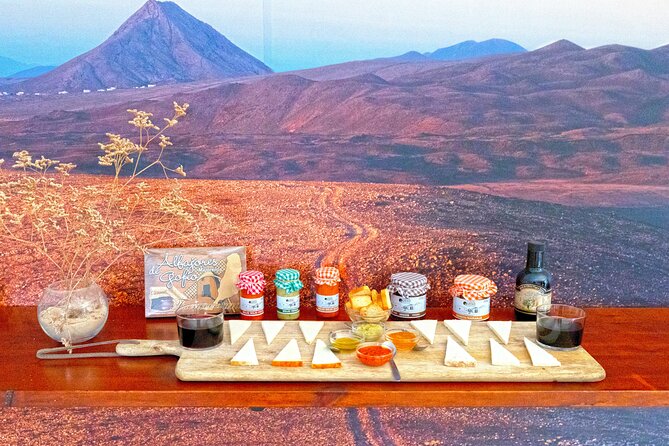
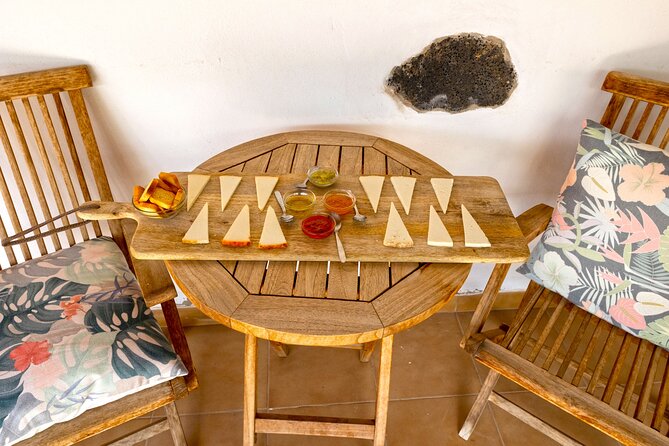
- Eat a real Canarian breakfast: Expect a fresh cheese sandwich, a cheese board, mojos, homemade jams, and one drink.
- Small group setting: A maximum of 10 people allows for plenty of hands-on time.
- English-language instruction: The explanations are designed for English speakers, with Elaine praised for her clear and friendly guidance.
Why Majorero cheese makes a good Fuerteventura experience
Fuerteventura is closely tied to goat farming, and Majorero cheese is the island’s signature food product. The dry climate is hard on agriculture, but Majorera goats are well suited to it. That makes this workshop more than a simple cooking class. It connects the cheese on your plate with the animals, work, and local food traditions behind it.
I like experiences that explain a place through something ordinary and useful. Here, milk becomes breakfast and a souvenir within the same morning. You see the raw material, handle it, and learn why careful milking and cheese pressing matter.
The setting is Quesería La Casa del Queso Cabrera Pérez Llano in Los Alares. The activity begins and ends at the farm, so you do not spend the morning moving between several stops. That keeps the focus on the goats and the cheese.
More Cheese Making Workshops in Spain
- Fuerteventura: Artisan Goat’s Cheese Making at Local Farm
★ 4.9 · 112 reviews - Sangria Workshop and Tasting with Local Cheese
★ 5.0 · 86 reviews - Central Madrid: Sangría Workshop & Tasting with Local Cheese
★ 4.8 · 82 reviews
Arriving at 8:00 a.m. in Los Alares
The workshop starts at 8:00 a.m., which is early for a holiday morning but practical for farm life. Morning is when the milking work happens, so the schedule lets you see the process at the right time instead of watching a staged demonstration later in the day.
You begin with a welcoming coffee while the host introduces the farm and explains what will happen. This gives you time to settle in before the hands-on work begins. It also helps if you are traveling with children, since the morning moves from a calm introduction to more active tasks.
The meeting point is specific: Quesería La Casa del Queso Cabrera Pérez Llano, 35638 Los Alares, Las Palmas, Spain. Plan your route before the day of the visit, especially if you are staying elsewhere on Fuerteventura. The supplied information does not include transport from hotels, so you should not assume a pickup service.
Feeding and milking the Majorera goats
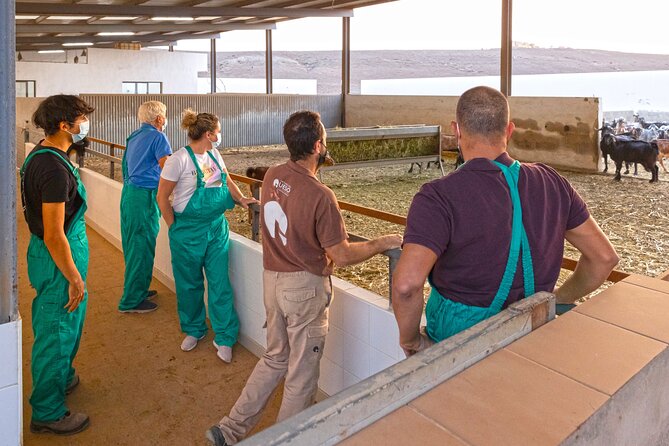
The goat portion is where this activity feels most personal. You are given protective clothing and learn how to handle the animals before trying the milking process. Feed is placed in the goats’ bowls, which helps keep them settled while you work.
You learn both manual and machine milking. Hand milking takes patience and a little coordination. One account of the activity notes that it was not as easy as it looked, which is useful to know. The point is not to perform like a professional on your first try. It is to understand the skill involved.
The machine gives you a different view of modern farm work. Seeing both methods helps explain how a traditional farm can keep old practices alive while using equipment to manage the daily workload.
You may also get the chance to feed the different herds hay, straw, alfalfa, grass, or herbs. The farm visit is not limited to a quick photo with one animal. You spend time around the goats and see some of the routine that supports cheese production.
Families should take note of the friendly animal contact. A four-year-old child was especially taken with patting and feeding the goats, and the farm’s dog, Wolfy, was another memorable part of the welcome. Still, children need to follow instructions around the animals, and parents should be comfortable with a working farm environment rather than a petting zoo.
From fresh milk to cheese in the production room
After milking, you move indoors to make cheese. The milk you have just helped collect is used in the production process, giving the activity a strong sense of connection from start to finish.
You work through the steps of creating a fresh cheese, using molds and a press. The cheese needs time under added weight, so the schedule includes a pause while it settles. This is a useful lesson in timing. Cheese making is not instant, even when you are working with a small batch.
The activity is hands-on but organized. Materials such as work covers, tights, and gloves are included, and the instructions are given in English. Elaine has been specifically praised for being friendly, clear, and informative. That matters here, since the quality of the experience depends on understanding each step rather than simply copying movements.
Sanitation is also part of the process. You handle the cheese directly, but the workshop supplies protective gear and follows a clean working routine. This makes the activity suitable for people who want to try cheese making without signing up for a long technical course.
The result is fresh cheese. You are not merely watching a farm worker produce it for you. You help shape it and later prepare it to take away.
Same region, a different board:
- Tacoronte: Guided Winery Tour with Wine and Cheese Tastings
★ 4.6 · 481 reviews - Guided Visit to the Estrella Galicia Museum with Cheese Pairing
★ 5.0 · 218 reviews - Fuerteventura: Tickets to Salt, Cheese and Windmill Museums
★ 4.4 · 129 reviews - Tenerife Bodegas Monje Winery Tour with Wine and Cheese Tasting
★ 4.5 · 121 reviews
A Canarian breakfast with cheese, mojos, and jams
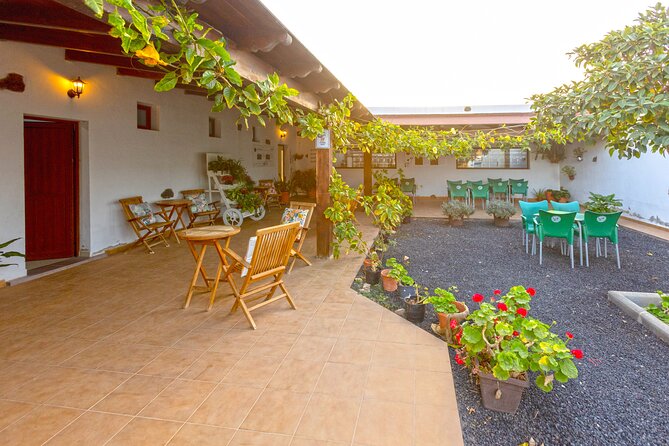
While your cheese rests in the press, you take a break in the garden patio for breakfast. The food is central to the experience, not an afterthought.
The meal includes:
- A fresh cheese sandwich
- A local cheese board
- Canarian mojos
- Homemade jams
- One drink
Your drink choice can be coffee, tea, Tenerife wine, beer, a soft drink, or water. The included welcome coffee comes separately at the start, so the morning has a gentle beginning before the more substantial tasting break.
The cheese board gives you a chance to compare local products, while the mojos and jams show how cheese is eaten in the Canary Islands. The combination of savory cheese, sauces, and something sweet makes this more useful than a basic sandwich stop. You get a small introduction to the flavors sold at the farm shop and served in local homes.
I would treat the breakfast as part of the value, not a reason to book the activity on its own. The main attraction is making cheese, but sitting down with food after the work gives the morning a pleasant rhythm. You work, pause, taste, and then return to finish your own product.
Only one drink is included. Additional drinks cost €10 per person, so check before ordering extras if you want to keep the final cost close to the advertised price.
Packaging your personal cheese
Once the cheese has rested, you return to the production room. You vacuum-pack and label it yourself, rather than receiving a generic wrapped sample from the farm.
That label makes the cheese a more personal souvenir. It is edible, practical, and tied to something you actually did. You can take it home fresh or allow it to cure a little longer, according to the guidance provided during the workshop.
The vacuum packaging also matters for transport. The cheese is prepared for you to carry away, though you should still follow any airline or accommodation rules that apply to food. The supplied information does not specify the cheese’s exact shelf life or whether it can be carried in hand luggage, so ask the farm if you have a long journey ahead.
What the $85.54 price includes
At $85.54 per person, this is not the cheapest farm visit on the island. The price makes more sense when you count what is included: the welcome coffee, protective equipment, goat visit, feeding and milking instruction, cheese-making materials, breakfast, tasting, and your own vacuum-packed cheese.
You are paying for participation rather than observation. A short visit that only showed you the goats would cost less in time and perhaps money, but it would not give you the same connection to the finished product.
The small group limit also supports the price. With no more than 10 people, you have a better chance to try milking, ask questions, and get help with the cheese molds. A larger group could make the same tasks feel rushed or turn the workshop into a demonstration from the back of the room.
The activity is also fairly compact at about two and a half hours. That makes it easier to fit into a day of sightseeing, though the 8:00 a.m. start means you need to plan around it. If you value local food, animal contact, and a hands-on activity, the price is reasonable. If you only want to sample cheese and take photographs, you may find it expensive.
Language, group size, and the pace of the morning
The activity is offered in English, and the English explanations have been described as especially strong. Elaine is one guide named in connection with the workshop, and her style is warm and clear. A translator may also be involved, depending on the session.
The maximum group size is 10 people. That is small enough for a more relaxed exchange with the farm team, though the actual number on your date may be lower. One session had only two participants, which allowed plenty of personal attention.
The pace alternates between instruction and action. You listen, try milking, feed the goats, make cheese, eat breakfast, and return to package the finished product. It is active without taking up a full day.
You should wear something suitable for a farm activity, although the farm supplies work covers, tights, and gloves. The provided gear protects your clothing and supports clean cheese making, but it does not turn the visit into a formal kitchen class.
Who will enjoy this workshop most
I would recommend this for people who like food traditions explained at their source. You do not need prior cheese-making experience. Curiosity and a willingness to try milking are more important.
It works particularly well for:
- Families with children who enjoy animals
- Couples looking for a local food activity
- People who prefer small-group experiences
- Cheese lovers who want more than a tasting
- Visitors interested in traditional farm work
- Anyone seeking an edible souvenir from Fuerteventura
The activity may be less suitable if you want a late morning, dislike touching animals, or prefer a polished restaurant setting. The farm is a working place, and the experience includes real tasks. That is part of its appeal, but it is also the main thing to consider.
Booking and cancellation details
The experience is often booked about 31 days ahead, so reserve early if your dates are fixed. Confirmation is provided at booking, and the activity has free cancellation up to 24 hours before the 8:00 a.m. start time.
Cancellations made less than 24 hours before the start are not refunded, and late changes are not accepted. The cut-off follows local time in Fuerteventura. Keep that in mind if you are arranging several activities close together.
Should you book the Fuerteventura cheese workshop?
Book it if you want to understand Fuerteventura through its food and farm life, not just taste a product in a shop. The strongest parts are the full chain of activities: feeding the goats, trying both kinds of milking, making cheese, eating local accompaniments, and taking home a labeled piece of your own work.
I especially like the balance between work and pleasure. You earn the breakfast by taking part, then get a souvenir that carries a clear memory of the morning. Elaine’s friendly English guidance and the small group limit add to the comfort of the experience.
Skip it if the early start, rural location, or animal handling does not appeal to you. For everyone else, the $85.54 cost buys a focused two-and-a-half-hour lesson in one of Fuerteventura’s most distinctive food traditions.
FAQ
Where does the cheese-making workshop start?
It starts at Quesería La Casa del Queso Cabrera Pérez Llano, 35638 Los Alares, Las Palmas, Spain.
What time does the activity begin?
The workshop begins at 8:00 a.m.
How long does the experience last?
It lasts approximately 2 hours and 30 minutes.
Is the workshop offered in English?
Yes. The activity is offered in English, and the explanations include instruction throughout the goat and cheese-making process.
What food and drinks are included?
You receive a welcome coffee, then a breakfast with a fresh cheese sandwich, a local cheese board, Canarian mojos, homemade jams, and one drink. The drink can be coffee, tea, Tenerife wine, beer, a soft drink, or water.
Can I take home the cheese I make?
Yes. You vacuum-pack and label your own cheese, then take it home. Additional drinks are not included and cost €10 per person.
New cheese trips in Spain
- Cheese Factory Workshop with Wine Tasting in Requena, Valencia★ 4.5 · 3 reviews
- Guided Tour Montesdeoca Cheese Factory – Cheese and Wine Tasting★ 4.5 · 6 reviews
- Hike the Cork Oak trail and try some Delicious Cheese★ 5.0 · 12 reviews
- Discover the Art of Idiazabal Cheese in the Basque Country★ 4.5 · 9 reviews
- Private Basque Cheese & Txakoli Wine Tour from San Sebastian★ 5.0 · 20 reviews
- Menorca: Cheesemaking and Farm-Fresh Product Tasting★ 5.0 · 29 reviews
- Mallorca Wine and Cheese Tasting★ 5.0 · 29 reviews
- Madrid Bike Tour with Churros and Wine, Ham, and Cheese Upgrade★ 5.0 · 8 reviews
Cheese Making Workshops, compared.
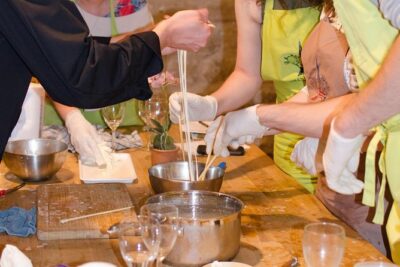
Paris Cheesemaking Workshop including Wine and Cheese Tasting with an Expert
Read our review →
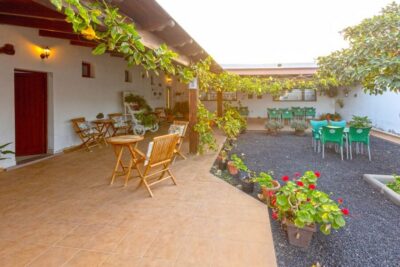
Troodos Mountains Halloumi Making: All Inclusive Workshop & Tour
Read our review →
Central Madrid: Sangría Workshop & Tasting with Local Cheese
Read our review →Troodos Mountains Halloumi Making: All Inclusive Workshop & Tour
Read our review →Browse the lists this tour appears in